Prostate cancer
About 4,500 men are diagnosed with prostate cancer each year in Ireland.* This means that 1 in 6 men will be diagnosed with prostate cancer during their lifetime.
What is prostate cancer?
Prostate cancer is when the cells of your prostate gland grow in an abnormal way to form a lump (tumour). In some men prostate cancer grows slowly; in others it grows more quickly and spreads to other parts of your body. Prostate cancer is a common cancer in Ireland. About 4,500 men are diagnosed with it each year.*
Early (localised) prostate cancer: This is prostate cancer found only within the prostate gland. It has not spread outside your prostate gland. With early prostate cancer there may be no symptoms. Your doctor may only suspect it after doing a PSA test.
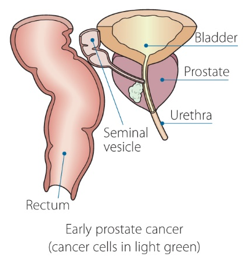
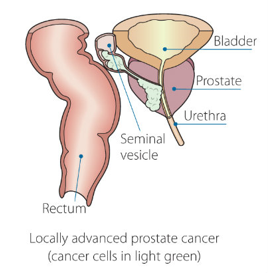
Locally spread prostate cancer: Cancer that has broken through the capsule (covering) of the prostate or has spread outside the gland to nearby tissues. Places where the cancer might spread include tissues such as your seminal vesicles, lymph nodes, neck of your bladder or your back passage (rectum). The seminal vesicles are two glands that sit just behind your prostate gland and store seminal fluid.
Some treatments for locally spread prostate cancer hope to cure it, while others aim to control the disease or stop it from growing.
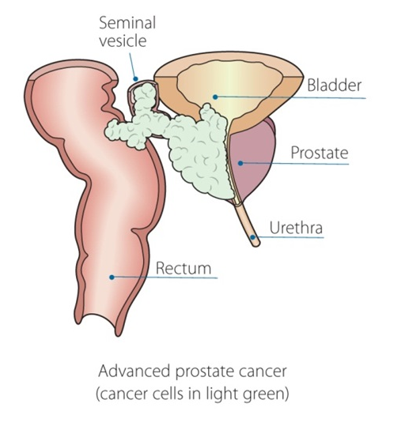
Metastatic (advanced) prostate cancer: This is when prostate cancer cells have spread and are affecting other parts of your body, away from the prostate gland. The most common place for prostate cancer to spread to is your bones.
Read more about metastatic prostate cancer.
A short video about prostate cancer, the signs and symptoms, types and treatments, and how to reduce your risk.
What is the prostate and what does it do?
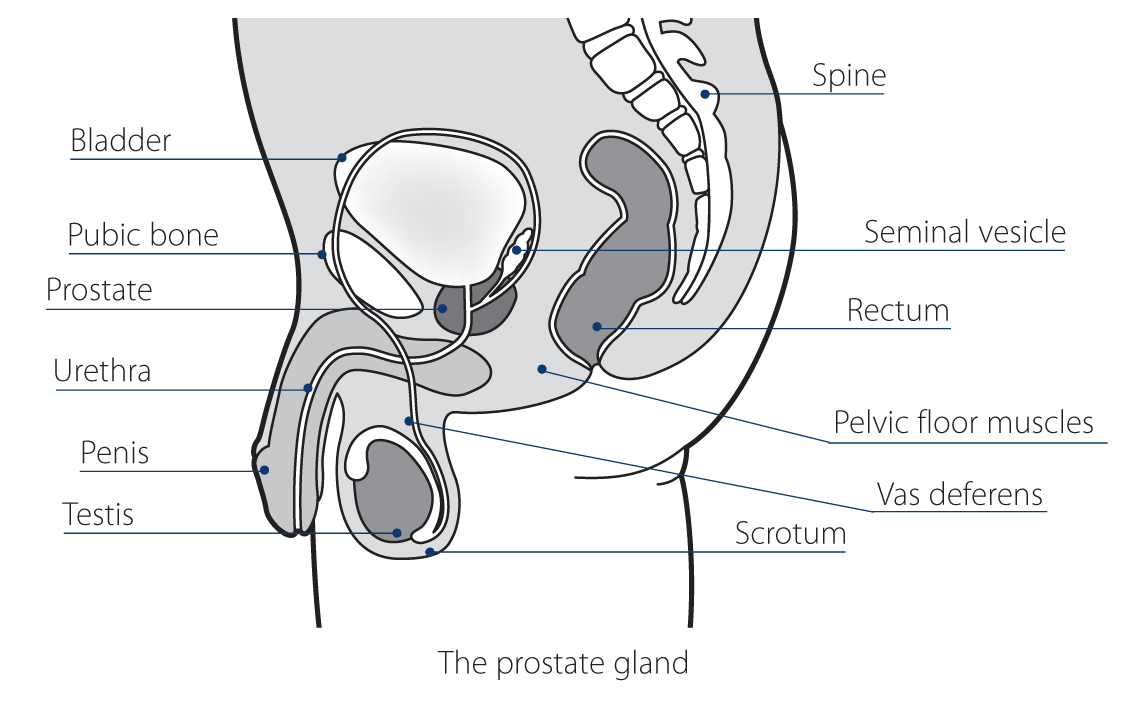
The prostate gland is a small gland about the size of a walnut. It lies below your bladder, just in front of your rectum (back passage).
A tube that carries urine runs through your prostate and into your penis. This tube is known as your urethra or water pipe. If the prostate gland is enlarged it can cause trouble passing urine because it presses on the urethra.
The prostate makes a thick white fluid that mixes with sperm (semen). It also makes a protein called prostate specific antigen (PSA), which turns semen into liquid.
If your PSA level is higher than normal, it can sometimes be a sign of prostate cancer. However it can also be a sign of a less serious condition like a prostate or urinary infection.
Prostate cancer risk factors
Age
The risk increases with age. It mainly affects men over 50. Nearly 2 in every 3 prostate cancers are diagnosed in men over 65.
Family history
Your risk is higher if your brother or father has prostate cancer. It is also higher if your relative developed prostate cancer at a younger age or if you have more than one relative with the disease. Inherited faulty genes can increase the risk of prostate cancer. Men with an altered BRCA2 gene are twice as likely to develop prostate cancer. Read more about BRCA and cancer.
Ethnic group
Black men are at a higher risk of developing prostate cancer. The risk is lower from Asian men. The reasons for this are not yet fully understood.
Having a risk factor doesn’t mean you will get cancer. Very often people with no risk factors get the disease. If you’re worried, talk to your GP or talk to one of our cancer nurses. Call the Support Line on 1800 200 700 or visit a Daffodil Centre.
Reducing your risk of prostate cancer
The most important things you can do to reduce your risk are:
- Get checked: If you are over 50, you should see your GP every year for a check-up. If you have a family history of prostate cancer, have regular check-ups from age 40.
- Be a healthy weight: Being overweight or obese can increase your risk of having aggressive prostate cancer or prostate cancer that spreads.
- Eat a healthy diet: A healthy diet can help you to keep a healthy weight. Eat fruit, vegetables, pulses (like beans) and wholegrains. Limit red meat and foods high in sugar, fat and salt. Avoid processed meat like rashers, sausages, ham and salami.
- Be physically active: Aim for at least 30 minutes of moderate-intensity activity a day.
Prostate health checker quiz
What do you know about your prostate health?
Take this short quiz to find out more about staying healthy and learn the signs and symptoms of prostate cancer.
Note: We use gender-inclusive language. We sometimes use woman/man and female/male when they are needed to explain a person's treatment and care - for example, talking about hormones or body parts - and when needed to describe research or statistics.
Medical content updated from our 'Understanding prostate cancer' booklet (2021), reviewed by Richard Power, Consultant Urologist; Lisa Smyth, Consultant Urologist, Patricia Daly, Consultant Radiation Oncologist; Cormac Small, Consultant Radiation Oncologist, Ger O'Boyle, Radiotherapy Advanced Nurse Practitioner, Sara White CNM2/CNS Prostate; Louise Fahy, Medical Physicist, Martina Sweeney, Registered General Nurse; Donna Spillane, Daffodil Centre Nurse.
Continue reading about prostate caner
Publications about prostate cancer

Talk to a Cancer Nurse

Support Line

Our Cancer Nurses offer confidential advice, support and information for anyone affected by cancer. Call or email supportline@irishcancer.ie. Video calls available. Mon-Fri: 9am-5pm

Our Daffodil Centres
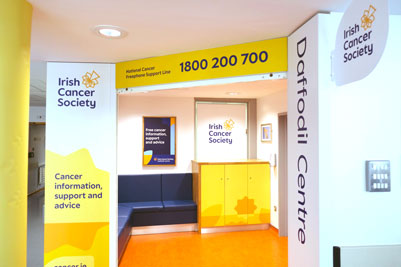
Our Daffodil Centres in 13 hospitals nationwide are staffed by Cancer Nurses and trained volunteers who provide face-to-face advice, support and information for anyone affected by cancer.
*The Irish Cancer Society uses the most up-to-date cancer statistics from the National Cancer Registry Ireland, available on www.ncri.ie