Laura's Story
“You realise that you’re so much stronger than you give yourself credit for. If I had read my story before I went through it, I would’ve thought ‘no way’. I think you surprise yourself with what you’re able to endure and still have a life that is worth living.”
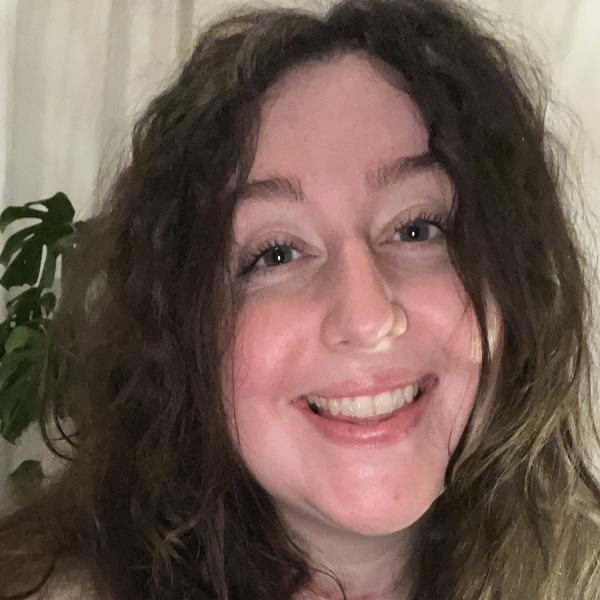
Three years ago, Laura Dennehy, now 31, was starting a course in midwifery, caring for her son and planning a wedding with her partner. Then she was diagnosed with thyroid cancer.
Beginning in February 2023, Laura had a cough that wouldn’t go away. She got a chest X-ray which showed her trachea pushed to the other side of her neck. While receiving inconclusive results from scans and blood tests, her physical symptoms worsened and she felt pressure in her throat and chest, dizziness, was struggling to sleep, having issues with swallowing and breathing, and would lose consciousness.
Just before Christmas in December 2023, she underwent surgery to remove the mass in her neck, and half of her thyroid. The mass had grown so large it was compressing vital structures in her neck and chest and was affecting blood flow to her head. After six weeks, in February 2024, the results of the surgery came back. She was told she had thyroid cancer.
“I didn’t realise the magnitude of what I’d just heard. I spent so long knowing something wasn’t right in my own body. I second guessed my instincts for so long. But I knew deep down this wasn’t how my body was supposed to feel. While it was absolutely devastating at 29, there was a part in getting my diagnosis which really validated that I knew my body better than anyone else did."
“I didn’t give up on myself. I kept pushing for answers. So, there was a level of relief to finally know, but also obviously complete and utter devastation.”
Laura quickly ordered booklets from the Irish Cancer Society website after her diagnosis. “I needed something that said this was real. The booklets were like a bible,” she says.
To further treat the cancer, Laura had another surgery to remove any remaining thyroid tissue to completely get rid of her thyroid. In May of 2024, she underwent radioactive iodine treatment, which is a type of internal radiation. Due to the radioactive nature of the treatment, Laura was isolated in a room which was lined in plastic.
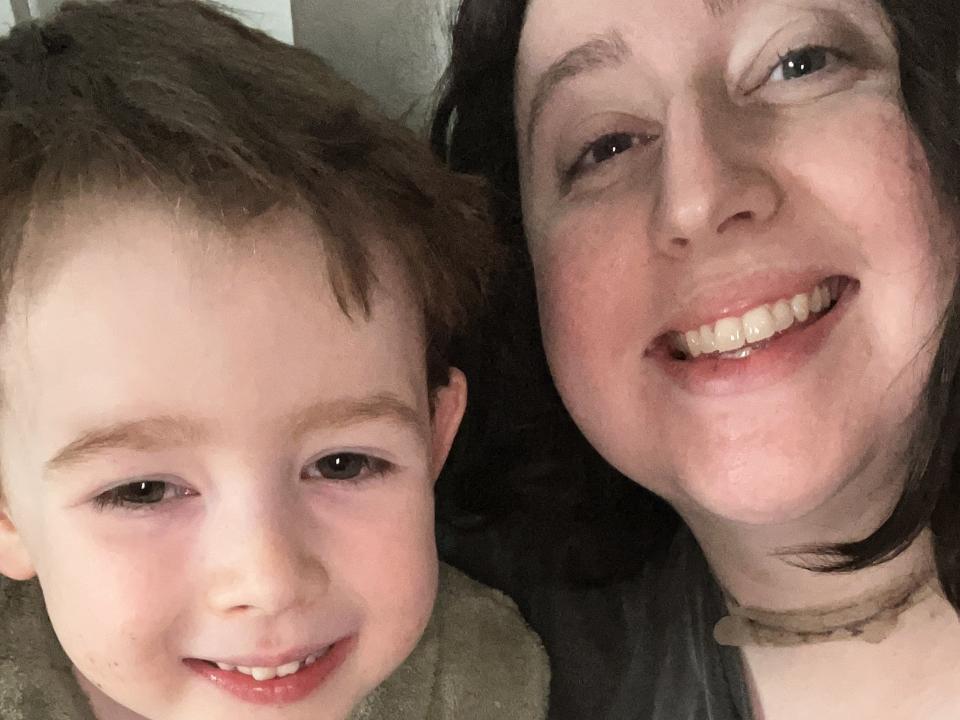
“It was hard enough to be isolated from all human contact, but it was something else so clinical being removed from all comforts. It upset me that people thought this was an ‘easy’ journey. I would’ve given anything to be near my son or husband, but it was two and a half weeks before I was able to be near or hug my little boy. How do you tell a little five-year-old that he can’t hug his mom?”
After the radioactive iodine treatment, Laura had to wait nine months to see if the treatment worked and to have the scans. She says she was under the impression that she wouldn’t have to isolate again, but she did as she had to undergo the treatment again. She adds that the treatment took an emotional and physical toll on her.
Laura sometimes rang the Irish Cancer Society Support Line. “It was just to have a friendly ear to listen to what you’re going through. I was really aware that what was going on was really heavy and not everyone in my life understood it.”
“People have this view of what it looks like to be a cancer patient, or to go through cancer treatment – people would ask ‘are you doing chemo or radiation?’ To this day I don’t know how to answer because I’ve not gone through either of the typical treatments people think of. I’ve gone through something torturous in its own way. Externally you look ‘okay’, people expect that means you feel okay."
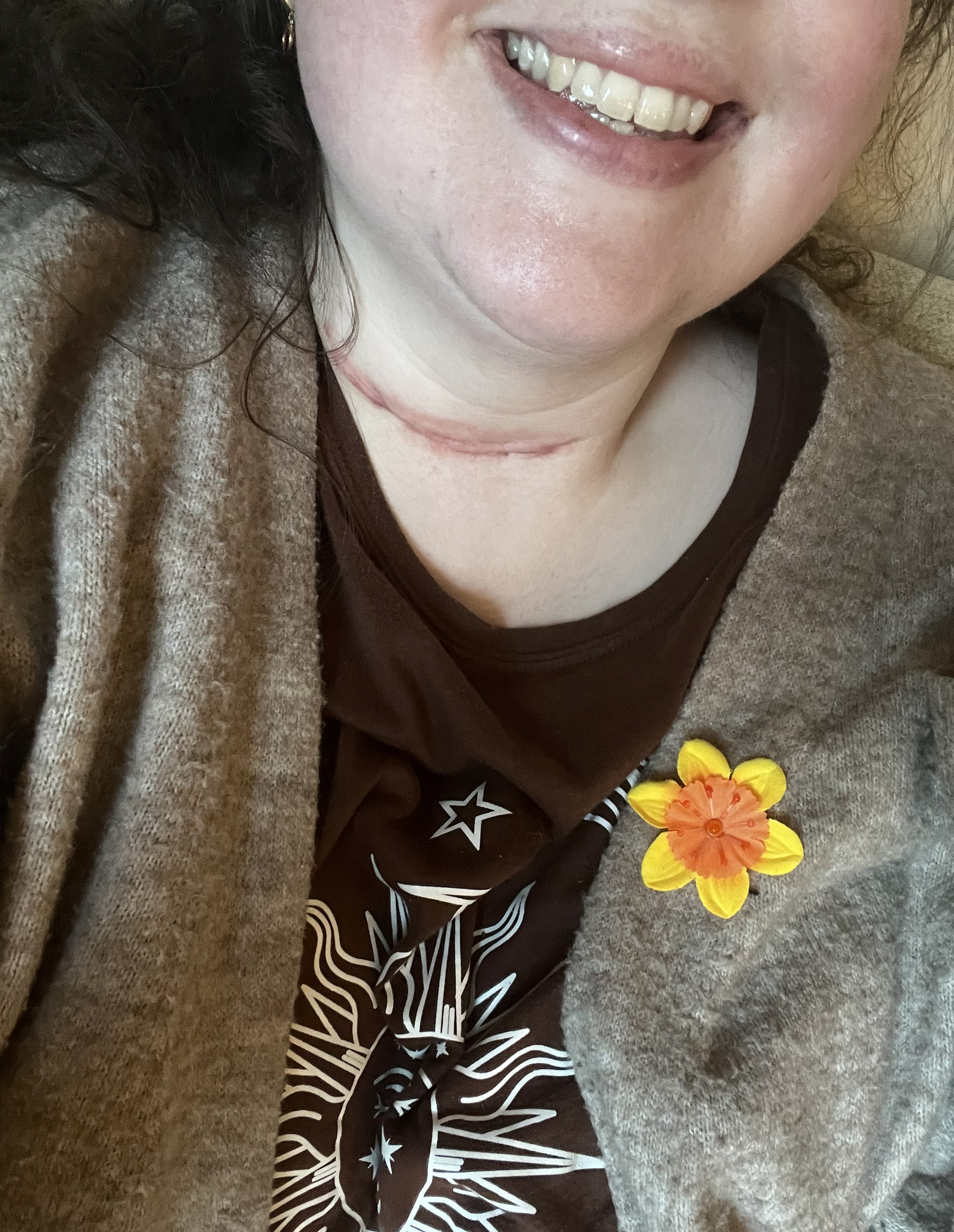
“I feel like people would have more understanding and sympathy for me if I lost something visible. People can relate more. I lost something that had major functional value. I lost the engine of my body to cancer, but because no one can visibly see what I’m going through it’s like it never mattered,” she says.
“I’ve learned to love my scars and wear them proudly as a reminder this happened and that I can do hard things. They’ve become a physical reminder of my body’s strength.”
In February 2025, there was no evidence of cancer in her thyroid. Though, as a complication of surgery, Laura developed a rare lifelong condition called hypoparathyroidism. She now requires medication multiple times a day for the rest of her life alongside replacing her thyroid hormones.
“It’s a reminder that even after cancer is gone, its impact remains. I never understood the complexity of getting everything titrated. It’s taken over two years for my body to adjust to it being synthetically replaced to a point where I have a functional quality of life back, and I will spend the rest of my life managing that delicate balance."
“Life is very different now, and cancer has irreversibly changed the trajectory of my life. However, I’m just eternally grateful to be here to watch my little boy grow up.
“I am sharing my story because thyroid cancer is often misunderstood and minimised. People living with it deserve to be believed, supported, and taken seriously. Not just during treatment, but for the rest of their lives.
“And I want people who are facing a diagnosis to know that it’s okay to fall apart a little bit. It’s okay to be held up by the people around you. There will be a day where you’re going to feel strong enough to stand on your own two feet again. But it’s okay if that day is not today.
“You learn that two things can coexist at the same time. There are glimmers in the darkness. You find them and you hold onto them. In the end of the day, that’s all life is - an accumulation of amazing little moments. Cancer can’t take that away from you.”