Lisa's Story
“If I could give advice to anyone going through this scary time, when you feel like you’ve been hit by a bus, I would say to talk to people, to get support from organisations like the Irish Cancer Society.”
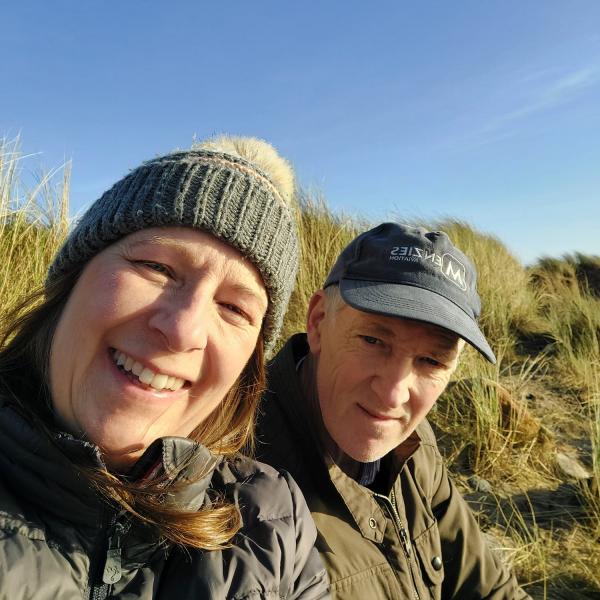
Lisa Murphy’s husband, Michael, introduced her to Ireland 35 years ago. They both worked outside as landscapers and gardeners and had 2 children and 2 grandchildren. They were about to begin their retirement together when Michael was diagnosed with a brain tumour.
Lisa, 61, lives in Dunboyne, Co. Meath, and describes Michael as a very kind, outdoorsy, joyful man. “Pops, as our grandkids called him, was very good at coming down to a child's level and having good fun with them. He’d play sporty games in the garden with them. He also always had a project back at home and was always doing something around the house or in the garden. He was also a huge hurling fan.”
Coming up to Christmas last year, Michael said he was tired a lot of the time, and that his head was a bit sore. “We didn’t think too much of it because it was leading up to Christmas and he had sinus issues. He started to get a bit dizzy when he walked - his walk would veer and his gait didn’t look right,” Lisa says.
In January 2026, after experiencing those symptoms, Michael went to A&E 3 times in a week, and it wasn’t until the third time that they scheduled him for a CT scan.
“The doctors checked everything with x-rays and blood tests. Once they did the CT scan on February 5th, they could see the tumour at the back right-hand side of the brain.”
A week later, Michael had a biopsy in Beaumont Hospital. A week after that, he was diagnosed with stage 4 aggressive glioblastoma, for which there is no cure.
“It was very rapid, and there was no hope. That was actually the hardest thing. He wasn't well enough for chemotherapy; he wasn't well enough for radio therapy. He couldn't be operated on. It was such a shock. It was difficult enough when we found out he had a brain tumour, but the rapid decline was astonishing.”
Michael went into palliative care quickly after his diagnosis. “It felt like we were on a roller coaster and we couldn’t get off for 6 weeks. The consultants would have bad news, we might have a nice moment with Michael, and then you’d go into caring mode, to do the best you can do.”
Lisa says that hiring a carer was surprisingly difficult, as was figuring out how to be financially supported during this time, as Lisa and Michael are both self-employed.
“You're swimming a bit with all the social welfare forms and what you’re entitled to."
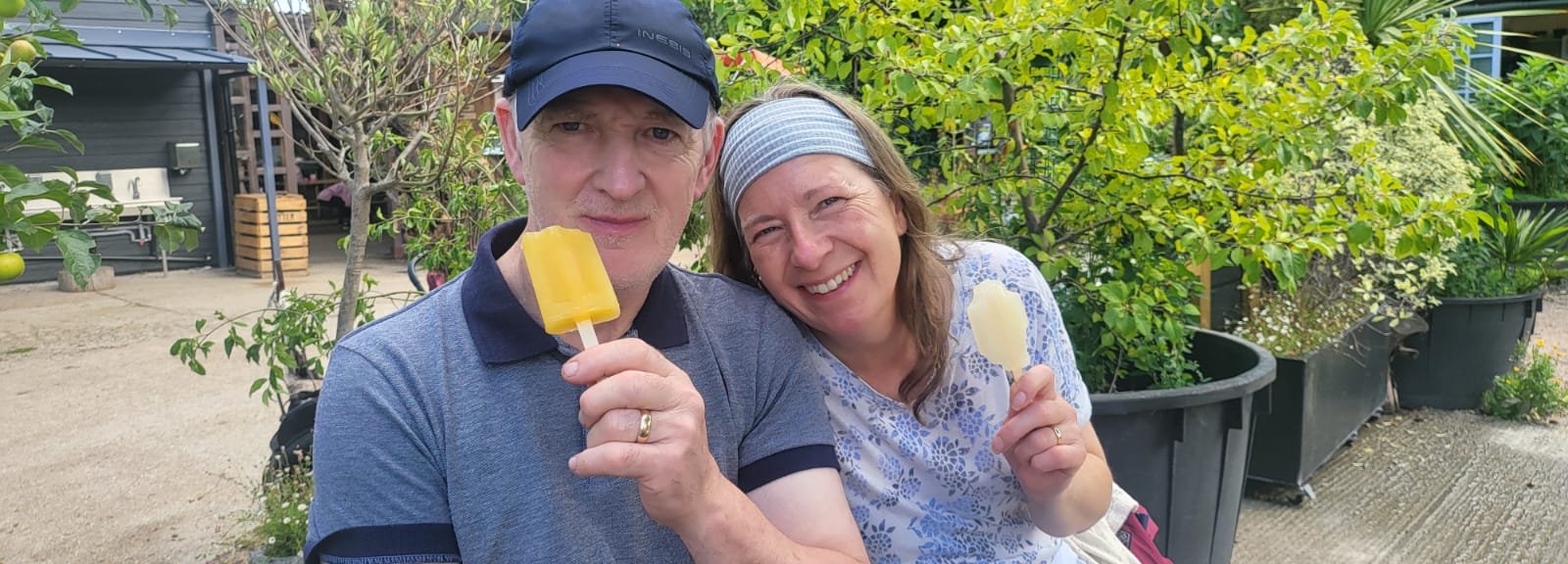
Lisa says she was angry following the diagnosis, and as Michael went into palliative care. “I was angry at the world – not the doctors or nurses, but at the world. It was horrible. I felt like we were cheated out of having another 20 years together. We had our campervan and were looking at going on more adventures. That time and experience was stolen after we had worked so hard for so long. He couldn’t enjoy the remainder of his life. It was all so quick, and there was no chance to process it.
“There was also a loss of dignity around the care for Michael. We had to feed him and change his catheter and pads. It was very hard to watch and help with.
“But the Night Nurses were absolutely fantastic. They would chat away to him and give us a rest. Every single one of them was brilliant, and it was a fantastic service. She saw Michael the very first day and she knew straight away what kind of medications to give, and how best to spend time with Michael to sort his care.”
Michael died on Easter Sunday, April 5th, just 6 weeks after his diagnosis.
“Caroline, our Night Nurse, was able to guide us with what to do after he passed. The end-of-life care at home was so helpful, and I am so grateful for them.”
Lisa also had skin cancer before Michael was diagnosed. She was diagnosed with benign Basal Cell Carcinoma, and had the cancer removed in 2022. In June, she competed in a walking challenge for Irish Cancer Society and ended at the top of the fundraising leaderboard. “Hopefully the money raised can help other people have night nurses as well. I know they’re in demand.
“I also hope that more money can be put towards cancer research and particularly towards brain cancers, because I don't think there's enough awareness about noticing the symptoms.”