Spinal cord compression
Spinal cord compression happens when pressure is placed on the spinal cord, which is the bundle of nerves that runs through your spine.
What is spinal cord compression?
Spinal cord compression happens when pressure is placed on the spinal cord, which is the bundle of nerves that runs through your spine.
The spinal cord carries messages between your brain and the rest of your body. When pressure is placed on it, the nerves may not work properly. This can affect movement, feeling (sensation), bladder and bowel function, and sexual function.
Spinal cord compression can happen if:
- Cancer starts in the spine
- Cancer has spread to the bones of the spine (secondary or metastatic cancer)
- There is bleeding or injury affecting the spinal cord
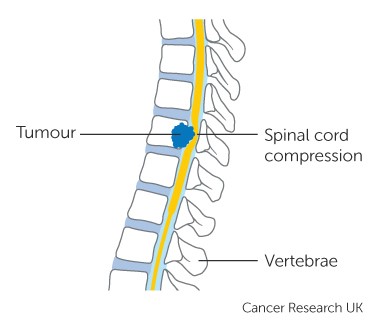
Diagram showing how a tumour in the spine can press on the spinal cord.
Picture courtesy of Cancer Research UK / Wikimedia Commons
Spinal cord compression is a medical emergency.
Getting treatment quickly can help prevent permanent damage to the spinal cord.
Contact your hospital team immediately or go to the Emergency Department if you develop any of the symptoms listed below.
Do not wait until your next appointment and do not delay seeking help, even at night or during the weekend.
What are the symptoms?
Symptoms can develop gradually or sometimes quite quickly. Symptoms can include:
Pain
- New back or neck pain
- Back pain that is getting worse
- Pain that wakes you up at night or disturbs your sleep
- Pain that does not get better with your usual pain relief
- A band-like pain around your chest or tummy area
- Pain that travels down your arms or legs
Changes in sensation
- Numbness, tingling or pins and needles
- Reduced feeling in your arms, legs, lower back or buttocks
Changes in movement
- Weakness in your arms or legs
- Difficulty walking or feeling unsteady on your feet
- Your leg or foot giving way unexpectedly
- Difficulty using your arms or hands
- Foot drop (difficulty lifting the front part of your foot)
Bladder or bowel changes
- Finding it hard to pass urine (pee)
- Difficult controlling your bladder or bowels
- New constipation, together with other symptoms
Changes in sexual function
- Difficulty getting or maintaining an erection
- Other changes in sexual function or sensation
What should I do if I have symptoms?
If you develop any symptoms of spinal cord compression:
- Contact your hospital team immediately.
- Use your emergency oncology contact number if you have one.
- Go to the emergency department if you cannot contact your cancer team.
Tell staff that you have cancer and are worried you may have spinal cord compression. Quick treatment can help prevent permanent nerve damage and reduce the risk of long-term disability.
How is spinal cord compression diagnosed?
You will usually need an MRI scan to check whether the spinal cord is being compressed and to identify the cause.
Because spinal cord compression is an emergency, tests and treatment should start as quickly as possible.
How is spinal cord compression treated?
Treatment aims to reduce pressure on the spinal cord, relieve symptoms and prevent further damage.
You may need one or more of the following treatments.
- Steroids can reduce swelling around the spinal cord and help relieve pressure. They may be given as tablets or through a drip into a vein.
- Radiotherapy may be used to shrink the tumour causing the pressure. This can help relieve pressure on the spinal cord, improve symptoms and reduce pain.
- Surgery. Some people may need surgery to relieve pressure on the spinal cord. Your specialist team will discuss whether surgery is suitable for you. Surgery may involve:
- Removing part of a tumour
- Removing bone pressing on the spinal cord
- Stabilising the spine using metal rods, screws or bone cement
- Physiotherapy and specialist support. You may get advice from a physiotherapist or specialist team. They can recommend specific ways for you to move safely, as well as exercises to help you keep up your strength and mobility. You may also need temporary bed rest or a spinal brace or collar.
- Bone-strengthening treatments. Medicines such as bisphosphonates may be used to strengthen bones affected by cancer and reduce the risk of further bone damage. They can also help to control pain.
Emotional support
Being diagnosed with spinal cord compression can be frightening and overwhelming. You may have changes in mobility, independence or daily activities. Everyone copes differently, and there is no right or wrong way to feel.
It may help to talk about how you’re feeling. Try sharing your feelings with friends or family, your medical team or a counsellor. The Irish Cancer Society funds counselling at many local cancer support centres.
You can also speak with one of our Cancer Nurses at a Daffodil Centre or by calling our Support Line.



Talk to a Cancer Nurse

Support Line


Our Daffodil Centres