Cachexia

Cachexia is severe and unintentional weight loss that can happen with cancer and some other diseases. 

About cachexia

Cachexia is a condition that changes how your body uses proteins, fats and carbohydrates. People may burn calories faster and have a reduced appetite. This causes severe and unintentional weight loss.,muscle loss and potentially fat loss

You might also hear it referred to as anorexia cachexia syndrome.

There are 3 categories to describe the stages of cachexia:

  • Pre-cachexia
  • Cachexia
  • Advanced cachexia

What causes it?

While a person’s body is fighting cancer cells, their body may start to work in a different way. They may have increased levels of inflammation and changes to their metabolism. These changes can lead to the body breaking down muscle and fat for energy instead of the food you eat.

Cachexia is usually a symptom of advanced cancer. It’s more common with cancers of the digestive system, such as pancreatic and stomach cancer, and lung cancer.

What are the symptoms?

  • Having little or no appetite
  • Losing weight, muscle and fat, even if you are eating
  • Feeling very weak
  • Feeling full after eating small amounts
  • Anaemia (low levels of red blood cells)

What should I do if I have symptoms?

You should talk to your medical team if you’re worried about the symptoms of cachexia. Although there is no treatment that can get rid of cachexia, your medical team will support you to feel as well as possible. 

How is it treated?

There is no treatment that can reverse or stop cachexia at present, although drugs are being researched. It is a good idea to meet with a dietitian who can give good advice when it comes to meal choices etc.

Try to seek support from a dietitian early on, if you notice unintentional weight loss or changes in your appetite. In the early 'pre-cachexia' phase, dietary support from a dietitian can be highly effective. 

Your doctors can prescribe appetite stimulants and anti-sickness medications which may help you eat a little more. The aim of these treatments is to help improve your quality of life.

In advanced cachexia, weight and muscle loss is driven by inflammation, meaning eating more food does not stop a person from losing weight.

Advanced cachexia is very different to general weight loss or muscle loss. Doctors can’t reverse it fully despite you being able to eat. Feeding through a tube is not effective either.

Coping with cachexia

Try to join in with the social aspect of family meals – even if you can’t eat much – and try to explain cachexia to your family and friends, so that they don’t put pressure on you to eat if you don’t feel able to.

Taking a little exercise, if you’re able, can also help you to feel a little better and may help to build muscle mass. Ask your doctor about what type of exercise might be suitable for you.

Cachexia and its effects can be very upsetting. If you feel your mood is consistently low, it is important to seek help. You may be experiencing depression as a result of your diagnosis and side-effects. Your GP, cancer nurses and medical social workers can all support you and your family and advise you about other professionals who can help. For example, psychologists, psychotherapists and psychiatrists.

You can also ask if there is a psycho-oncology service at the hospital. This service helps patients and their families deal with the psychological aspects of cancer, such as depression.


We're here to help

Our range of free services are here for you

Patient Education
Our free patient education group sessions and video resources provide information to guide you through and beyond cancer treatment.
Peer Support
Peer Support is a free and confidential phone service connecting people with similar cancer experiences. Our volunteers are trained to provide emotional and practical cancer support.
Eating well and exercise support
Eating well and exercise can help you feel better before, during and after cancer treatment. We can provide information and support on maintaining a healthy diet and being physically active.

Talk to a Cancer Nurse

Support Line

Support Line

Support Line
Our Cancer Nurses offer confidential advice, support and information for anyone affected by cancer. Call or email supportline@irishcancer.ie. Video calls available. Mon-Fri: 9am-5pm
Our Daffodil Centres

Our Daffodil Centres

Our Daffodil Centres
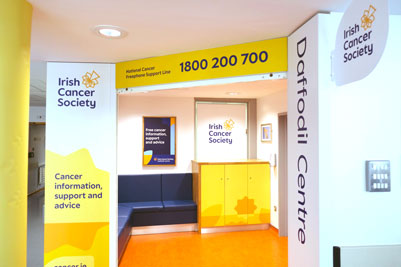
Our Daffodil Centres in 13 hospitals nationwide are staffed by Cancer Nurses and trained volunteers who provide face-to-face advice, support and information for anyone affected by cancer.