Melanoma

Diagnosis and tests

Diagnosing melanoma

Visit your family doctor (GP) first. They will examine your skin carefully. They can then refer you to hospital for more testing by a skin specialist (dermatologist). The testing will include an excision biopsy. 

Excision biopsy (removing the suspicious mole)

A biopsy means taking a sample of cells and looking at them under a microscope. With an excision biopsy, the entire mole or affected tissue is removed and examined in the laboratory. 

  • The doctor who does the surgery is a dermatologist or plastic surgeon
  • The doctor who examines the mole under a microscope is a pathologist.

After melanoma is diagnosed, the pathologist will measure the depth, or thickness, of the cancer to see how deep it is within the layers of your skin. This is called the Breslow thickness. 

Thin melanomas

If the depth of the melanoma is less than 1mm, it is called a thin melanoma and there is an excellent chance that your melanoma will not come back (recur) once it has been treated. 

Thicker melanomas

If the melanoma is thicker than 1mm, there is a chance it could have spread or might come back in the future.

Most people have melanomas that are 1mm thick or less

The pathologist will check:

  • Whether the melanoma has been fully removed. 
  • How fast the cells are dividing (mitotic rate). If the cells are dividing fast there is a greater chance of the cancer spreading. 
  • For breaks in the surface of the melanoma (ulceration) that can only be seen under the microscope.
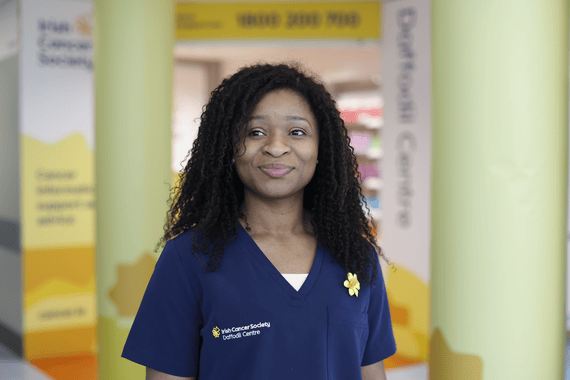
A Daffodil Centre nurse smiles to camera wearing a navy uniform

If you are diagnosed with melanoma, we're here for you. 
Our cancer nurses are here if you need information or just want to talk. They can help you to understand your diagnosis and what to expect, send you information and tell you about our services. 

Further tests

If the biopsy shows that the cancer has or might spread deeper than your skin surface, your doctor may need to do other tests to find out more about the extent or stage of the cancer and your general health. This can help them decide on the right treatment for you. Tests you might have include:

Sentinel lymph node biopsy

This test is to see if cancer cells have spread to lymph nodes close to the melanoma site. This is unlikely to happen if the melanoma is less than 0.8mm thick. If the melanoma cells go deeper than 0.8mm into your skin, your doctor may do a sentinel lymph node biopsy. This involves:

  • Injecting a tiny amount of radioactive liquid or dye into the scar site of the melanoma.
  • A scan to see which lymph nodes have taken up the liquid. The first node to take up the liquid is the sentinel node. 
  • Removing the sentinel lymph node so it can be checked for cancer.

Read more about sentinel lymph node biopsies.

PET scan

A scan to see if there is melanoma elsewhere in your body. Read more about PET scans.

CT scan

A scan that can give a detailed picture of the tissues inside your body. Read more about CT scans.

Ultrasound scan

A scan that uses sound waves to look at collections of lymph
nodes (called basins) and soft tissue. It is done in the X-ray
department of the hospital. The scan is painless and only takes a few minutes. Some gel is first put on the skin, which is then scanned to give more information about the cancer.

MRI scan

A scan that uses magnetic energy to create a picture of the
tissues inside your body. Read more about MRI scans.

Bone scan

Bone scans can sometimes be used to find cancer cells before they show up on an X-ray. Read more about bone scans.


Waiting for test results

While some results may come back quickly, others may take a few weeks. 

Waiting for results can be an anxious time. It may help to talk things over with your doctor or nurse or with a relative or close friend. You can also call our Support Line on 1800 200 700 or visit a Daffodil Centre to speak to a cancer nurse.

What are the stages of melanoma?

Knowing the stage of your cancer is very important, as it helps your doctor to decide the best treatment for you. Melanoma staging looks at:

  • The thickness (depth) of the tumour
  • Whether the tumour has broken the skin. This is called ulceration
  • Whether the tumour has spread to the lymph nodes
  • Whether the tumour has spread to other parts of the body. This is called metastasis

Your doctor often uses this information to give your cancer a number stage – from 1 to 4. A higher number, such as stage 4, means a more advanced cancer.
 

Stages of melanoma

Stage 0: Melanoma in situ 

This is the earliest stage of melanoma. The melanoma cells are only in the top layer of the skin (epidermis).

Melanoma in situ does not usually spread to other parts of the body.

Stage 1-2: Early-stage melanoma

The melanoma cells are found only in the skin. It has not spread to lymph nodes or other organs.

Stage 3: Medium-stage or locally advanced melanoma

The melanoma may have spread to nearby skin or to nearby lymph vessels or nodes.

Stage 4: Metastatic (advanced) melanoma

The cancer has spread to distant parts of your body such as the lung, liver or brain.

Detailed staging of melanoma

Using the general stages 1-4, your doctor may also do a more detailed staging, adding letters (A-C) to the numbers. This will describe the thickness, the spread (if any) and if the skin is ulcerated (broken).

The melanoma is less than 0.8mm thick. The covering layer of skin over the tumour is not broken (not ulcerated).

The melanoma is less than 0.8mm thick and the skin is broken (ulcerated). Or it is between 0.8 and 1mm thick and may be either ulcerated or not ulcerated.

The melanoma is between 1 and 2mm thick and is ulcerated. Or it is between 2 and 4mm and is not ulcerated.

The melanoma is between 2 and 4mm thick and is ulcerated. Or it is thicker than 4mm and is not ulcerated.

The melanoma is thicker than 4mm and is ulcerated.

The melanoma has spread to 1 to 3 lymph nodes near the original tumour. The nodes are not enlarged and the melanoma can only be seen with a microscope. The melanoma can be of any thickness, but it is not ulcerated.

The melanoma can be of any thickness and is ulcerated. It has spread to 1 to 3 lymph nodes near the original tumour. The nodes can be enlarged or not enlarged. 

OR

The melanoma can be of any thickness, but it is not ulcerated. The melanoma has spread to skin or lymph vessels around the original tumour. Nearby lymph nodes do not have melanoma cells.

Stage 3C describes one of the following:

  • The melanoma has spread to 1 to 3 lymph nodes near the original tumour. The nodes are enlarged. The melanoma can be of any thickness and is ulcerated.
  • The melanoma has spread to skin or lymph vessels near the original tumour. The lymph nodes do not contain melanoma. The melanoma can be of any thickness and is ulcerated.
  • The melanoma has spread to 4 or more nearby lymph nodes, or to nearby lymph nodes that are clumped together. The melanoma can be of any thickness and may or may not be ulcerated.
  • The melanoma has spread to skin or lymph vessels around the original tumour and to nearby lymph nodes. The nodes are enlarged because of the melanoma.

The melanoma has spread to other areas of the body, such as the lung, liver or brain.

Knowing the stage of your cancer helps your team to plan the best treatment for you. 

Genetic mutation testing

In certain cases, a pathologist will test the tumour for gene changes (mutations). Each gene mutation makes the cancer act in a different way. Almost half of people diagnosed with melanoma have a mutation in the BRAF gene. 

Knowing which gene mutation affects your tumour helps the doctors to plan the best treatment for you.

We're here to help

Our range of free services are here for you

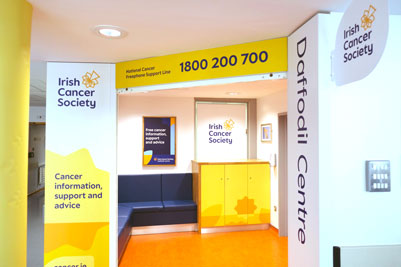
Our Daffodil Centres
Our Daffodil Centres in 13 hospitals nationwide are staffed by Cancer Nurses and trained volunteers who provide face-to-face advice, support and information for anyone affected by cancer
Transport Service
We provide transport and limited financial grants (Travel2Care) for those in need who are in cancer treatment.
Counselling
We fund professional one-to-one counselling for anyone affected by cancer remotely (over the phone/online) or in person in certain cancer support centres around the country.
Eating well and exercise support
Eating well and exercise can help you feel better before, during and after cancer treatment. We can provide information and support on maintaining a healthy diet and being physically active.

Get help & support

Support Line

Support Line

Our Cancer Nurses offer confidential advice, support and information for anyone affected by cancer. Call or email supportline@irishcancer.ie. Video calls available. Mon-Fri: 9am-5pm
Support Line
Free support pack

Free support pack

Receive our free cancer support pack. You will find a number of items ranging from cancer information booklets to services guides to items to help you navigate the experience.
Free support pack