Certain changes in chromosomes can affect how your CLL progresses. Knowing about these changes can help your medical team to decide on the best treatment for you. Examples of chromosome and DNA changes in CLL include:
Chronic lymphocytic leukaemia (CLL)
Diagnosis and tests
Diagnosing CLL
Your family doctor (GP) will talk to you about your symptoms and arrange blood tests, if needed. If your blood test is abnormal you will be referred to hospital for more tests. Some tests can also help your doctor to learn more about your CLL and how it’s responding to treatment. Tests you have may include:
You may have different types of blood tests. For example, a full blood count finds out the different types of blood cells in your blood. This test can also give your doctor an idea of your general health. You will have frequent blood tests if you have CLL.
Chromosomes are structures that contain DNA. These carry genetic information, which tell your body how to grow and develop. Chromosome tests can find out about abnormalities in your chromosomes that are connected to your CLL. For example, parts of chromosomes may be missing or you may have an extra chromosome.
An example of a chromosome test is called FISH analysis (fluorescence in situ hybridisation). Genes are specific parts of DNA. FISH analysis makes abnormal genes glow (fluoresce) so that the doctor can identify the particular type of genetic abnormality. In CLL cells, chromosomes 11, 12, 13 and 17 often have defects. About 3 in every 4 CLL patients have chromosome changes in their CLL cells.
A FISH test can help your doctor to predict how your CLL might respond to a particular treatment, so they can recommend the best option for you.
This test checks what kind of proteins or markers are on the surface of your leukaemia cells. This test can be done on your blood or bone marrow. This is often how CLL is diagnosed.
This uses high-energy rays to take pictures inside your body. It can check for any enlarged lymph glands or to see the state of your general health.
If your glands are enlarged, a biopsy (sample) of the tissue may be taken. However, this test is rarely needed.
It involves a small operation, usually with a local anaesthetic, meaning you will be awake for the procedure.
The gland or part of the gland is removed and sent to a laboratory for tests.
This is a scan that uses sound waves to look at organs and tissues in your body. For example, in your lymph glands or spleen.
This is a special type of X-ray that gives a detailed 3D picture of your lymph glands and organs such as your spleen.
Chromosome changes in CLL
People with only this change often have a type of CLL that develops very slowly and doesn't need any treatment for many years. Between 3 and 5 in every 10 people with CLL will have the del (13q) abnormality.
This change makes the leukaemia more difficult to control. Fewer than 1 in 10 people with CLL have the del (17p) change. If del (17p) is found, a FISH test may be done to see if a gene called TP53 is also missing. This abnormality is associated with a poorer prognosis (outlook), but there are treatments for this type of CLL. It doesn’t respond as well to chemotherapy as some some other types, but there are targeted therapies that work well.
Trisomy 12, also known as tri 12, means that you have an extra copy of the whole of chromosome 12. CLL with trisomy 12 often causes large lymph nodes. Modern targeted treatments often work well for CLL with trisomy 12.
Knowing if the IgVH gene is mutated can help to predict how your CLL will behave. B-cell CLL with mutated IgVH is typically less aggressive (progresses more slowly) than B-cell CLL with unmutated IgVH.
TP53 is one of the most important genes that can be damaged in CLL cells. Between 5% and 10% of people with CLL have mutated TP53 or absent TP53.
If you have CLL with TP53 abnormalities, there is a small chance that the disease may relapse (come back) sooner compared to people without an abnormal gene. However, many of the drugs available today are very effective in treating CLL with abnormal TP53 genes.
If you are diagnosed with chronic lymphocytic leukaemia, we're here for you. Our cancer nurses are here if you need information or just want to talk. They can help you to understand your diagnosis and what to expect, send you information and tell you about our services.
Waiting for test results
It usually takes a few weeks for all the test results to come back. Naturally, this can be an anxious time for you. It may help to talk things over with your doctor or nurse or with a relative or close friend. You can also call our Support Line on 1800 200 700 or visit a Daffodil Centre to speak to one of our cancer nurses.
What are the stages of CLL?
Staging CLL means describing how much the cancer has developed. Knowing the stage helps your doctor to plan your treatment.
There are different ways to stage CLL. The 2 most common are:
The Binet system has three stages: A, B and C. It measures the number of white blood cells and checks if you have anaemia (low red blood cells) or a reduced number of platelets. The Binet staging system also counts the number of areas in your body where you have enlarged lymph nodes. Lymph nodes are mainly found in the neck, armpits, groin, liver and spleen.
- Stage A: There are fewer than 3 areas of enlarged lymph nodes
- Stage B: There are 3 or more areas of enlarged lymph nodes
- Stage C: There are a reduced number of red blood cells, platelets or both.
The Rai system has five stages. The stage is described as 0-4, shown in roman numerals: 0, I, II, III and IV.
Your consultant may use both the Binet and Rai systems, so you will see both a letter and a roman numeral. For example, stage A 0 or C IV.
Knowing the stage of your cancer helps your team to plan the best treatment for you.
Transformation
Rarely, CLL cells can change (transform) into different types of blood cancers, such as Richter's syndrome, a fast-growing cancer of the lymphatic system or prolymphocytic leukaemia (PLL), an aggressive type of blood cancer.
This is rare. If it happens, you may notice a sudden increase in symptoms. For example, fevers, extensive weight loss and swollen glands.
If your CLL transforms into a faster-growing cancer, you will need immediate treatment. You doctor will advise you about your treatment options.
Continue reading about chronic lymphocytic leukaemia
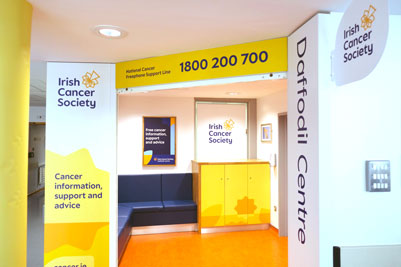
Our Daffodil Centres in 13 hospitals nationwide are staffed by Cancer Nurses and trained volunteers who provide face-to-face advice, support and information for anyone affected by cancer

We provide transport and limited financial grants (Travel2Care) for those in need who are in cancer treatment.

We fund professional one-to-one counselling for anyone affected by cancer remotely (over the phone/online) or in person in certain cancer support centres around the country.

Eating well and exercise can help you feel better before, during and after cancer treatment. We can provide information and support on maintaining a healthy diet and being physically active.
Get help & support

Support Line

Our Cancer Nurses offer confidential advice, support and information for anyone affected by cancer. Call or email supportline@irishcancer.ie. Video calls available. Mon-Fri: 9am-5pm

Free support pack

Receive our free cancer support pack. You will find a number of items ranging from cancer information booklets to services guides to items to help you navigate the experience.