Trish Blake's Brain Cancer Story
My message is: don’t let the prognosis timeline become a deadline in your head.
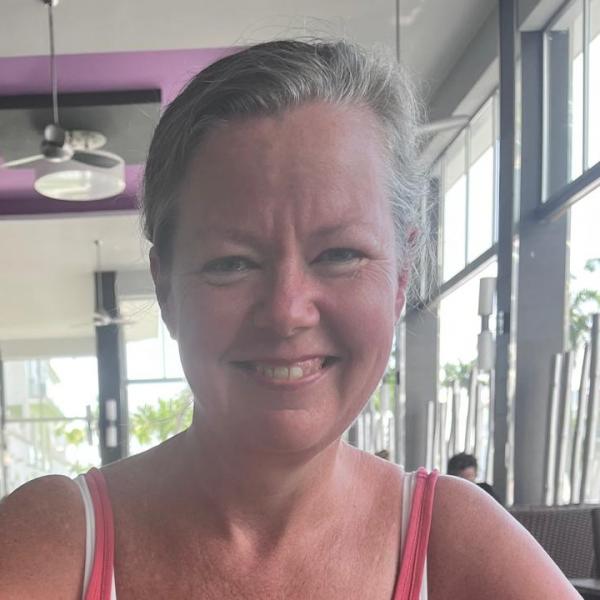
Now aged 52, Trish Blake from Clare was diagnosed with an incurable form of brain cancer in 2023. Told she had approximately 15–18 months to live, Trish is approaching three years living with her cancer this July. “I’m sharing my story because I want people living with advanced cancers to know that life goes on. My message is: don’t let the prognosis timeline become a deadline in your head. You’ll be here until you’re here, and life is there to be lived. Every person’s journey is different, and I know many people are facing challenges far greater than mine, but I’ve learned that it’s what you do with the time you have that matters.”
Back in July 2023, the mother of two was experiencing headaches that gradually worsened. “I had headaches coming and going. Looking back, they must have been on and off for about nine months. When I mentioned them to my doctor, they were just one of many menopausal symptoms I was experiencing at the time. My eyesight also deteriorated very quickly, but I put that down to getting older. My balance was off too. I’d occasionally miss a step going up or down the stairs. You tell yourself, ‘slow down, you’re doing too much.’ You don’t think it’s anything more serious than that.”
Trish, an operations manager in a health and safety company, was at work when she developed a severe headache.
“This was the worst one. I went home sick and I went to the doctor. It was suspected I had a hormonal migraine and I was prescribed medication. After taking the tablet, I went to lie down, but I became very sick. I was vomiting. My children — my daughter was 16 and my son was 14 — were at home with me and they rang the GP. I was told to go straight to the Emergency Department.”
After a period of waiting in University Hospital Limerick’s ED, Trish underwent a series of scans. “By the time I was seen, my headache had eased. That was happening a lot — they would come and go. Nothing showed on the CT scan so I was admitted into hospital. The following morning they did a brain MRI and said they could see a ‘mass’ on my brain. I didn’t really understand what they meant by a mass, but I knew it wasn’t good. They needed to transfer me straight away to the neurological team in Cork University Hospital.”
Once in Cork, Trish was advised by the neurosurgeon that the large mass was almost certainly a brain tumour. “He said there were three options: 1) do nothing, 2) do a biopsy or 3) have immediate surgery. He advised the third option given doing a biopsy would only delay what he knew already, and he had in fact scheduled surgery for the next morning.”
“On 14 July 2023, I underwent brain surgery that lasted around six or seven hours. Following that first surgery, I was formally diagnosed with Glioblastoma, a particularly aggressive brain cancer. I was in good shape after the first surgery, so they wanted to do another operation to try to remove more of the tumour which was over 8 hours long. I ended up having two brain surgeries within four days. After the second one, I experienced side effects. I lost peripheral vision in my left eye and had weakness down my left side. I had quite a few neurological deficits that took a lot of rehabilitation but thankfully they have improved.”
Trish’s medical team were very honest about her prognosis.
“There was no sugar-coating anything. They told me this was a terminal diagnosis. There is no cure and, typically, people have only 15–18 months to live. When somebody delivers that news to you, it changes everything. It felt like I’d been transported into another world. A week earlier I was in work, and suddenly this news is dropped into your life.”
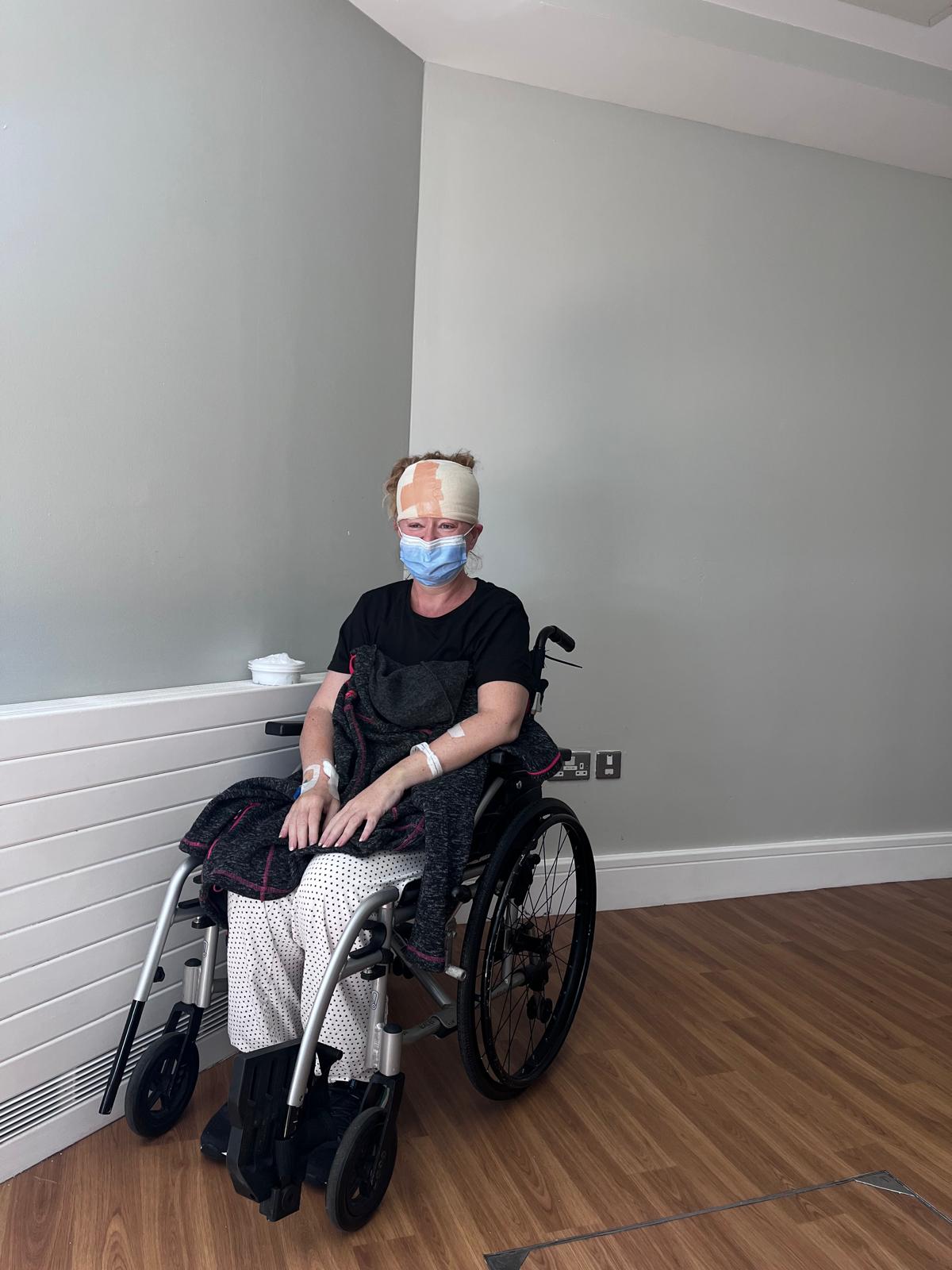
“My husband, Gearóid, works as a Senior Fire Officer with the Local Authority Fire Service. He is used to dealing with crisis situations and delivering difficult news. But it’s completely different when it’s your own family. As the patient, you go through the rigours of treatment, but your heart also breaks for the people who love you and have to watch on. I’m incredibly grateful to the medical staff in Cork University Hospital, my Neurological Surgeon Mr Mazhar Iqbal and his team. My Consultant Oncologist Dr Roshni Kalachand and my Radiotherapy Consultant Dr Mazen El Bassiouni both in the Mater Private/Mid Western Radiation Oncology Centre Limerick. And to everyone who has stood beside me every step of the way.”
Following a period of recovery after surgery, Trish began radiotherapy in September, followed by chemotherapy. “The chemotherapy was manageable, but radiotherapy was the hardest part of the treatments for me. I remember being measured for the protective mask I had to wear during every session. Putting that mask on every day for six weeks straight was very tough. Losing my hair was also such a difficult thing to accept.”
“When your chemotherapy and radiotherapy end, you can have a real ‘what now?’ moment. Everyone else’s lives seem to return to normal, but yours never quite does. You can find yourself feeling very alone. During that initial post-treatment period, I found the adjustment incredibly hard. The world as I knew it had been taken from under me in a matter of months, and suddenly I was expected to carry on. You lose your sense of purpose. I found myself wondering who I even was anymore.”
With time, Trish reached out to her local cancer support centre in Clare and began accessing support services. “Initially, I reached out to University Hospital Limerick’s counselling support service, but the building where the counselling took place was right beside oncology. I just couldn’t bring myself to go back there. It was just too triggering. “By the end of 2024 and into 2025, I decided to contact my local cancer support centre. Mary and the team of volunteers are just wonderful. I dropped in to see what they offered and, over time, I availed of counselling, and most importantly, the support of other people affected by cancer.
“There’s something very special about the cancer community. Sometimes one look is enough. People understand when it’s not a good day. They don’t need an explanation. They just get it. I am a reflexologist practitioner for over 20 years a meditation teacher and a mental health and wellness instructor, so I was comfortable seeking out complimentary treatment. Meditation has been my to go to in dealing with the fear and anxiety that builds with a cancer diagnosis. Cancer centres are all across Ireland and, for anyone facing a diagnosis, I’d encourage them to reach out when they feel ready.”
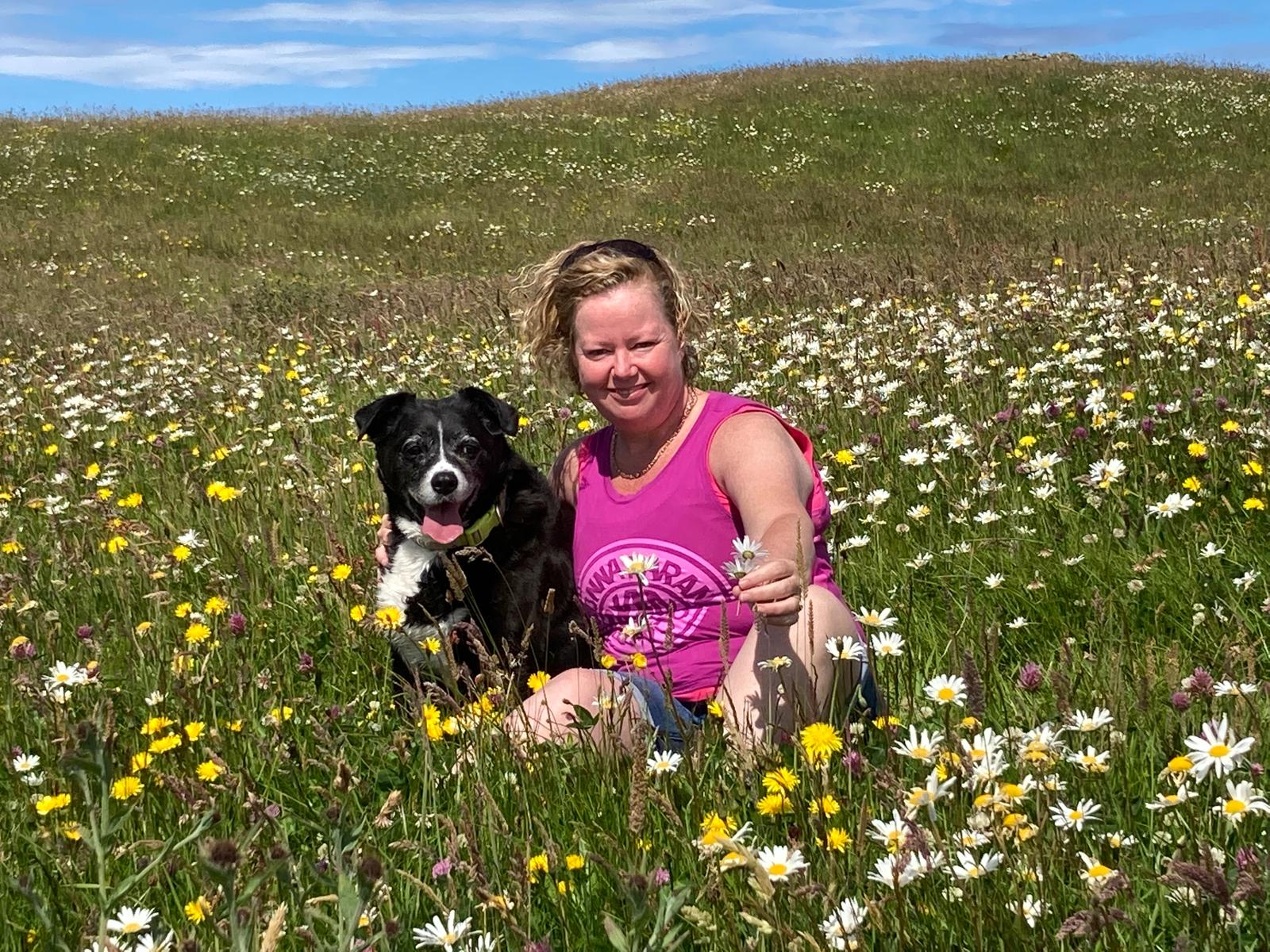
Trish is sharing her story to raise awareness about living with brain cancer. “When I was first diagnosed, the medical team gave me the facts, and that’s important. They also told me to stay off Google. Of course, I didn’t listen. But eventually I had to put the phone down because once you go down that rabbit hole, it can consume you. That’s no way to live.”
“I live in the here and now. I live every day knowing I have terminal brain cancer. I get Brain scans every three months and have up to three weeks then of waiting for my results which impacts on my mental health. I don’t tend to plan much further ahead than that because none of us really know what lies ahead.
“Since my diagnosis, so much has happened and I’ve been here to be part of it. My daughter has just completed her first year of college. My son is in his leaving cert year. I’ve attended the weddings of nieces and nephews. Four new babies have joined our family. It’s not that you forget about your cancer, because you don’t. And I know many people are living with illness, loss and uncertainty every single day. Some days are harder than others. But I’ve learned the importance of gratitude — of appreciating the moments that are in front of you, no matter how ordinary they may seem.
“My cancer is part of my story, but it doesn’t define who I am. I try to live each day with purpose, gratitude and hope, making the most of the time I have. If just one person facing a brain cancer diagnosis, or any serious illness, can take some comfort or positivity from my story, then sharing it will have been worth it.”