Séamus' Story
“If you’re experiencing persistent headaches that get worse, raise the possibility of a brain tumour with your GP. It absolutely never occurred to me that my symptoms could have been brain cancer.”
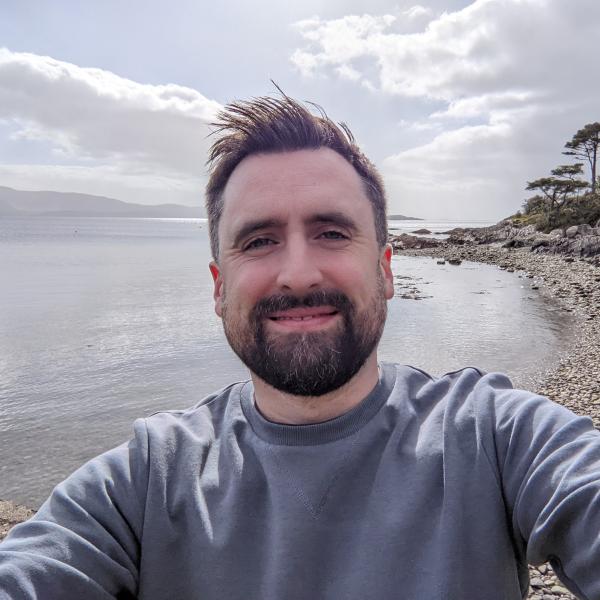
Séamus Conaty, 36, who lives in Dublin and is originally from Monaghan, started getting headaches in the summer of 2023. He initially put this down to being a new parent, as his son was born that June, and he was also working in a stressful job.
“On the August bank holiday, I had the first headache that was so bad it actually stopped me in my tracks,” says Séamus. “I’d gone to my GP about it, who initially thought my symptoms were most likely linked to my heart, as I was also experiencing low blood pressure and dizzy spells when I stood up.”
However, on Christmas Day 2023, before he received the results of tests on his heart, things took a turn. Séamus woke up earlier than usual as he felt unwell. This worsened throughout the day, and later lead to a diagnosis that would turn his world upside-down.
“That morning I had a headache that kept getting worse, and this was quickly followed by nausea, vomiting and a numbness down my left side.”
It was far from the jolly first Christmas with his newborn that Séamus had anticipated. A brain MRI later that day identified a tumour in the right frontal lobe and that night he was on the operating table in Beaumont Hospital, to undergo an emergency brain surgery.
“In the waiting room the surgeon’s registrar told my wife and my parents that they had three aims for the surgery. The first was to remove as much of the tumour as possible, the second was to preserve as much of my functioning as possible, and the third and most critical aim, was to save my life. It really drove home the severity of the situation and what was at stake.”
After the surgery, Séamus was placed in an induced coma for over 24 hours. Several days later, he received his full diagnosis, a high-grade astrocytoma.
Séamus recalls being shocked by his diagnosis. He says: “It’s not really something that you can ever come to terms with, cancer was certainly not on my radar at 34-years-old. There are a lot of new terms and phrases in my world now, but I knew the word ‘malignant’ when I was told the pathology results, and it shook me right to my core.”
The next stage of his treatment was concurrent radiotherapy and chemotherapy for 6 weeks followed by 6 months of chemotherapy, the standard of care. His chemotherapy was extended by 6 months, as he tolerated it well, so he did a full year of chemotherapy altogether. The treatment had its side effects, such as a reduced appetite on chemo weeks and an intense fatigue that continues to this day.
However, Séamus says the impact of his diagnosis on his mental health and his family has been particularly difficult.
“The most severe impact of the diagnosis is the mental toll and strain it has on both myself and my family. The suddenness of my severe symptoms and immediate brain surgery was truly traumatic, the burden of living with this diagnosis can’t really be expressed in words that do it justice. The future as a family we had planned is now unrecognisable.”
Following treatment, he goes for brain MRI scans every three months and will continue to do so for the rest of his life, essentially living scan to scan.
“The anxiety of my diagnosis is with me daily but is certainly amplified leading up to scan days. When I’m waiting for results, often for two or three weeks, this anxiety is turned all the way up, ‘scanxiety’ as it’s called. My first post-treatment scan realised those fears, when it identified a new area of concern.”
Séamus was treated for something called radiation necrosis, essentially damage to brain tissue resulting from his radiation treatment.
His scans have since been stable.
“A stable scan is the best result we can hope for,” he says. “But even after receiving stable results, the heightened anxiety doesn’t disappear instantly. It takes weeks to come down.”
Despite living with this dark cloud over his head and weight on his shoulders, Séamus strives to continue to live an active life. “Getting out into nature and going for walks is an essential part of my routine, it helps me both physically and mentally.”
His diagnosis also stripped him of an important element of his independence, his ability to drive.
“I can’t drive for two years post treatment, which was a massive adjustment. I was not used to being a passenger and I’m not a very good one either. Needing lifts to any appointments or activities makes me feel like a burden, even if people are very willing to offer.”
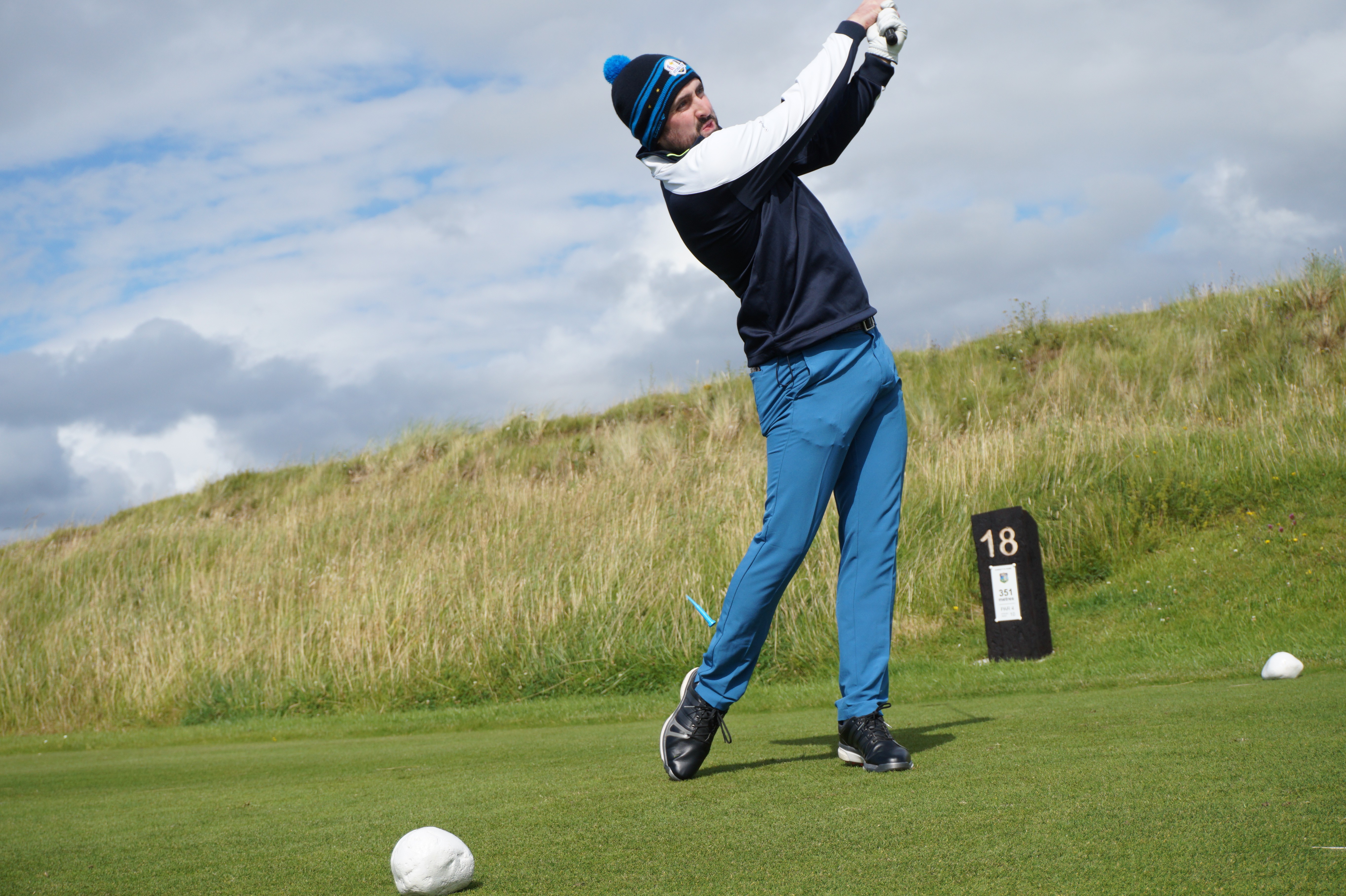
Today he does yoga, goes to the gym, plays golf, and is training to be a breathwork instructor. He is involved with Cancer Trials Ireland and is their first brain tumour patient on their Public and Patient Involvement (PPI) group. He also writes about his experience of brain cancer on his Substack blog, Stoney Grey Matter. He finds this therapeutic and helps to let others know what he is going through.
Reflecting on the difficulties of living with cancer, Séamus says: “My wife and I are often ‘putting a face on’ when we meet people, and that can be very challenging and tiring. It’s a real effort. I think people don’t realise the magnitude of the impact something like this has, the fact that this is our real life now.”
Reflecting on his experience, Séamus says: “The diagnosis set off a bomb in our lives. We had just had our first baby, we’d only been married for two years, and ‘in sickness and in health’ happened far sooner than we expected. It’s something that hits you every morning when you wake up but, thankfully, I’m stable right now.
“It’s incredibly frustrating to have a cancer type that has had such a dearth of treatment innovation. My hope is that some amazing cancer researchers will make a breakthrough and that I will be around to avail of the cure.”