Martin's Testicular And Prostate Cancer Story
“Sharing my story shows the importance of the early detection of cancer, and I hope that it means if any of the people I’ve shared my story with find a lump, that they’ll get it checked.”
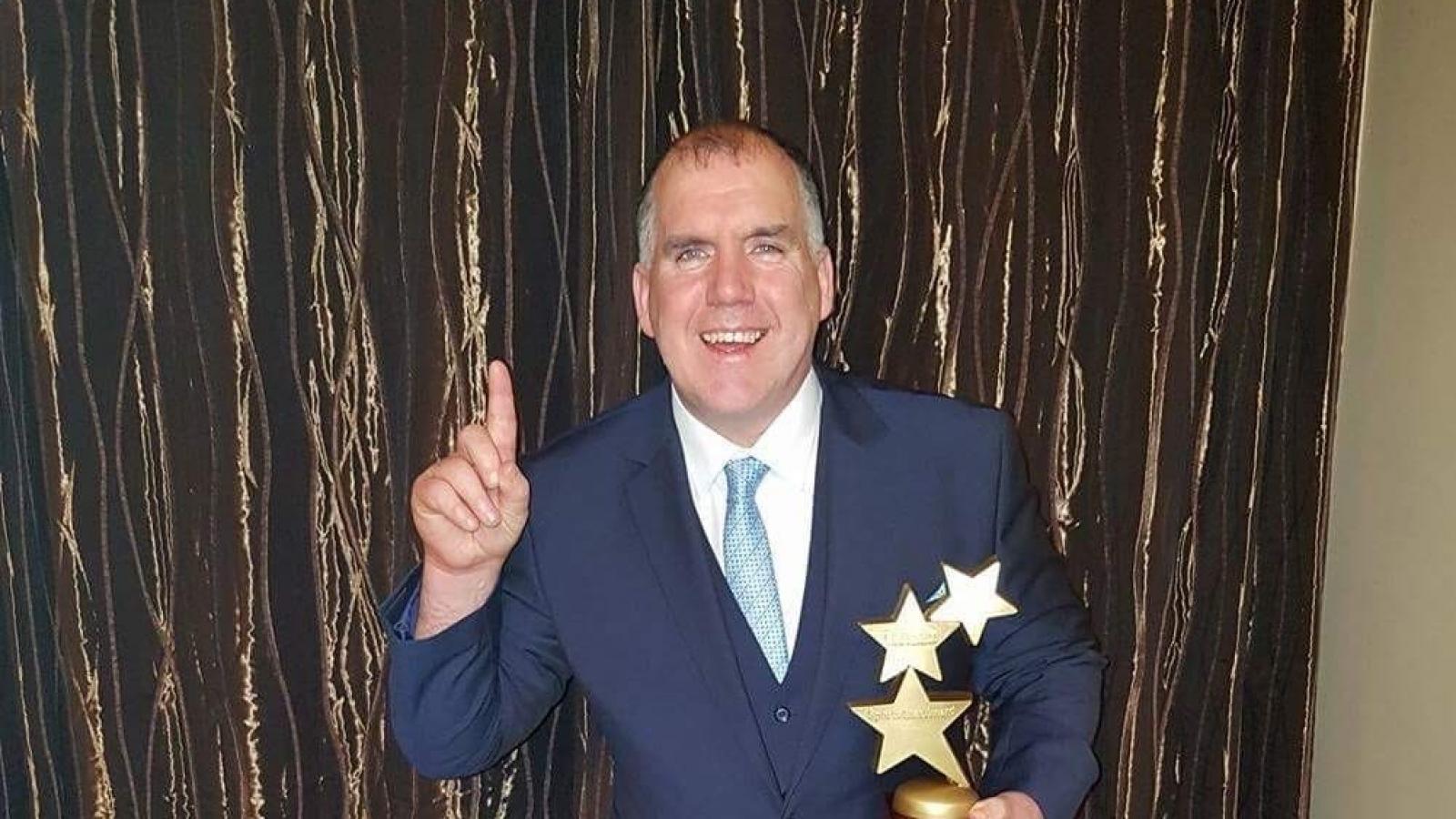
Martin McHugh, 55, who lives in Sligo, is a celebrated GAA player in his home county of Leitrim as he was part of the team who won the 1994 Connacht Senior Football Championship. A skilled goalkeeper and coach, Martin was doing well and feeling fit in 2009, when he found a lump in his testicle and went to his GP.
“I played football, I was healthy, I had no aches or pains,” says Martin. “My GP referred me to hospital, and then I had surgery to remove the lump, which they did a biopsy on.
“When the doctor told me I had testicular cancer, my whole world fell apart. I ended up having the testicle removed and then I had three months of chemo.
“My diagnosis came completely out of nowhere. I don’t drink, I don’t smoke, I was fit and active. When you’re diagnosed with cancer, it stops you dead on your feet and your head starts spinning – you’re thinking, will I survive this? Will I die?”
Martin’s treatment included a strong course of chemotherapy. He was feeling low and withdrawn when he was going through treatment, until the familiar feeling of being on a football pitch gave him a sense of hope.
“I got a call from the manager of a football club in Cavan. We were just talking and then I asked him why he was ringing me, but he wouldn’t answer the question. Then he mentioned training was on that night, and suddenly I had a pep in my step – I told him I would be there and I would go to training that night."
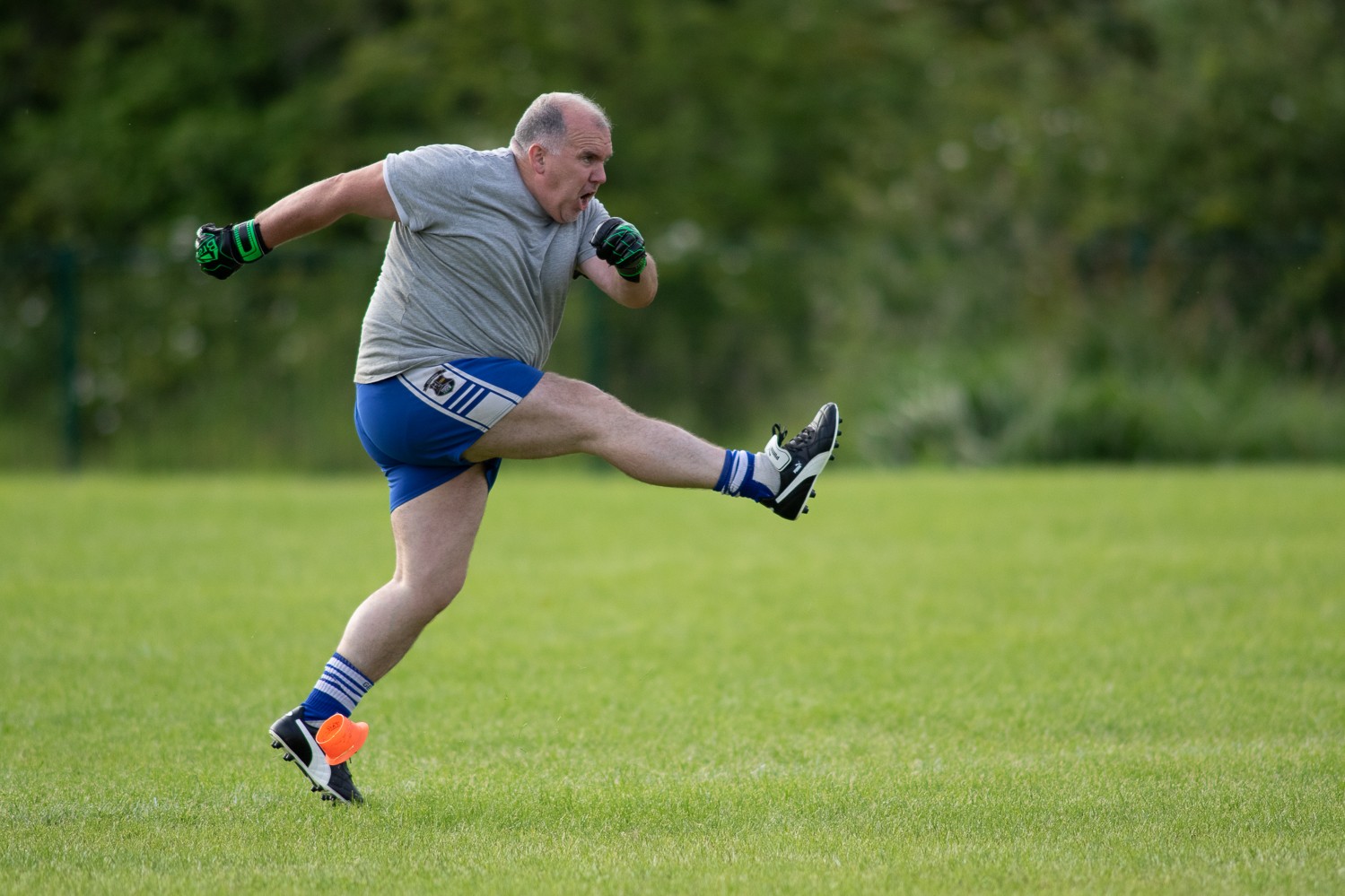
“It took me a while to get there from my home at the time in Sligo and I knew I’d need to stop along the way to be sick because of the chemo. But when I arrived at the pitch in Cavan, togged out and then ran onto the field, I felt like a new man. After training, I headed home and fell onto the couch and lights out. I was so tired and I didn’t wake till nine the following morning.”
The next day, Martin was feeling uplifted after being on the pitch in Cavan. He decided to go along to training in his local club, Clonguish GAA Club in Longford, and enjoyed being around his teammates again. Shortly after this, Clonguish were playing an important match that Martin was too ill to play in – but it didn’t dampen his determination for the team to win.
“It wasn’t going well,” he recalls. “Halfway through the match, we were in the dressing room, and I stood up and my language was bad, I was saying ‘F this’ and ‘F that’. I told them to give it their all for the last 30 minutes of the match, I told them to make it the game of their lives – because that’s what I would’ve been doing, if I was able.
“They went back out, they played incredibly. They won the Longford Senior Championship and got the Connolly Cup. Paul Barden asked me to lift the cup with him.
“It was killing me that I wasn’t able to play in the match, but to be able to lift the cup with the legend that was Paul Barden, with the home supporters in front and my teammates behind me, suddenly I wasn’t thinking of cancer or chemo anymore. In that moment, I knew that I had it in me to beat cancer.
“There were times where I felt so sick, and so tired, but when you have something to do – like being a part of a team – it really helps, and it’s really important that you stay involved in it.”
After Martin recovered from testicular cancer, he wasn’t able to go back to work as a painter, as the chemo he was treated with had worn him out. Instead, he retrained in healthcare and qualified as a health care assistant (HCA) in 2015. When he applied for a HCA role through a healthcare agency they told him he’d have to undergo a medical.
“I got my bloods done for the medical check so I could work in the hospital,” says the father-of-two. “I had no aches or pains at the time, I was back playing football and feeling good. But when they did my bloods, they said my PSA was up, it was 2.2. So they did the test again, two more times, and the number kept going up.
“I was sent to Galway for it to be checked. The doctor said my prostate was slightly swollen, so he did a biopsy. Then after a few weeks I got a phone call from University Hospital Galway asking me to come in.
“The first time I had cancer, I went to appointments on my own, but this time around I decided I’d always have someone with me. I brought my partner Linda with me. I was told I had prostate cancer, and then I was in a world of my own, but Linda took it all in.
“The doctor said I had prostate cancer, but it had been caught early and I had treatment options: radiotherapy, brachytherapy or robotic surgery.”
Initially, Martin didn’t consider surgery as it would’ve meant a longer recovery and time away from the GAA pitch. Ultimately, he chose robotic surgery at the last minute after being encouraged to do so by his oncologist and other doctors he knew.
“My prostate was removed around early 2016, then my PSA went from 6 or 7 to 0.00. It was caught early, so the only treatment I needed was the robotic surgery.
“Getting your prostate removed is very hard on a man. You have a lot of side effects, like erectile dysfunction, and I had incontinence for a while after the procedure. But if you do pelvic floor exercises several times a day, your muscles will tighten up and your incontinence will improve."
“It took a good three or four months for that to happen to me, I had to wear pads to hold my pee. But because I did those exercises, my urine is flowing normally now, but if I have to go to the toilet, I had to go urgently now – I can’t hold it for too long. But, for me now, that’s just become a part of normal everyday life.”
After a chance meeting with a teacher from his old secondary school, Martin now gives talks in local secondary schools about the importance of checking for lumps and getting your PSA tested.
“I talk to the students about testicular cancer, and I tell them that if they find any lumps it’s very important to get them checked out. And then I talk to them about prostate cancer and PSA levels, which I know doesn’t apply to them at that age, but I tell them to talk to their uncles or dads about it and the importance of getting their PSA checked.”
Martin, who now gets yearly checks which have all come back clear and has written an autobiography called ‘Born to Save’, says his experience of being diagnosed with cancer twice has given him a different outlook on life.
“Since having cancer for a second time, I enjoy life a lot more,” he says. “I like my job working as a HCA in the hospital in Sligo, and every day that I can get up and out of bed is a good day for me.”