Margaret's Story
“I initially felt a thickening in my breast - not a specific lump, just a thickening.”
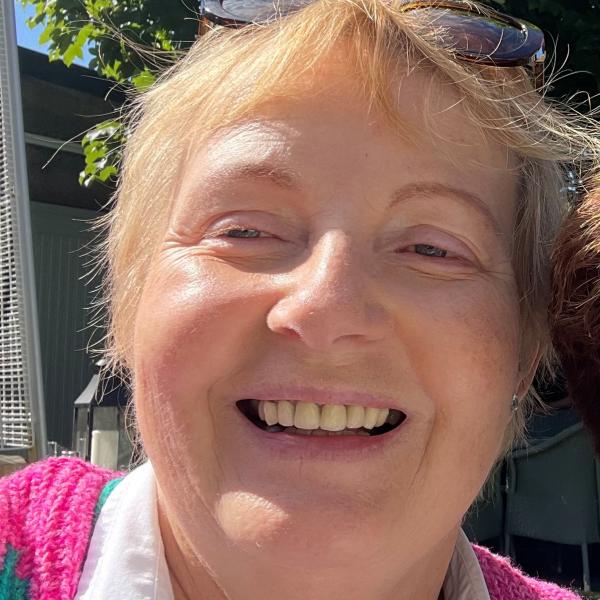
Margaret Cusack, 64, from Co. Waterford, noticed a thickening in her breast in November 2011, just before her 50th birthday. She contacted BreastCheck to arrange a screening mammogram and received a negative report, much to her relief.
She had commenced HRT for perimenopausal symptoms in May 2011 through a specialist women’s clinic in Dublin, and was reviewed in October 2011. On both occasions a breast examination was performed. Margaret says two different doctors noted that there was a “breast lump which was of no significance”.
Having had the reassurance of the two doctors and a clear mammogram, Margaret “happily put the whole issue out of my head and got on with life”.
In May 2012, she developed pain in her right breast and noted that this breast seemed significantly larger than the left. She decided to consult her regular GP, though a little concerned that she was “making a fuss”.
The GP acted immediately securing an urgent appointment in Cork University Hospital Breast Unit. On the second mammogram, there again was no evidence of breast cancer however following ultrasound, biopsy and MRI, she was diagnosed with stage three invasive lobular breast cancer.
She was not at all surprised, pragmatic about the required treatment but worried about her teenage son. She had a full mastectomy, followed by chemotherapy, radiotherapy and breast reconstruction. Tamoxifen was also prescribed for the following ten years.
However after eight years, she discontinued Tamoxifen due to increased severity of the side effects.
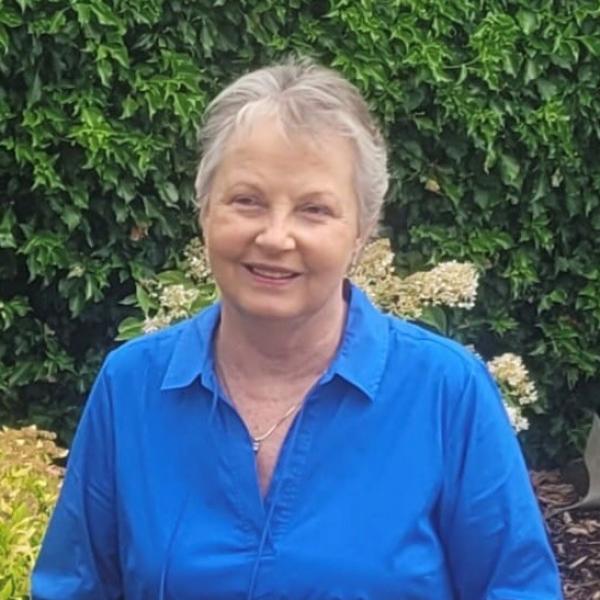
Following completion of her hospital treatment she availed of various supports provided by Solas, the local cancer support service to help her deal with the post chemotherapy side effects, particularly memory issues and fatigue.
Other close family members were subsequently diagnosed with various forms of cancer and they found that the Daffodil Centre in their treating hospital was an invaluable source of information and support.
She returned to work as a lecturer on a part-time basis in 2015 but “found it extremely difficult to retain information and was exhausted from the level of concentration required”, thus felt compelled to take early retirement in 2016. Margaret found this transition from work life to retirement to be quite challenging.
Margaret’s health continued to be monitored, having regular consultant visits, MRIs and mammograms. In early 2023, a friend commented on her lack of energy and at that time she was also experiencing intermittent stomach pain.
With encouragement, she arranged to have a gastroscopy and colonoscopy. It was initially reported that all was well and she was advised to continue on her current medications.
However, when the biopsy results were returned, Margaret received a preliminary diagnosis of a rare form of stomach cancer and was referred for further investigation. It was subsequently determined that she had stage four invasive lobular breast cancer which had metastasised to the lining of the stomach and the peritoneal cavity.
While Margaret was aware of the possibility that breast cancer could metastasise to the bones, brain, liver and lungs, she did not know that lobular cancer can also spread to unique sites such as the gastrointestinal tract or gynaecological organs.
She commenced both hormone therapy and targeted therapy in July 2023 .The targeted therapy drug was changed in August 2024 due to side effects and the new drug regime continued until July 2025 when it was determined following further biopsies, that the spread of the cancer was not being adequately controlled and that chemotherapy was now required.
Due to the growth pattern of lobular cancer it can also be difficult to detect the extent of the cancer on CT scans, however at this point, there was one clearly visible one centimetre tumour near the kidney and based on this tumour alone, it was decided that Margaret might be eligible for a clinical trial which was being conducted at the hospital where she was receiving treatment.
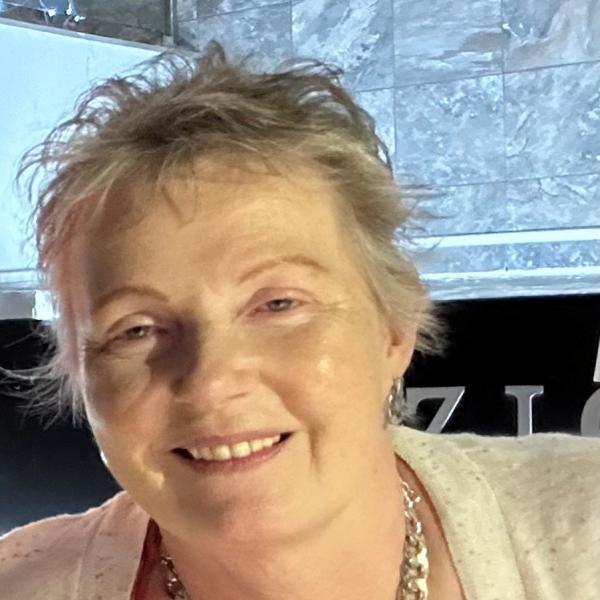
Margaret's oncologist gave her an outline and preliminary information relating to the trial and she agreed to think about it and discuss it with her family. She subsequently met with the two clinical trial nurses and was given the initial patient consent form to study.
Following this, Margaret read extensively about what to expect on the clinical trial, the trial drugs and their potential side effects and the current standard of care. She considered whether the trial drugs might improve her progression-free survival more than the standard of care.
“The substantially increased level of patient care and monitoring, and the fact that I could withdraw from the trial at any time, were significant factors in my final decision to join the clinical trial.”
Margaret met with the clinical trial team again, who answered all her questions and provided the reassurance around the trial that she needed before signing the initial patient consent form. Blood samples and various scans were taken and over the next few weeks, it was agreed that she was a suitable patient for this cancer trial.
During this time, she met on a number of occasions with the clinical trial nurses whose kindness, understanding and patience were exceptional. The final trial consent form was signed and Margaret received her first treatment in September 2025.
The trial schedule involved attending the hospital on a fortnightly basis for an infusion of the trial chemotherapy drug, in addition to an infusion of an immunotherapy drug every six weeks. Both of these treatments have side effects. As side effects arise, the trial team do everything in their power to mitigate them.
“There is always someone available at the other end of the phone to advise and reassure me," says Margaret.
Since commencing the trial, CT scans are taken every nine weeks and bone scans as required. The one-centimetre tumour, which was the initial target of the trial, has disappeared.
Margaret is continuing on the trial and is “very happy to be on it while knowing that she can withdraw anytime”. She is also conscious that the outcome of this trial may be of benefit to future breast cancer patients.
She would encourage all patients, either early or late stage, to consider appropriate cancer trials. Her experience of the entire trial process has been hugely positive, particularly as regards the level of monitoring and support from the trial staff.
“While the trial may have been daunting initially, the care, support and advice from the trial team has been second to none.”