Elizabeth's Story
“When I got the diagnosis, I didn’t believe it – there was no history of breast cancer in my family. I was sure they’d made a mistake.”
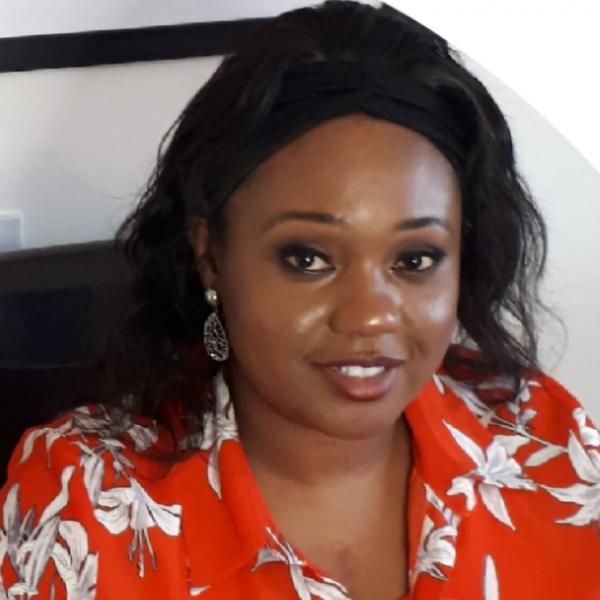
“When I got the diagnosis, I didn’t believe it – there was no history of breast cancer in my family. I was sure they’d made a mistake.”
Elizabeth Osagie-Alli, who is in her 50s and from Cork, found a hard lump in her right breast just before Christmas 2021.
“I had something similar ten years before when I was breastfeeding my son, but I wasn’t breastfeeding anymore, so I knew it wasn’t the same thing,” says Elizabeth, who works as an instructor in adult education.
“I waited until January 2022 to get it checked, because the lead-up to Christmas was so busy. I went for a mammogram, but then I kept having to go for more and more tests. I had a biopsy and some scans. I thought it was weird that they were doing all of those tests, but I never thought I would be diagnosed with cancer.”
In February 2022, Elizabeth was diagnosed with triple negative breast cancer. The news came as a shock to her, and she was worried how it would be received within her community.
“I was scared of what people in my community would say when I told them I had cancer, that they would assume that I’d die,” says mother-of-three Elizabeth. “Cancer can be a taboo subject in some communities."
"I want people to know that cancer isn’t their fault, and you can still live well after a cancer diagnosis. Cancer shouldn’t be taboo, it’s not your fault, you didn’t do anything wrong, and not all cancers are genetic."
“And being diagnosed with any cancer is a lonely place to be, it doesn’t matter if it’s a common or a rare cancer you’re diagnosed with. In the midst of that lonely place, you need to remember there are helping hands – your family, your friends, your oncology team, and cancer support services.”
After her diagnosis, Elizabeth’s treatment consisted of chemotherapy, surgery and radiotherapy. She balanced going through chemotherapy with working on assignments and writing a 25,000-word thesis to earn a master’s degree in social policy.
“When I was going through chemo, I completed my master’s degree in social policy in UCC,” says Elizabeth. “I wanted to tell cancer it could take my hair, it could make me tired, it could slow me down, but it couldn’t touch my master’s – I was determined to do it, and I did.”
After finishing radiotherapy, Elizabeth had to go for another course of chemotherapy.
“After surgery and radiotherapy, I thought I’d be done,” she says, “but after radiotherapy they took out some of my lymph nodes and they found it had spread to them, so I had to have more chemo."
“After it all, I’m really glad I decided to go for treatment. It was the best decision I could’ve made. I’m so glad I took that step – that’s why I’m still alive today.”
Since her cancer experience, Elizabeth has gone on to be a PPI (Public and Patient Involvement) Contributor in the Irish Cancer Society and is also an Ambassador for Iris House Cork Cancer Support Centre.
She still feels the effects of having gone through cancer treatment. “There are up and down days,” she says. “There are days where I feel like I can fly across the world, and other days where I feel like I just need to sit down and rest.”
Elizebeth is sharing her experience to raise awareness of breast cancer, and to encourage people to get any changes checked by their GP.
“If you notice any lumps or thickening in your breast, go to your GP and get it checked straight away. Don’t assume you know what’s caused it – don’t take the risk of minimising what it could be.”
Alongside raising awareness of the signs and symptoms of breast cancer, Elizabeth is also determined to break the stigma around cancer that she has encountered.
“For people from ethnic minority groups in Ireland, it’s time to start having meaningful conversations about breast cancer,” she says. “Let’s end the taboo and stigma attached to a cancer diagnosis, to ensure that more women feel safe enough to get their mammograms and to get treatment when necessary. Fear and stigma can delay lifesaving care.”