Eileen's Story
"There’s a fear of cancer and fear of talking about it, among those with no experience of it. I felt the difference between those who had gone through it versus those not able to talk about it.”
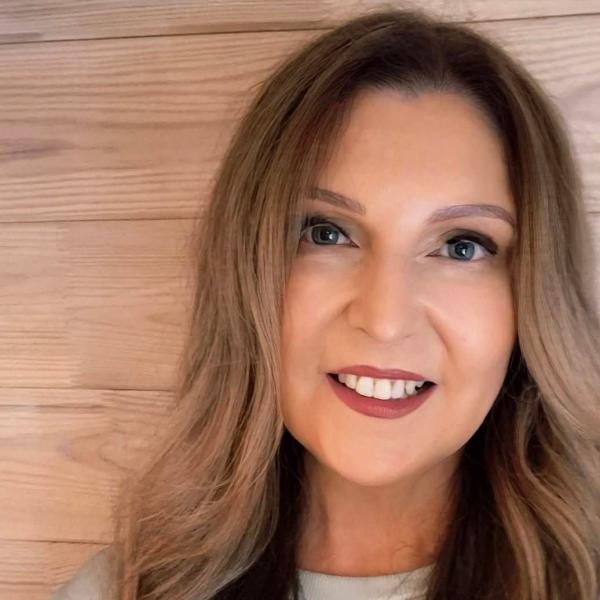
Eileen Higgins, from Athy, Kildare, put her tiredness down to being a busy mum of five. On top of that, at the time, she had only recently weaned her youngest off breastfeeding.
“I would quite literally collapse on the sofa and fall asleep in the afternoons, exhausted,” she said, but dismissed it as the “beautiful chaos of life”.
She was reluctant to go to the GP. “At the time I thought, what would I even say to my GP? I didn’t have specific pains or anything. I just wasn’t feeling well in myself.”
Eileen then noticed concerning changes on her left breast including severe swelling. The pores on her breast skin had become highly visible and stretched out by an internal pressure. The area felt hot to touch compared to surrounding area and there was some nipple retraction. Eileen could also feel a firm lump beneath the skin. The changes occurred in a very short time but after months of having fatigue first. Eileen remembers that these changes appeared over a period of around 4 weeks.
She arranged an appointment with her GP, who immediately organised a further appointment for Eileen in St James’s Hospital.
At the hospital, Eileen returned her risk-factor checklist blank. She said she felt like an imposter in the clinic. While there, she had tests including an ultrasound followed by a biopsy.
Upon getting the results of the biopsy, the consultant told her the outcome. "I’m very sorry," he said, "but you have cancer."
In that moment Eileen blurted, "But I just had my hair done." This broke the tension in the room, and the consultant reassured her that her hair would grow back. However this was the beginning of a very tough cancer journey for Eileen.
She had a 10x11cm tumour and Stage IIIC Inflammatory Breast Cancer (IBC) - which was characterised as aggressive, rare and high-risk. Eileen had months of chemotherapy, a mastectomy, targeted treatment and 28 sessions of radiation.
As part of her treatment, Eileen agreed to participate in a trial. Unfortunately the drug, while targeting her cancer, caused Eileen to become extremely ill. Bacteria entered her bloodstream, resulting in a haemorrhage. “I was in ICU containment and it was life or death,” she explained.
Thankfully, Eileen recovered and her treatment was amended. She recounted a very negative experience that she had with her consultant, who had, she describes, no bedside manner.
Alongside the hardship of treatment and the toll on her body, Eileen had to deal with childcare problems as she attended her treatments, and financial implications.
Eileen’s son Hayden was just two years old at the time. Eileen said the local creche, Tír na nÓg in Athy, was a lifeline during this incredibly difficult time.
“Kathleen, proprietor of the crèche, provided incredible support. Extra hours in the crèche were covered by the community welfare officer. Kathleen organised school pick up for my 2 year old son’s siblings, aged 7 years and 12 years so they would be able to eat dinner together. It meant so much that they could eat together, it brought some sense of normality to their lives. It might be 7pm when I got home after having my treatment. It meant they could stay close and connected and try to mitigate the absence of their mum.”
“I often wouldn’t be able to hug or kiss to say goodbye or goodnight. We had to wave goodbye instead. It was really important to make it seem normal and not sad for my kids, especially Hayden.”
Eileen also applied for the Irish Cancer Society Travel2Care grant which helped her to attend her treatments.
She also attended Hope, the Cuisle cancer support in Portlaoise. “Being around people who were at different stages of their treatment was helpful,” she said. “You’re very housebound while you’re in treatment and immunocompromised. But others being in the same boat can validate you. There’s a fear of cancer and fear of talking about it, among those with no experience of it. I felt the difference between those who had gone through it versus those not able to talk about it.”
Eileen’s cancer was triple-positive (HR+/HER2+), and she noted that HER2+ recurrences often peak around the 20-month mark.
“The "HR+" part of my diagnosis means the risk is a long-distance runner,” said Eileen. Unlike hormone-negative cancers, HR+ disease is uniquely prone to "late" recurrence, sometimes waking from dormancy ten or twenty years down the line.
“My history of,” Eileen said, “a massive 10x11cm tumour and nodal involvement, places me in a category where the 20-year risk remains a factor. To push back against those odds, I lean into the protocols of survival: exercise, health, and protecting my peace with fierce intentionality.”
“I have been in remission for twelve years now. Every year is a hard-won victory, but I worry about the statistic. For those of us with Stage IIIC IBC, the risk of recurrence is a persistent reality, hovering around 50% due to the cancer's aggressive biology.”
Twelve years on, Eileen’s hair did indeed grow back. “I didn't just return to the life I had; I built a new one. In 2025, I traded the patient gown for a doctoral hood, graduating with a Ph.D. in Clinical Psychology.
“I am here, living with the physical 'souvenirs' of all that treatment: Chemotherapy-induced peripheral neuropathy (CIPN), and surgery-induced neuropathy, along with radiation-induced pulmonary fibrosis, but still moving forward, ever-conscious that while the shadow remains, every sunrise is another year claimed.”