Dennis Hogan's Non-Hodgkin Lymphoma Story
“Nothing can prepare you for it. You never think it’s going to be you or your family that would get a cancer diagnosis.”

In October 2022, Dennis Hogan, 66, from Ennistymon, Co. Clare, noticed what he thought was his tonsils swelling up. He went to his GP, who prescribed antibiotics and steroids. “The medication masked my symptoms, and when I finished the round of antibiotics and steroids, the swelling returned,” he says.
“I went back in to see my doctor. She saved my life. She wrote a letter and told me to be at the hospital in Limerick for 8am, and we were there, 3 days before Christmas.”
Dennis was diagnosed with Non-Hodgkin lymphoma in December 2022.
"When they told me the news, I had to get out of the room and walk around the hospital a couple of times. 'Cancer’ isn’t a word anybody wants to hear. I was in a state of shock."
“They went on to discuss treatment options, but I didn’t hear that the chemo would help me. In my mind, I had almost given up already. I needed a mindset shift if I was going to get through this."
“I was moved for a CT scan, and while in the waiting area, this lady about 88-years old looked at me, and after asking how I was, she asked: ‘What are you so grumpy about?’ I told her I just had been diagnosed with cancer. She lifted her wig off her head and said she was cancer free for the last three weeks. ‘You can get through this no problem,’ she told me.”
In January, Dennis started 8 rounds of chemotherapy. “My biggest fear in the world was needles, and they kept sticking needles in me,” he says. His treatment went on through June 2023, when he was told that he was cancer free.
Dennis went in for his three-month review in September 2023 and found out that the cancer had returned, and it was more aggressive than the first time. His doctors checked haematology levels, and Dennis was brought for tests, scans, and an MRI. His doctor told him: “It wasn’t a new cancer; it was the same cancer as last time. This time, we’ll get rid of it.”
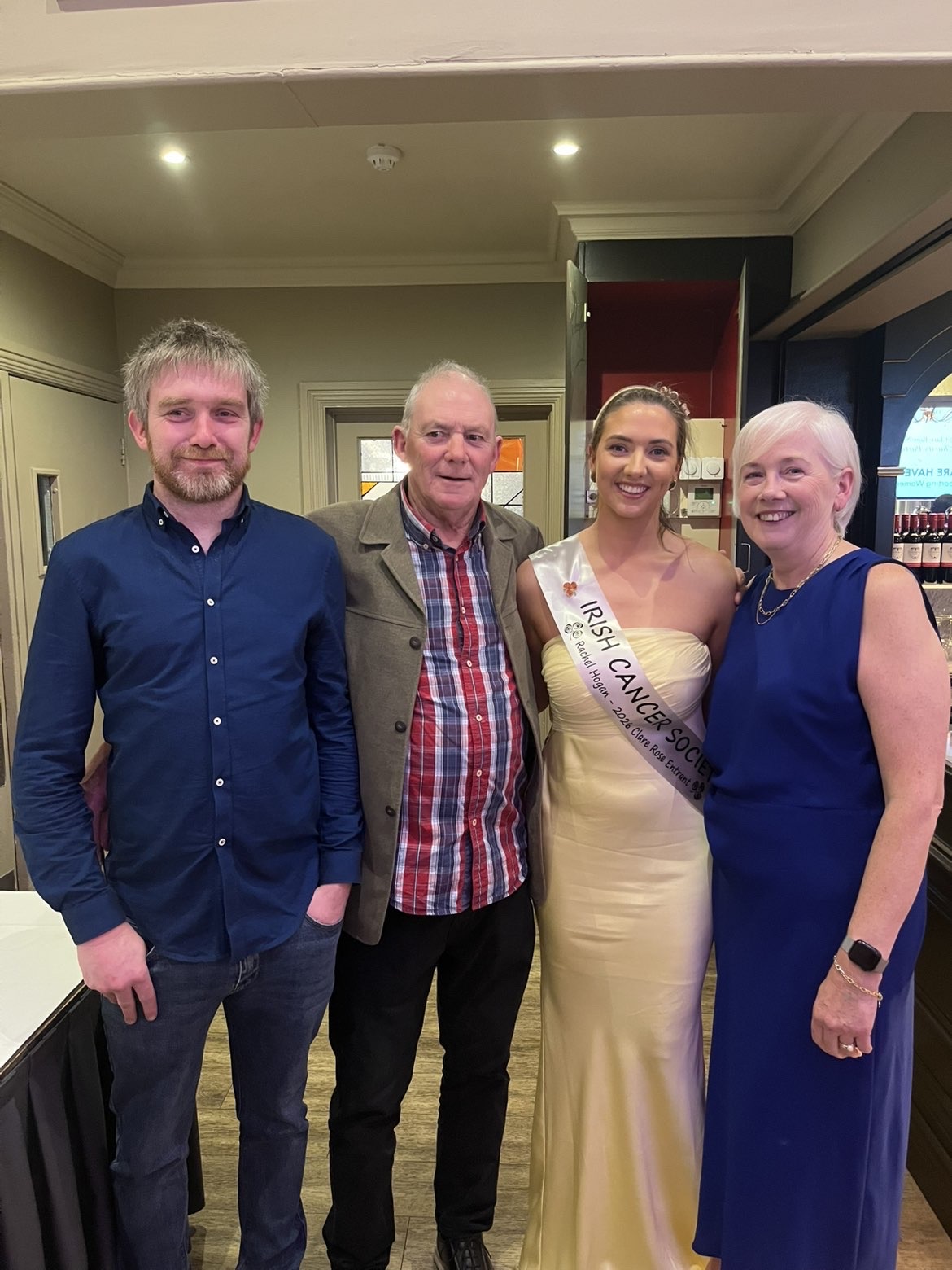
“When the doctor showed me his scans, the only visible organ I could see was the heart,” says Dennis’s daughter Rachel, who was an important source of support for Dennis.
Dennis was readmitted to University Hospital Limerick. At times, he says, he was receiving chemotherapy and other medications through an IV, 24 hours a day. “I was lucky I was strong,” he says.
To receive a stem cell transplant, Dennis went through a high dose of chemotherapy to ensure that the cancer cells in the bone marrow would be killed. He was told that his immune system would be affected to ensure that the transplant would be effective, allowing new stem cells to grow and rebuild his bone marrow. He said he underwent cycles of 4 days of chemo, then 10 days at home, then 4 days of chemo.
“Do what the doctors tell you, they won’t lead you astray. Everything they told me to do, I did.”
He was going to get his stem cell replacement at St. James’s Hospital in Dublin, when a spot opened at University Hospital Galway in January 2024. He had the stem cell transplant in Galway and underwent treatment there for 8 weeks.
Dennis often walked around the hospital during his treatment and at times went into the Daffodil Centre. “The cups of tea and coffee were great, lovely distraction from what you were experiencing."
“I was able to get up and out. Whatever you’re doing keep life normal. Don’t let the cancer keep you in bed. I told myself, you can fall into the chair, but don’t fall into the bed.”
Dennis completed his treatment and returned to his home in March 2024. The cancer was gone. “Everything had gone the way they wanted it; all the scans came in clear."
“When somebody tells you, ‘You have cancer’, there was nothing getting into my head. It’s a long journey, but it can work out. I been through it, it’s been a long road, there’s very little you can say to someone who has been told they have cancer. The news has to be digested by the person who experienced it themselves. You have to give them a chance to process it. But don’t give up hope no matter what. Keep moving, whatever you do."
Rachel Hogan, 29, Dennis’s daughter, remembers what it was like to see her dad grapple with his diagnosis and treatment, and shares how she supported him.
“Cancer is such a scary thing. There are so many emotions, and you put a lot of pressure on yourself being a family member of someone that’s going through cancer. Your emotions are so important. But if you aren’t strong enough for yourself, how are you going to support someone else?"
“There were some days my dad was in the hospital, and he might ring me. We might say ten different things to each other, but hearing my voice, it gave him comfort. Your support can mean the world to somebody that’s feeling isolated, alone or scared. It’s okay for you to be scared too."
“You feel like a bit of an alien because you can’t do much, that seems so helpless to someone so sick. But hearing stories and having a warm dinner when they get home - they appreciate it so much more than you think. You have a purpose in their treatment plan. These small tasks can mean so much. It is helping them."
“It’s okay to have the fear, to be grieving what could have been. Whether it’s walking down the aisle or playing with future grandchildren - even if those moments haven’t been planned yet, you still have grief that your family member could miss something that you didn’t know would happen in the future. I want to let people know that the feelings you have are valid. It’s okay to feel fear and everything that’s going on."
“I’m grateful that my dad is doing well now, and that my family and I were there to support him through his cancer journey.”