Daniel Nordon's Cancer Researcher Story
“Our research means there could be more precise intervention, at the right time, instead of ‘one-size-fits-all’ medicine.”
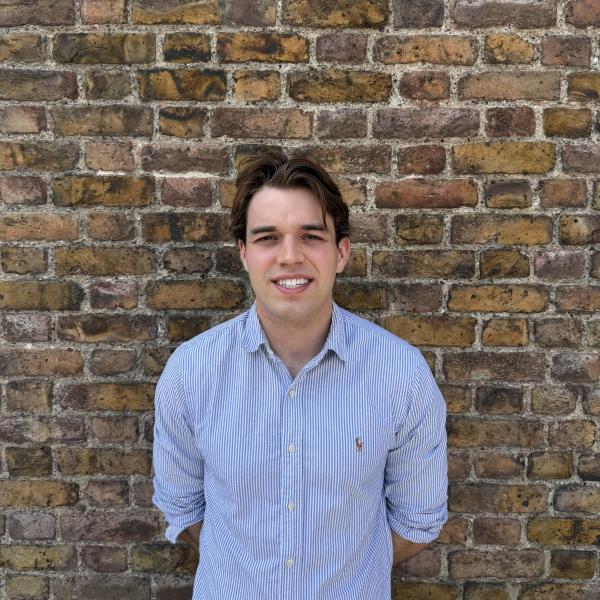
Daniel Nordon, an Irish Cancer Society-funded cancer researcher, is set to embark on his PhD project this September. It will focus on developing a tool to guide clinicians in deciding treatment for people with sinonasal cancer.
“When a clinician is making a decision about treating a patient with sinonasal cancer, they have to pick between surgery or a combination of chemotherapy and radiotherapy,” says Daniel, who is talking about his project to mark World Head and Neck Cancer Day.
“This project aims to create a tool using machine learning that will give the clinician a guide about what the treatment should be. We will combine three types of information: the molecular and genetic profile of the tumour, AI-based digital analysis of tissue samples, and clinical data including treatment history and outcomes.
“The clinicians are then given a risk score to guide them on whether to choose chemo or surgery. It’s basically a step towards more precise medicine and treatment.”
Daniel is hopeful that his project will help to offer more effective treatment for people diagnosed with sinonasal cancer in the future.
“This research has the potential to improve treatment decisions for people with sinonasal cancer, reducing unnecessary treatments, lowering patient burden, and improving survival."
“A better understanding of the best course of treatment may support more targeted therapies and provide a model for personalised care in other rare cancers," says Daniel, who is based in RCSI and is originally from Dundalk, Co Louth.
Working in the area of cancer research appeals to Daniel as he has seen the impact cancer has had on his wider family. His interest in head and neck cancers specifically came about when he was doing an MSc in Technologies and Analytics for Precision Medicine at RCSI, as his course coordinator worked on that cancer type.
“I’ve seen the effects of cancer in my wider family, and the impact that cancer research can have,” says Daniel. “Rare cancers like these depend entirely on dedicated research. Without it, they simply get left behind.
“The main thing I’d like people to know is that cancer patients are the number one priority to us all in cancer research. They’re the people that we’re doing our research for, and they’re the most important voice – Public and Patient Involvement (PPI) will be a big part of this project.”
Daniel’s work is being funded by the Irish Cancer Society Translational PhD Scholarship in Memory of Tom and Margaret Roche.
“I was absolutely delighted when I got the PhD scholarship, because we put so much work into the proposal,” says Daniel. “I really wanted to get into cancer research and PhD scholarships in it are hard enough to come by, especially in Ireland.
“To get funding from the Irish Cancer Society, such a well-respected and recognised charity, it means so much. It means that I am able to work and contribute to cancer research here in Ireland. I’m really looking forward to working with patients and seeing the real-world impact of the research.”