Aoife Habenicht's cervical cancer story
“There is a critical shortfall within Irish cancer care right now and its heartbreaking that its fixable but not being addressed. Nobody should have to question whether the equipment that is delivering them life-saving care is fit for purpose. It’s not a question that should even enter a patient’s mind.”
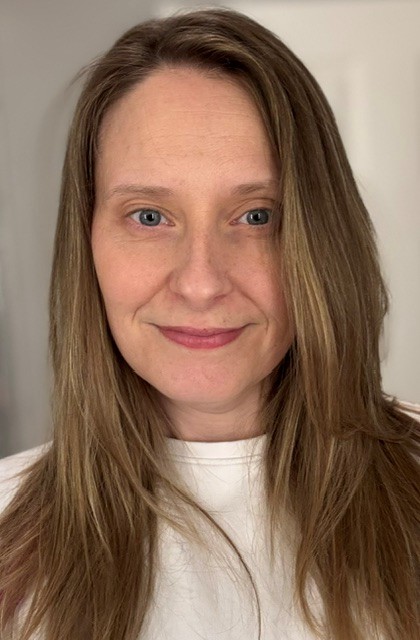
Aged 39, Aoife Habenicht welcomed her second child unexpectedly at home. “Thankfully everything went okay and Sebastian arrived safely. My husband and my mum were there and had to deliver him. Because the birth was unusual, I decided to go for a smear test to try get a better understanding of how it all happened so quickly. Six weeks later, I was diagnosed with Stage 3C cervical cancer. My previous smear tests had all been clear.
It was incredibly shocking news to receive, especially as a new mum. You expect to spend your maternity leave with your baby but all of a sudden, you receive this news that turns your world upside down.
For my treatment, after discussing options with my medical team, I was put forward for a new approach which had just been successfully trialled, that would hopefully improve my survival rate. In simple terms, I would undergo chemotherapy initially for six weeks to try destabilise the tumour, which took place in the Beacon Hospital. After that, I would face into 25 sessions of radiation therapy in St. Luke’s Hospital in Rathgar in conjunction with more chemo in the Beacon. Finally, I would do three sessions of brachytherapy.
"The days were longer than expected as the radiotherapy machine being used was old and unreliable. Of my 25 radiation sessions, six were delayed because the LINAC machine broke down and we had to move to another unit."
I was so anxious and terrified in the weeks leading up to starting treatment. However, the waiting to start was probably the most difficult as once I began treatment, my oncologists, Prof. Charles Gillham and Prof. Jenny Westrup, showed immense compassion, and the staff throughout both hospitals created an environment that was welcoming and supportive during one of the most frightening periods of my life.
“I tried to approach my treatment as a part-time job, this was what I needed to do daily in order to get better and be there for my family” explains Aoife. “But, during my radiation therapy, it actually felt more like a full-time job as it was five days a week and the days were longer than expected as the radiotherapy machine being used was old and unreliable. Of my 25 radiation sessions, six were delayed because the LINAC machine broke down and we had to move to another unit. I later found out that the machine I was assigned to is one of the oldest in Ireland, now in operation for 18 years, despite the advice that they are replaced every ten years.
Looking back, when you’re in the middle of treatment and focused on getting better, you don’t realise that breakdowns should not be happening. You don’t question it. I just thought this was part of the cancer journey.
"Those machines not working as they should have meant there was a lot of waiting around to get your life-saving treatment. Days became longer than anticipated and creche pick ups I wanted to do myself were missed. Dinners I wanted to make weren’t made by me"
“What these machines breaking down meant for me was that the mum side of my life was put under even greater strain. Of course, going through cancer treatment meant my husband took on a much greater role anyway, but I wanted that bonding time and I wanted some level of normality to continue. We were fortunate that we practically moved my parents in with us to help out.
But those machines not working as they should have meant, there was a lot of waiting around to get your life-saving treatment. Days became longer than anticipated and Creche pick ups I wanted to do myself were missed. Dinners I wanted to make weren’t made by me, and everyone else around me stepped in even more. For cancer patients, these delays are not simply inconvenient. They create enormous stress.
“Despite the issues with the machinery, I only met amazing people doing their best in the health service. I felt like I really had a team of people fighting for me throughout the two hospitals. It was only afterwards that I began to understand the circumstances they have to work within. They are doing their utmost to save lives but are reliant on machinery that is frankly past its best-before date and this is a systemic failure in our health service.
During my treatment I focused on nothing else but getting better and spending all my free time with my kids, ensuring their lives were not disrupted. However, after taking a few weeks to process what I had been through, I decided to write to then-HSE Chief Executive Bernard Gloster. I wrote one letter just to put my thoughts on paper but that letter eventually led to me meeting An Taoiseach Michael Martin and becoming the patient advocate on the Irish Radiation Therapy Group, led by Aisling Barry, who very eloquently, brought this issue to the Health Commission earlier this year.
"Nobody should have to worry about whether the equipment that is delivering them life-saving care is fit for purpose. It’s not a question that should even enter a patient’s mind."
“Regardless of where you live, you should expect the best possible care. Where you live, what your nearest hospital is and whether they have machinery in that is eight years beyond its recommended usage should not be a determining factor on the level of care you receive. Nobody should have to worry about whether the equipment that is delivering them life-saving care is fit for purpose. It’s not a question that should even enter a patient’s mind. There are very few predictabilities in cancer care. These machines breaking down and needing to be replaced is one of them.
It baffles me that we don’t have a more robust replacement scheme in place so that patients across the country can expect to receive the same level of care no matter where they are. If we don’t establish a rolling replacement system at national level, it will lead to multiple machines being decommissioned at the same time, which will lead to longer wait times to start treatment.
Following her treatment and recovery, Aoife is doing well now. There are days thankfully, that I don’t even think of the word ‘cancer’. However, because of the old machine that I got my radiation therapy on, I had to get permanent alignment tattoos used to guide my treatment. Therefore, despite me being better and having psychologically moved on, I am left with the permanent reminders of my treatment. This is yet another reason why we need to replace those machines as tattooing is no longer required of patients if we had updated machines like other European countries.”
Today, I consider myself lucky. Lucky that Sebastian’s birth had prompted the smear test that caught my cancer. Lucky that my side effects during treatment were relatively mild. Lucky that I am still here today to be a mum to my children. My goal now is that in the 2027 budget, the Government finally admits that the current plan for Radiation therapy in Ireland is not sufficient, that something must be done and that the funding will be put into this life-saving machinery."