Andrea's Story
“You should definitely check your breasts regularly and try to do it at around the same time every month. I didn’t do that before I was diagnosed, and it’s something I would really encourage women to get into the habit of doing now."
“If you notice a change, feel pain, find a lump, or even just have that feeling that something isn’t quite right, go to your GP and get it checked. You know your own body. Listen to it and trust yourself if something feels different.”
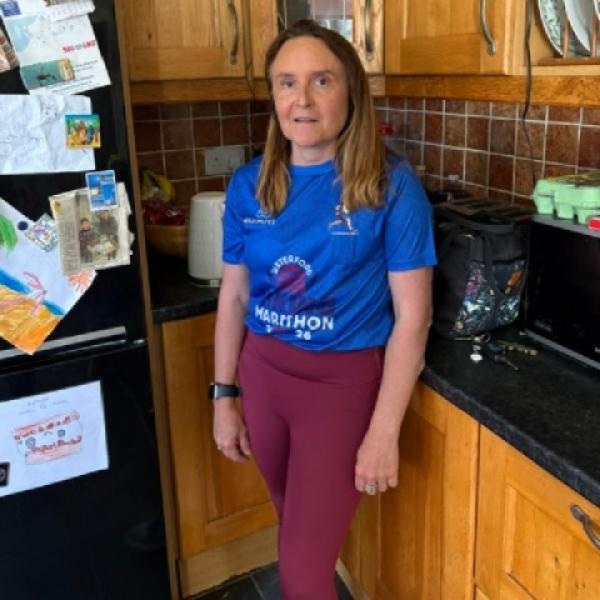
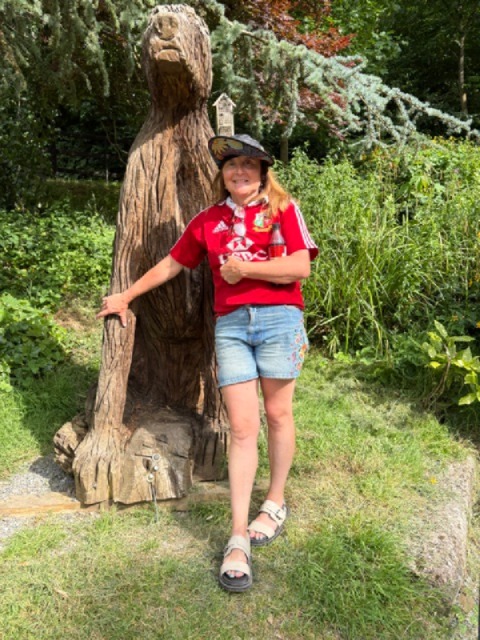
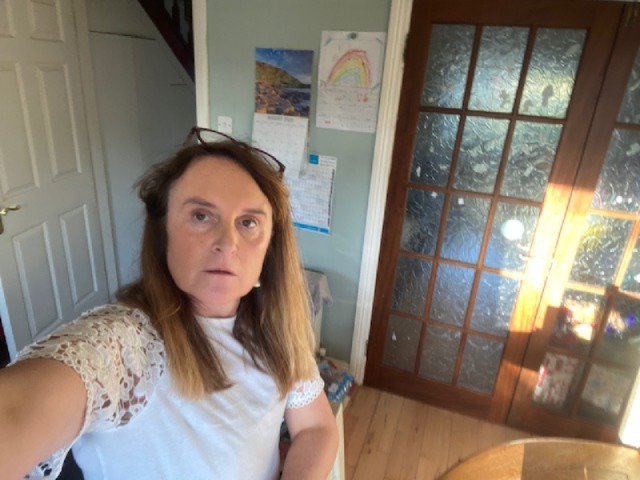
Andrea Duffy, 50, from Waterford, first realised something might be wrong when she experienced an unusual sensation in her left breast in July 2021.
“I was driving one day when I suddenly got this really strange burning sensation in my left breast. It was painful enough that I actually pulled over. When I got home, I went into the shower and checked my breast properly."
“I remember thinking, ‘Oh no, is this something?’ When I felt my left breast, I could feel what seemed like a lump. It was almost oval or pea-shaped. At first, I tried to rationalise it. I thought maybe it was a duct because I had breastfed all four of my children."
“I rang my sister and she reminded me that our mam had suffered from cysts, so there were plenty of reasons it could have been something harmless. But there was still this little voice in my head telling me that it could be something more.”
Andrea made an appointment with her GP, who examined both her breast and the lymph nodes under her arm.
“My GP was very good and saw me quickly. One thing I remember clearly is how thoroughly they checked under my arm. When I had checked myself in the shower, I had only really been thinking about my breast. I hadn’t thought about checking anywhere else. My GP spent quite a bit of time examining under my arm, and I remember it being very sore afterwards.”
Andrea was referred to a Breast Clinic, where she underwent a triple assessment consisting of a mammogram, ultrasound and biopsy.
“I had all the scans and tests done, but nobody actually said the word cancer to me at that stage. Deep down, I think I knew. It felt as though I was collecting pieces of a jigsaw puzzle, but I couldn’t put the whole picture together until somebody actually told me.”
A few days later, Andrea returned to the clinic for her results. Although she had prepared herself for the possibility of cancer, hearing the diagnosis was still incredibly difficult.
“They told me I had HER2-negative, hormone-positive breast cancer and, at that point, they were temporarily calling it stage two while they waited for further tests.
“I remember feeling numb, but at the same time thinking, ‘Stage two. Okay. I can deal with stage two. This is manageable.’
“Then the consultant explained that I needed a full-body scan to make sure the cancer hadn’t spread. That was the moment my mind went into overdrive."
"When I walked out of the hospital that day, I honestly don’t think I could feel my feet touching the ground. My youngest little boy was only four. My daughter was doing her Leaving Cert and my other two boys were 16 and 13. They were immediately where my mind went."
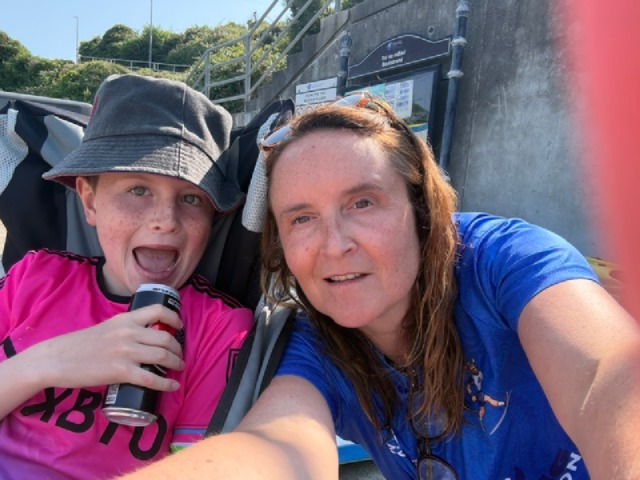
“I was thinking more about what this was going to do to them than what it was going to do to me. I felt that I had to somehow hold myself together for my children.”
Andrea, a primary school teacher, describes waiting for the results of her full-body scan as one of the most difficult periods of her diagnosis.
“The waiting was hell. When we went in for the results, we were told that something had shown up on my sternum. They couldn’t say immediately whether it was cancer or whether it could have been caused by an injury. My husband and I clung to the injury explanation because I had played rugby. We wanted so badly for that to be the answer.
“I then had a PET scan, and that confirmed it was cancer. I remember asking the consultant directly, ‘Does that mean it’s stage four?’ He said, ‘Yes. But look, it is treatable.’ That was an enormous things to hear."
"You hear the words ‘stage four’ and your mind can immediately go to the darkest possible place. But I had four children and a life that I loved. I had to find something to hold on to, and for me that was hope."
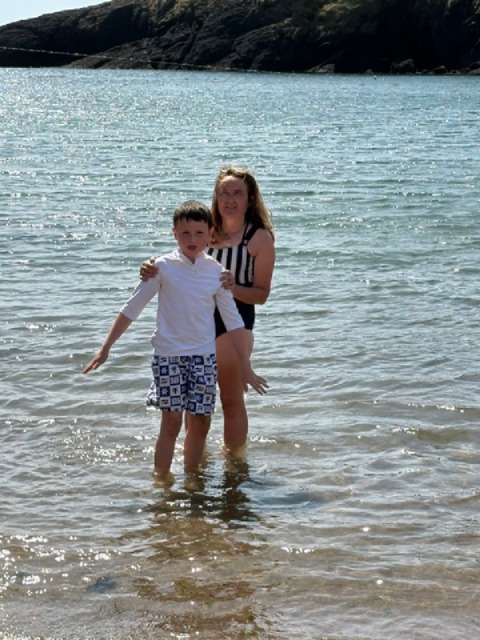
Four weeks later, Andrea began chemotherapy. She completed eight sessions, finishing in November 2021, before undergoing a mastectomy and reconstruction in February 2022.
“The chemotherapy was horrendous. You put everything into getting through it, and when you finally finish, there is this feeling of, ‘I did it. I’m still standing.’ Then suddenly you have to make yourself vulnerable all over again and go in for major surgery. I found that difficult.”
Following surgery, Andrea began endocrine therapy and underwent radiotherapy, which she completed in April 2022.
“I was absolutely exhausted. Even when radiotherapy finished, the tiredness didn’t just disappear. There was a lingering exhaustion that stayed with me for quite a while.
“I took a full year away from teaching while I went through treatment. There was no way I could have worked through it. My body needed that time.”
It was towards the end of active treatment that Andrea began attending Irish Cancer Society-funded counselling at Solas Cancer Support Centre in Waterford.
“I think people can need counselling at very different stages. Some people might need it immediately after diagnosis or during treatment. For me, I needed it when active treatment was coming to an end."
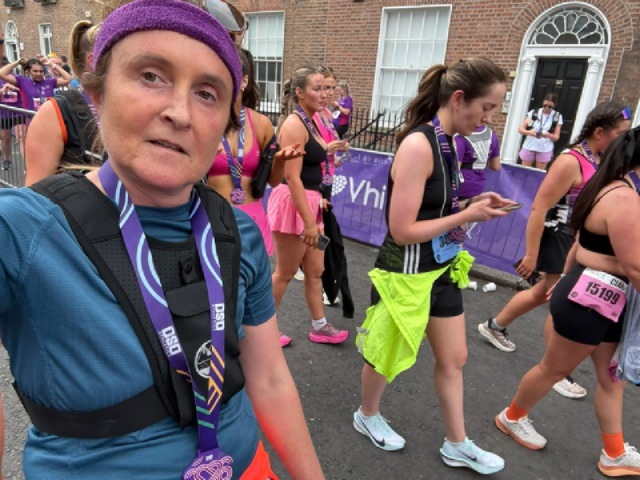
“During treatment, you are so focused on the next appointment, the next chemotherapy session, the next scan or procedure. Then suddenly there is space to actually process what has happened to you.
“Counselling gave me somewhere to put all of those thoughts and fears. I could talk openly to someone who would simply listen, without feeling that I was constantly placing my worries onto my family and friends.
“It helped me regain a sense of control over my own life. My son and daughter also attended counselling there and found it beneficial. Cancer doesn’t just happen to one person; in many ways, the whole family goes through it.”
After a year away, Andrea returned to teaching. Although physically she was beginning to look and feel more like herself again, the cognitive effects of treatment took longer to resolve.
“One of the hardest things for me was the effect treatment had on my brain. Physically, I was back at work and I looked like myself again, but my brain didn’t feel like mine.
“I would do silly things like send something to the printer and completely forget I had done it. That really irritated and frustrated me because I had always been a very efficient person. I remember wondering, ‘Am I ever going to get back to being that person again?’
“But it did come back. It wasn’t overnight, and I think that’s important for people to know. It probably took around two years before I really felt that I had my brain fully ‘back’, but it was improving throughout that time. Now, it isn’t something I worry about anymore."
"Sometimes recovery happens so gradually that you don’t notice it until, one day, you realise how far you have come.”
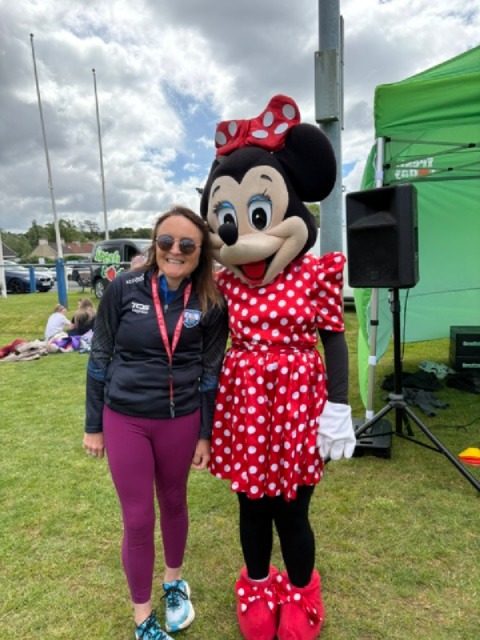
Five years after her diagnosis, Andrea currently has no evidence of active disease. Her scans, which were once carried out every few months, have now moved to yearly monitoring.
“To be sitting here five years later, in good health, raising my children, working, exercising, going on holidays and doing most of the things I did before I was diagnosed feels surreal when I think back to those first few weeks.
“There have absolutely been difficult times, and living through a cancer diagnosis changes you. But my life did not end with that diagnosis. There has been so much living since then.
“One of the things that helped me enormously in the beginning was changing the way I thought about the cancer. When I was told where it was in my body, instead of constantly concentrating on those places, I started thinking about all the places where it wasn’t.
“That might sound very simple, but it was incredibly powerful for me. It reminded me that cancer wasn’t everywhere. It helped me take back some control over my thoughts at a time when so much felt completely outside my control.
“If I could say one thing to somebody who has just been diagnosed, particularly someone who has heard the words metastatic or stage four, it would be not to give up hope.
“Allow yourself to be frightened. Allow yourself to cry and have the bad days, because they are part of it too. But try to find something positive to hold on to, however small it might seem.
“Treatments are advancing all the time. Statistics are numbers; they are not your individual story. I decided very early on that I was going to keep living my life rather than spend every day waiting for something bad to happen.
“Five years later, I’m still here. I’m still a mum, a teacher, a wife and myself. Cancer is part of my story, but it is not the whole story.
“And I think that is what I would most like somebody newly diagnosed to know: keep hope. Keep living. Your story is still being written.”