Amanda's Story
“Take it day by day and just try and be positive, even though I know it’s hard when you’re dealing with cancer.”
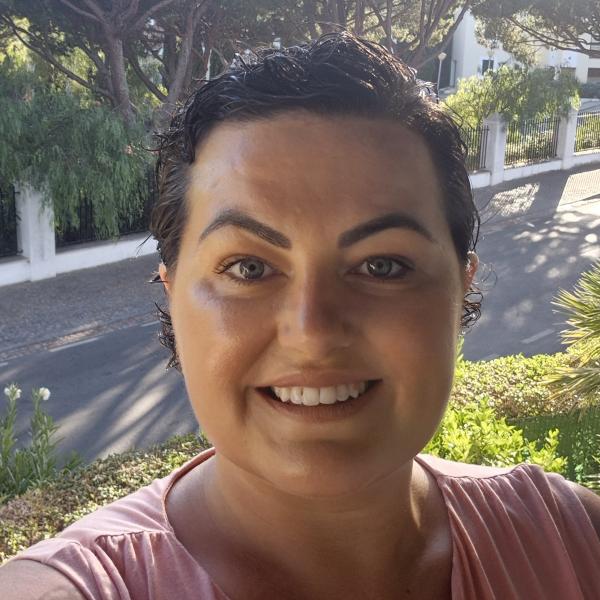
Amanda Broaders was 34 when she was diagnosed with breast cancer.
On a Sunday in April 2024, Amanda says she was just stepping out of the shower when she felt something wasn’t right as she was wrapping her towel around her. “You know the way when it’s just a little bit off, and I examined myself and found that it was a lump in my right breast.
“I’d have been conscious of checking myself. I have a family history of two aunts who had breast cancer.”
Amanda, now 36 and from Wexford, went to her GP who urgently referred her both publicly and privately to examine the lump. “My GP was concerned. She wanted me to be seen as quick as possible.”
At the next appointment, Amanda was initially told she was too young to have a mammogram.
“And as we all know, you’re never too young for cancer.”
She was also told that the lump she was feeling was most likely a fatty tissue.
“When I got the appointment, I felt like I wasn’t examined thoroughly. It seemed very quick.
“It was kind of like I was just brushed off. If I hadn’t spoken up for myself and just walked out of the room that day, it could have been a very different story if I still had that lump six months later.”
Ultimately, she was referred for a mammogram, ultrasound scan and biopsy all on the same day. She was diagnosed in May 2024, a month after she found the lump, with HER2 negative breast cancer with oestrogen and progesterone present.
When Amanda was diagnosed, she wasn’t initially shocked. “I did think in the back of my head, this is breast cancer. I don’t know why but I had a feeling in my gut, I just knew it was.
“Even though I hadn’t expressed that to anybody, I think I knew what they were going to tell me.”
If Amanda could give advice to someone else being diagnosed, she would urge them to not be “overwhelmed”.
“There is a lot of information to take in. Booklets are a great tool to take home and read in your own time. There are so many different appointments for different types of treatment and sometimes they information is not there on the system, so I found myself on a few occasions having to explain what stage I was at in my treatment.”
After her diagnosis, Amanda was told that she would need to have a single mastectomy, but after more tests the surgeon wanted to do a lumpectomy to try and save her breast. After this surgery, she also had an axillary clearance.
“They had said that they weren’t worried about the cancer travelling, but when they took out the lymph nodes, they removed five that were positive for cancer.
“That’s when they were worried that it had travelled to other parts of my body. Probably hearing that news, for me, was more devastating than hearing I had breast cancer.”
Amanda then completed 16 rounds of chemotherapy, every two weeks, starting that phase of the treatment in September of 2024. She says that the hair loss was one of the biggest elements of the chemotherapy. “You can’t prepare yourself for it.
“I actually wouldn’t look at myself in the mirror, but you know if you just walk by and catch a glimpse and you don’t even recognise the person you’re looking at.”
After completing chemotherapy, she started radiotherapy five times a week for four weeks. “These sessions were very quick, but my skin did become quite sore,” she says.
“It is just trusting the process.
“I honestly felt like I was looked after so well. Every surgery, every appointment with the chemo and radiotherapy, I think you need to be a special kind of person to work with cancer patients. They are fundamental in our health care system.”
Now that Amanda’s active treatment has finished, she is on two different drugs in tablet form – one for the next two years and the other for the next ten years.
She is also taking hormone suppressers which induce an early menopause. This medication blocks oestrogen in the breast issue and can cause menopausal symptoms such as hot flushes.
“Some people think once you receive the ‘all clear’ it’s over, but it’s far from it.
“I have been through so much in the last 18 months and I am extremely grateful to be here to tell my story and spread awareness, but I will never be the same person again. Cancer changes you in so many ways.
“But I want to say to people, that if they’re going to do one thing today, could they please check their breasts. Everyone you love will thank you for it.”
Amanda adds: “I appreciate every single day that I get to be here with my kids, husband, family and friends. I would fight every day all over again for that privilege alone.”