Akin's Story
“Men older than 50 should talk to their GP about their risk of prostate cancer, have a blood test to check their PSA levels. Thanks to this test, they were able to discover my cancer in time.”
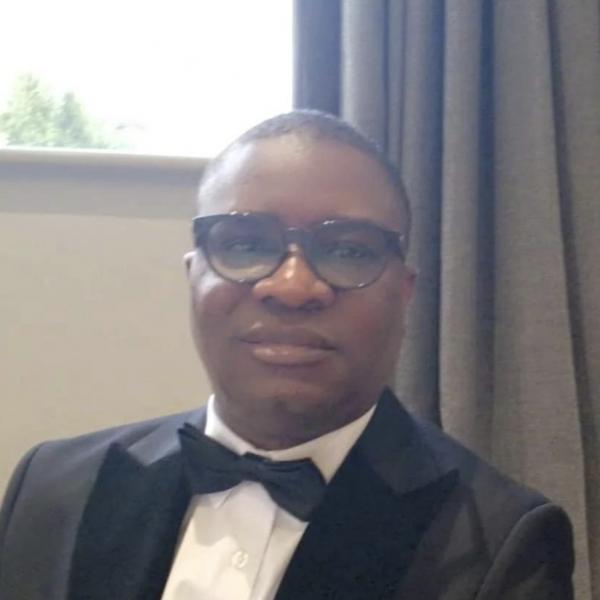
Akin Ogunniyi, 53, originally from Nigeria and living in Leixlip, Co. Dublin for over 20 years, says he is lucky to survive cancer and wants to share his story to anyone else who may be going through something similar.
The father of 3 had symptoms for prostate cancer, including weight loss, loss of appetite, and an increased need to pee, “I peed a lot and the stream wasn’t emptying enough, and I would have to go again.” His wife, a nurse, told him that he needed to go to the GP. “I was in denial,” he says.
At the GP, Akin took a blood test, to get his PSA checked. His PSA was higher than normal, and he was referred to Beaumont hospital for an ultrasound. In April 2025, he got a biopsy, and the results indicated that he had early-stage prostate cancer on the left side.
“I got the diagnosis alone. When they told me the bad news, I couldn’t control myself. I couldn’t drive; I couldn’t walk.
“Psychologically, you are worried about what is going on with you. After prostate cancer, you are worried about incontinence; you are worried about your sex life; you’re worried about your work. A major concern was how I was going to recover.”
When Akin shared the news with his family, he had to decide about his treatment. “The doctors gave me time to decide between radiation or surgery. I was told that even if I did the radiation there was a high likelihood that it could come back. I thought it would be better to go for surgery because I was still young, and I could recover more easily after they would remove the tumour.”
“It was very, very challenging waiting for the surgery. I was put on the waiting list, as the surgery depended on how severe or urgent the need was. I put pressure on the hospital, but they couldn’t fast track me. I waited 6 months to have the surgery.
“I was in pain and losing weight. When I was waiting for the surgery, I was still having symptoms like the continuous urge to pee. I couldn’t tell you how many times I had to pee every day, as the pressure just wasn’t there. Every time I went to the toilet I’d have to go again.”
Akin’s surgery was in November 2025. When he was discharged from the hospital, a catheter was placed and needed to remain for 2 weeks. “I had a shower every day, changed the catheter every day. It was something I wasn’t used to.”
The discomfort of the catheter was challenging. “Before the surgery, I thought about how was I going to survive? But after the surgery I was fine.”
Akin was also placed on tablets for erectile dysfunction for at least 4 months following the surgery. He was told there are 3 ways to address the erectile dysfunction that he was experiencing. The first way would be to take medication. If that didn’t work, then he would move onto penile vacuum therapy, which uses a pump. If that doesn’t work, then an injection may be considered. “You still want your sex life to go ahead,” he says.
If Akin could share a message with someone who has been diagnosed with cancer, he would say: “The one thing I would say is: be courageous. Think about the solution. Believe that it will be over. Don’t think about it all the time, the more you think about it the more down you may get. Go for a walk, go for dinner, go socialise.
“Avail of the services of the Irish Cancer Society. I was able to speak to two people who had been through this kind of diagnosis before and they shared their experiences. It gave me courage. That was very helpful.”
Akin’s work in hospice care helped him to recognise the difference between who he was caring for and his own circumstances.
“I was caring for people at the end of their lives, while I knew that I had a tumour in my prostate. But it wasn’t the end of life for me. In hospice they don’t go back home. I got to go home. I’m in a bit of pain, but I’m fine now.”
“Before the surgery, I was a bit moody and unwilling to talk to anyone. Psychologically that was an issue. After the surgery it has really improved.”
Akin still gets blood tests every 6 months to check his PSA levels and to make sure that the cancer hasn’t come back. “The experience was challenging. But I’m alive to tell my stories.”