Liver cancer
Treatment
How is liver cancer treated?
Liver cancer can be treated using surgical and non-surgical treatments. The best treatment for liver cancer depends on:
- The stage of the cancer
- The size of the tumour or tumours
- The location of the cancer
- If the cancer has spread
- How well your liver is working (liver function)
- Your age and general health
A team of healthcare professionals (multidisciplinary team) will recommend a treatment plan specific to you. Treatment options include:
Surgery
Surgery for early liver cancer can be:
- Surgical resection: Part of your liver is removed.
- Liver transplant: Your liver is replaced with a donor's healthy liver.
Your consultant will decide if you are suitable for surgery, based on the size and location of the tumour and how healthy the rest of your liver is.
Surgical resection
The removal of a whole lobe of your liver is called a lobectomy or hemi-hepatectomy. Other types of resection include segmentectomy and sectionectomy. Your surgical team will explain the type of surgery
you are having.
This surgery is not suitable for everyone, and your team will take many factors into consideration including:
- Are you fit for surgery?
- What size is the tumour? (If it’s small there’s less chance it has spread.)
- Has it spread into the blood vessels?
- Is your liver fairly healthy with little or no cirrhosis? In that case, the liver can grow back and start working as it did before.
The operation may be done through open surgery (laparotomy). This is where the surgeon operates through one long cut in the abdomen (tummy). Alternatively, you may have keyhole (laparoscopic) surgery, where the surgeon makes a series of small cuts in the abdomen. Sometimes, the surgeon uses a robotic device and computer to help perform minimally invasive surgery.
In some cases, you may also have an ablation treatment during your surgery.
Liver transplant
Transplant is an option for some primary liver cancers, but it is not suitable for everyone. You will have appointments and tests to see if you are suitable (the hospital may call this 'work-up'). Your consultant may recommend other treatments during this work-up or while you wait for a suitable donor liver. This is called 'bridging therapy'.
Read more about having a liver transplant.
Non-surgical treatments
Non-surgical treatments are used to reduce the growth of the cancer if surgery is not an option. A combination of non-surgical treatments can be used along with, or after, other treatments. Non-surgical treatments include:
This is a treatment that uses heat to destroy the cancer cells. It can be used if surgery isn’t suitable or if the tumour is very small.
The 2 main types of thermal ablation used are radiofrequency ablation or microwave ablation. They both use an electric current to destroy the cancer cells in the liver. A needle-type probe is guided into the tumour using an ultrasound scan or CT scan. This probe heats the tumour and destroys (ablates) it.
This procedure takes about 30 minutes and is usually done under general anaesthetic. You will probably be kept in hospital overnight.
You will usually have a scan 8-12 weeks later to see how well the treatment worked.
Embolisation involves blocking the hepatic artery blood supply to the tumour, killing the cancer cells. Examples of embolisation techniques include:
Transarterial embolisation (TAE)
TAE involves injecting the hepatic artery with tiny beads. This stops the cancer from growing by blocking off its blood supply.
Transarterial chemoembolisation (TACE)
TACE is very similar to TAE, except chemotherapy drugs are injected directly into the liver. The blood flow is also blocked (embolisation) so that the chemotherapy can stay longer in the liver and kill the cancer cells.
For both TAE and TACE, you will need to fast (not eat) from the night before the procedure. On the day of the procedure you will have a drip for fluids and antibiotics to prevent infection.
The procedure will be done in the radiology department. The radiologist will put a fine tube through a cut (incision) made in your wrist or groin. With the help of an X-ray, they will guide the tube to your liver and the treatment will take place. You will be given some sedation and a local anaesthetic – it shouldn’t hurt, but you may feel some discomfort. It usually takes about 1-2 hours. Usually you will stay in hospital overnight after this procedure.
You will have either a CT or MRI scan 2-3 months afterwards to see how effective the treatment was.
Radiotherapy uses high-energy rays to destroy cancer cells. The aim of the treatment is to control the cancer in the liver and also if it has spread to other parts of the body. There are 2 main types of radiation therapy used for primary liver cancer: selective internal radiation therapy (SIRT) and stereotactic body radiation therapy (SBRT).
SIRT (selective internal radiation therapy)
SIRT is a type of internal radiotherapy that delivers tiny radioactive beads (microspheres) directly to the tumour through your blood vessels. It is usually used to control cancer in the liver that cannot be removed by surgery. SIRT is sometimes called radioembolisation or transarterial radioembolisation (TARE).
You will have an angiogram to plan your SIRT and give your doctor more information about your liver. This is done by guiding a thin tube to your liver through a blood vessel in your wrist or groin. Then dye is injected through this tube and a series of X-rays show how the dye is travelling along the blood supply to the liver.
After 2–3 weeks, weeks, you will have SIRT. This involves another angiogram, but this time tiny radioactive beads (microspheres) will be injected into the liver, guided by the dye showing the blood supply to the tumour in the liver. These radioactive beads give off radiation and damage the cancer cells.
Stereotactic body radiation therapy (SBRT)
SBRT is a type of external radiotherapy, where a machine outside your body directs highly focused and accurate X-ray beams at the area to be treated. SBRT may also be referred to as stereotactic ablative radiotherapy (SABR). When you have SBRT you do not feel anything and it does not make you radioactive.
You will have a planning CT scan and possibly also an MRI scan to plan your treatment accurately. When you have treatment, the radiation therapist will help you get into position. The treatment couch and the machine will be moved to direct the radiation at the cancer. The machine will rotate around you but it will never touch you. It is important that you stay as still as possible throughout treatment.
You will need to attend for a course of treatments, usually 3–5 sessions, over 1–2 weeks. You may need to fast (not eat) for 2 hours before each treatment. The team will monitor you for side-effects throughout the treatment course and review you weekly during it.
There are 2 main types of systemic therapy:
- Immunotherapy (IO) combinations
- Targeted therapy drugs, mainly tyrosine kinase inhibitors (TKIs)
These are generally used to treat advanced liver cancer, especially if it has spread to another part of the body (metastatic cancer). These treatments can help to stop the growth of cancer cells.
Your doctor may recommend you have immunotherapy drugs or targeted therapy drugs if:
- The cancer has spread.
- The cancer returns after surgery.
- You are not suitable for other treatments, for any reason. For example, if you have other health issues that make other treatments unsuitable.
Immunotherapy
Immunotherapy has become an important treatment option for advanced hepatocellular cancer (HCC). These help the body’s natural defences or immune system to fight cancer cells.
These treatments are delivered by infusion into a vein and are typically given in an oncology day ward or infusion unit.
Read more about immunotherapy.
Targeted therapies
Targeted therapies are drugs that work by ‘targeting’ certain parts of cancer cells that make them different from other cells. In other words, they take advantage of differences between normal cells and
cancer cells.
Different drugs work in different ways. For example, they can:
- Block or turn off chemical signals that tell cancer cells to divide and grow
- Change proteins in the cancer cells so the cells die
- Stop making new blood vessels that feed the cancer cells
- Help your immune system to fight cancer
Tyrosine kinase inhibitors (TKIs) are a type of targeted therapy drug used to treat metastatic hepatocellular cancer (HCC). TKIs help stop the growth of cancer cells by blocking the enzyme tyrosine kinase, which helps cells to grow and divide. TKIs are usually given as tablets.
Will I get side-effects?
The type of side-effects you get will depend on the type of treatment, the dose, the duration and your own general health.
You can read about the different treatments to find out about possible side-effects. Ask your doctor or nurse specialist about possible treatments and tell them if you have any problems after treatment.
We have more information about coping with side-effects and symptoms.
Treating metastatic liver cancer
If the cancer spreads to another part of your body, it is called
metastatic cancer. The cancer may be in more than one part of your body when it is first diagnosed.
If the cancer has spread, it can still be treated. The aim of treatment is to try to control the cancer rather than to cure it.
Systemic therapies are often used to keep metastatic liver cancer under control. Or you may have another of the non-surgical treatment options.
You will be advised by your team how to take the medication and what side-effects you might have. Commonly in advanced liver cancer the type of targeted cancer drug used has 2 actions:
- It stops the cancer cells forming new blood vessels, which would help the cancer cells to grow.
- It stops the signals that tell the cancer cells to grow.
Your doctor will use these targeted therapies to slow down the growth of the cancer and reduce or relieve any symptoms you have.
You may be referred to the palliative care team, who are experienced in managing the symptoms of metastatic cancer.
There may also be treatments that you can have as part of a clinical trial.
Read more about metastatic cancer



Get help & support

Support Line


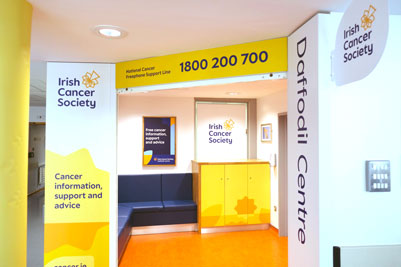
Our Daffodil Centres