Young breast cancer patients urge women to act early to detect breast cancer during the Irish Cancer Society’s Pink campaign this Breast Cancer Awareness Month
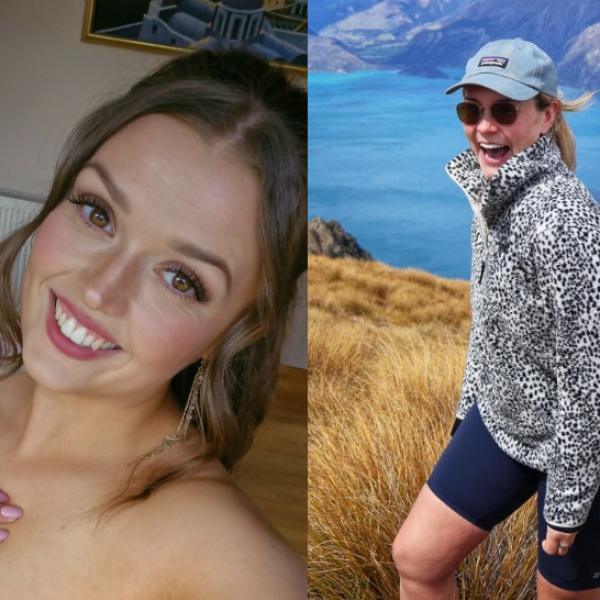
Monday, 5th October 2026: Two breast cancer patients in their 20s are urging women and men to know the signs of breast cancer, to understand their risk of breast cancer and to check their breasts.
Breast cancer remains the most common cancer among women in Ireland, accounting for nearly one-third of all invasive female cancers. Around 13 per cent of all breast cancers occur in women aged between 15 and 44. Though the incidence is lower in younger women, notably, there has been a 25 per cent increase in breast cancer in this age group over the past decade.
While breast cancer is significantly lower in younger women, when it does occur, the tumours tend to be more aggressive. Younger patients are also more likely to experience delays in getting diagnosed, and may face unique emotional, social, and long-term recovery challenges.
Breast cancer patient, Roisin Molloy, 28, from Offaly, was living and working in New Zealand in September 2025 when she noticed a sore lump in her right breast.
Explaining how she discovered the lump, Roisin said: “I was scrubbing off some fake tan when I noticed it. It was apple-sized, quite hard and close to the skin. There was some pain around it. I thought it was unusual but left it for four weeks to see if anything changed about it during my menstrual cycle.”
After the four weeks had passed and the lump hadn’t changed, Roisin went to her GP who referred her for further tests. In November 2025, she was diagnosed with HER2 breast cancer.
Speaking of the impact of the diagnosis while being so far away from home, Roisin said: “I felt like I was the loneliest person in the world. I was 20,000kms from home, and I was so scared and in disbelief. I was so healthy, I was eating so well, and I had no family history of cancer. I couldn’t understand why this had happened.”
Three weeks after her diagnosis, Roisin flew back home to Ireland and prepared to start treatment. She had fertility treatment first, before undergoing chemotherapy and a mastectomy. She finished active treatment in late September, when she completed her course of radiotherapy.
Reflecting on her experience of going through treatment for breast cancer, Roisin said: “I felt so vulnerable and like I was the only person in the world going through this and feeling this way, but I know I wasn’t. In June, two weeks after I had the mastectomy, I got the news that everything was clear – now I get to live again after all of this.”
Roisin shared how the Irish Cancer Society supports and services helped: “I found the Irish Cancer Society booklets to be an important source of information. I got an Irish Cancer Society Support Pack on my first day in St James’s Hospital.
“The nurse gave me the pack and said I could read everything in it in my own time. I liked that I could find out, piece by piece and when I was ready, more about what was happening.”
Roisin now checks her breast area on the first of the month, every month, and is sharing her story to encourage others to do the same and to go to their GP if they notice any changes.
Alanna Kells, 28, from Cavan, found a small lump in her breast in October 2025.
Commenting on how the lump in her breast felt, Alanna said: “I thought maybe it was just some muscle tissue. It felt like a pearl you’d get in boba tea. It was malleable and it wasn’t rock hard, which I assumed it would be if it was cancer. But I was able to move it around, and it blended into the surrounding tissue quite easily.
“I hummed and hawed about it for a day or two, but then I thought, ‘I should get this checked’.”
Alanna went to her GP, who referred her to a Breast Clinic. In December 2025, Alanna received her diagnosis.
Speaking about her diagnosis, Alanna said: “The surgeon was straight to the point and told me I had cancer, specifically stage three invasive ductal carcinoma breast cancer, hormone positive and HR negative.
“They told me the ultrasound found two tumours, and that the lymph nodes were inflamed. The breast MRI showed that I had cancer across all four quadrants of my breast. It ended up forming into one tumour that I could feel.”
Her breast cancer diagnosis meant Alanna had to take on some huge, life-impacting decisions, at an extremely vulnerable time. “I started the process of fertility preservation, however after consulting with my oncologist, I decided the best action would be to stop the fertility preservation and start chemotherapy sooner.”
Her chemotherapy was followed by a mastectomy, and she will soon start radiotherapy.
Reflecting on her experience, and what she’d like others to know, Alanna said: “My genetic screening was all negative, so it just goes to show breast cancer can affect anyone at any age, even without a family history of it. It’s so important to be proactive about your health and to do regular breast checks, it can make a big difference.”
Breast cancer is less common in younger women, but when it does occur, the tumours tend to be more aggressive. Younger patients are also more likely to experience delays in getting diagnosed, and may face unique emotional, social, and long-term recovery challenges.
Sonya Carr, Cancer Awareness Nurse, Irish Cancer Society said: "Roisin and Alanna’s stories are vital reminders for young women to be proactive about breast health.
“No matter your age, do regular self-checks, act quickly if you notice changes. Knowing your family history and making healthy lifestyle choices, like exercising more, healthy eating and limiting alcohol, are all things that can reduce your risk.
"If you have any questions about breast cancer, contact the Irish Cancer Society’s Support Line on freephone 1800 200 700 or email supportline@irishcancer.ie"
About the Irish Cancer Society’s Pink campaign:
This October, the Irish Cancer Society is calling on the public to support Breast Cancer Awareness Month.
Typically receiving just 5% of its funding from Government, the Irish Cancer Society’s cancer research and vital free services like the Support Line, Transport Service, Daffodil Centres, cancer information, financial grants, and Night Nursing are fuelled by fundraising.
Visit cancer.ie for more information.
ENDS
For media queries, please contact communications@irishcancer.ie or call 087 645 3867
Notes to Editors:
Impact of your support:
In 2025, generous support by the Irish public:
- Fuelled more than 6,165 lifts to treatment for breast cancer patients through the Irish Cancer Society’s Transport Service.
- Provided over 326 nights of vital end of life comfort and care to breast cancer patients through the Irish Cancer Society’s Night Nursing Service.
- Supported people affected by breast cancer through over 5,081 supportive and comforting conversations with the Irish Cancer Society’s Support Line and Daffodil Centre nurses.
- Provided over 4,900free counselling sessions to help breast cancer patients cope with a with their diagnosis.
Symptoms of breast cancer include:
- A lump or thickening in your breast or armpit.
- A change in size or shape of one breast like one breast becoming larger than the other.
- A change in the skin of your breast, like puckering or dimpling (the skin may look like orange peel).
- A breast abscess – (infected boil) this may appear as a red, tender area on your breast.
- A change in your nipple, like a pulled-in, sunken or flattened nipple.
- An unusual discharge (liquid) from one or both of your nipples. The discharge may be blood stained or watery.
- A change on or around the nipple like a rash or flaky or crusted skin.
- Swelling in your armpit or around your collarbone.
Breast pain alone is not usually a symptom of breast cancer. 9 out of 10 breast changes won’t turn out to be breast cancer, but it is important to go to your GP if you have any symptoms and get them checked out.