Giving emotional care
Finding out someone you love has cancer can be really difficult. You might be unsure about how best to support them emotionally.
Knowing how your loved one is feeling and what you can say or do to help is often difficult. You know your loved one best so don't be afraid to talk to them. Sharing your feelings can bring you both a lot of comfort.
When talking with your loved one about their illness, it can be
tempting to try to 'solve' their problems. You can't change the fact that they are sick, but you can help them a lot just by listening to them. Try to find out how they’re feeling and if they’re worried about anything in particular, such as upcoming tests or treatment. If you think they need professional help to cope, speak to their healthcare team.
Reactions to a cancer diagnosis
You may be surprised at how your loved one reacts to their cancer diagnosis. It's normal for people to cope in many different ways. Sadness, anger, anxiety and denial are all common reactions.
Different feelings at different times
It's normal for your loved one to experience different feelings during the course of their illness. It can be hard for you if you don't know what to expect.
The following stages may be challenging for your loved one:
- After diagnosis
- Waiting for test results
- Before a follow-up appointment
- When treatment is finished
- If the cancer returns after treatment
- If the treatment has not worked or they decide to stop treatment
Your main role is to support your loved one, not to change how they feel. Listening and trying to accept how they feel will show that you really support them.
You will also have your own reactions. Read more about taking care of yourself as a carer.
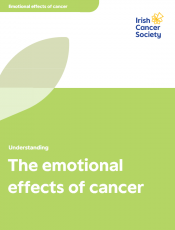
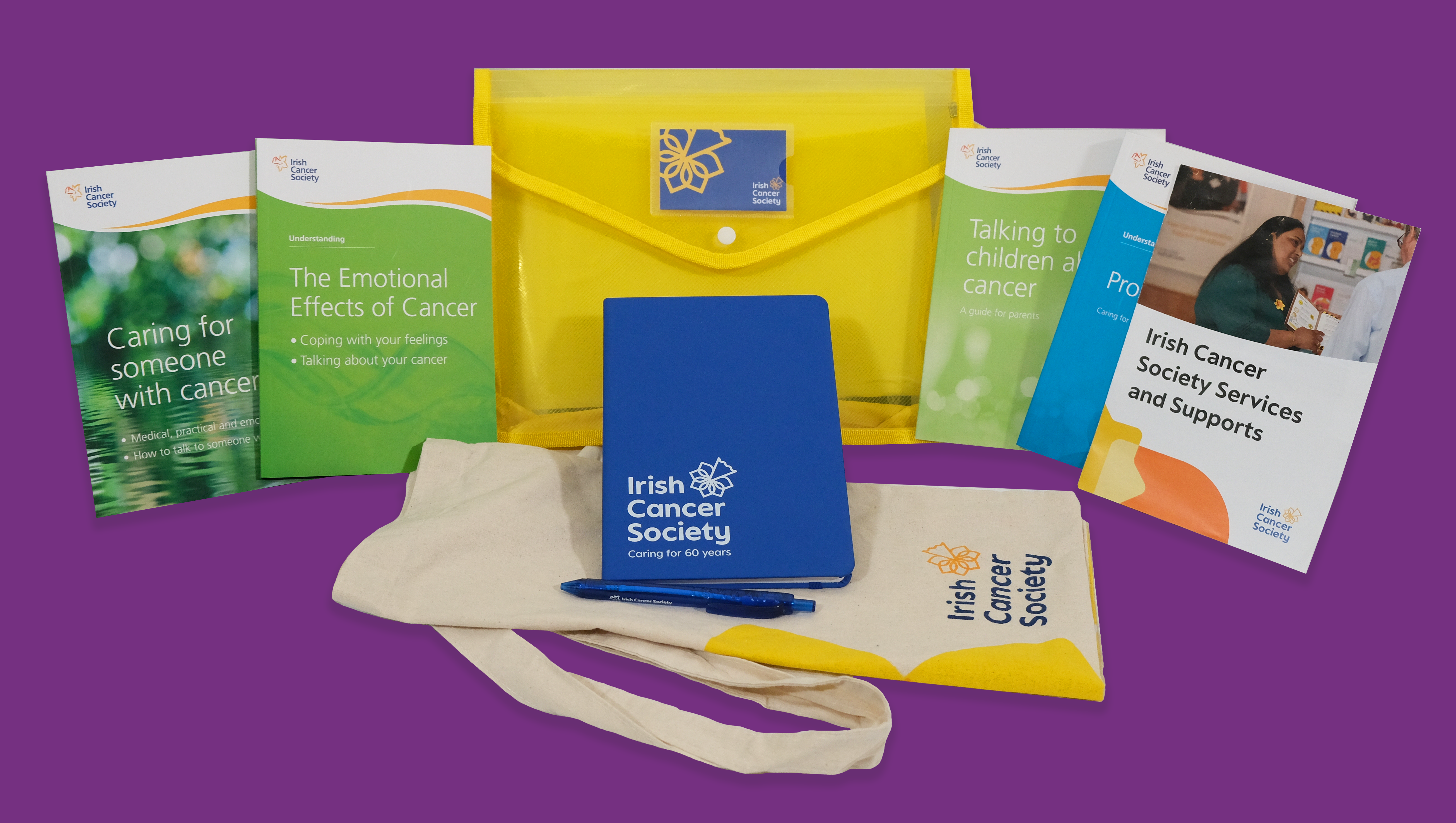
You could also read our booklet, Understanding the emotional effects of cancer, which you can download below or order through our Support Line 1800 700 200.
Talking to your loved one
Sometimes, as a friend or carer, you may feel stuck and helpless and maybe lost for words. There is no 'right thing’ to say. However, you can provide relief to the sick person by encouraging them to talk and letting them lead a conversation about their illness or their feelings. That way, talking about it will become easier.
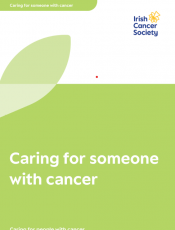
For more information, download our booklet Caring for someone with cancer below, which has a section on how to talk to someone with cancer. You can also order it through our Support Line on 1800 200 700 or pick up a copy at your local Daffodil Centre.
What not to say
Cancer survivor Cian talks about how to talk to someone with a cancer diagnosis, or specifically, what *not* to say to someone with cancer.
Don’t be afraid to talk to your loved one about their illness. They will be reassured that you are trying to understand what they are going through.
Getting support for your loved one
There's a lot of support available for cancer patients. This includes cancer support centres, support groups for different types of cancers, counsellors, booklets and online forums. See also Irish Cancer Society services.
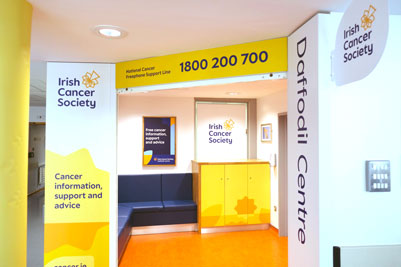
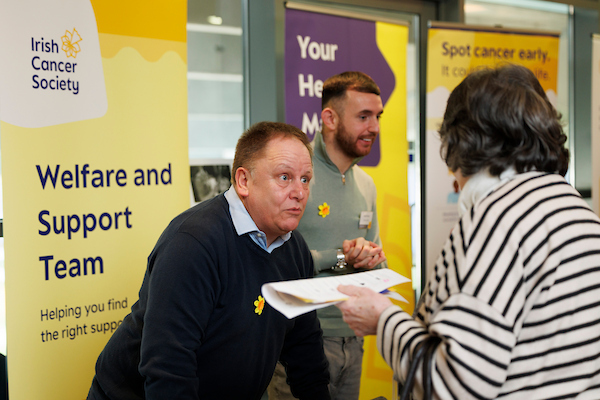
You can help your loved one by finding out what's available in your area. Some hospitals have a Daffodil Centre where you can speak to one of our Cancer Nurses.
Psycho-oncology services
If you are concerned that your loved one is having difficulty coping with their illness, speak to their doctors, nurses or medical social worker. Some hospitals have a psycho-oncology team. These are specialists in psychological care and support for cancer patients. Usually the team includes psychiatrists, clinical psychologists and nurses.
Keeping life as normal as possible
Cancer will have a big impact on your loved one’s life, but try not to let it take over. They are still the same person.
Try to keep living as normally as possible. Remember to include your loved one in special activities like birthday celebrations or other events and outings. Everyone needs something to look forward to and it can be a welcome break from thinking about their illness.
Some people may use humour to help them cope, which can bring some light relief to difficult situations. Try to follow your loved one's lead on this.
Just be yourself around the patient. They are still the same person. Respect their wishes and don’t treat them any different to before their illness.
Caring for a child with cancer
Sometimes being a carer means looking after children affected by cancer. For more information, see our section on children and cancer.
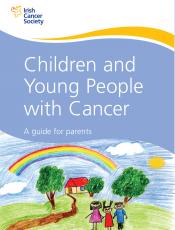
We also have booklets for parents such as Children and young people with cancer: A guide for parents. This can be downloaded below or ordered from our Support Line by calling 1800 200 700 or emailing supportline@irishcancer.ie
Our Children's Cancer Nurse is in Children's Health Ireland (CHI) in Crumlin one day a week to provide free and confidential advice, support and information to anyone affected by a child's cancer. She will be around the playrooms, wards and clinic areas. See the in-hospital posters for times and days.
The medical social worker involved in your child's care can also give you information on supports, services and entitlements.
Booklets and publications
Related links

Talk to a Cancer Nurse

Support Line


Our Daffodil Centres