Surgery for pancreatic cancer
Information about surgery for pancreatic cancer.
Types of surgery
Surgery aims to remove all of a tumour. It is the main treatment for early-stage pancreatic cancer. This means it suits about 1 in 5 patients at the time of diagnosis.
Your medical team will decide if surgery is right for you based on your cancer type, location, overall health, and scan results.
Types of surgery:
This type of surgery is done if the cancer is in the head of the pancreas.
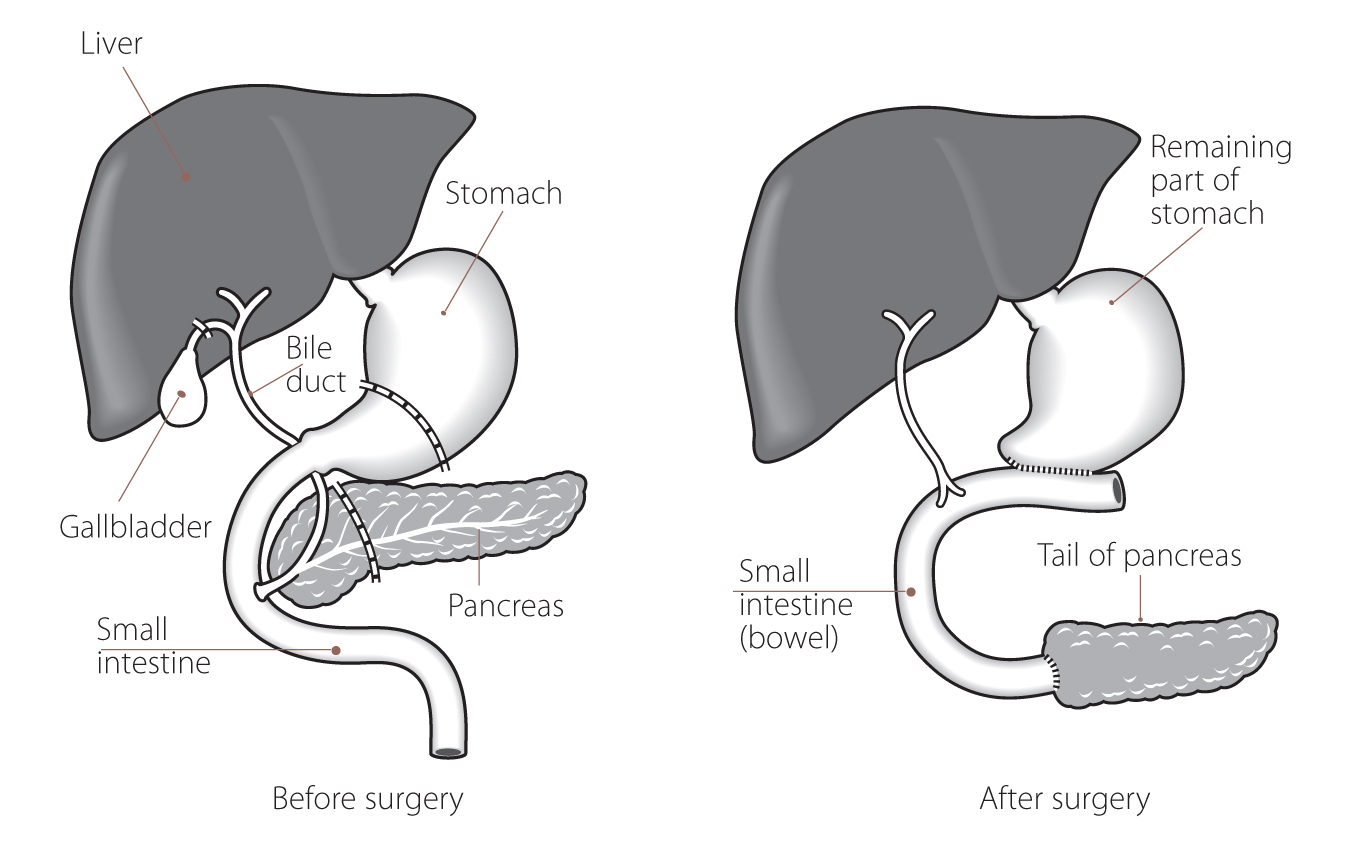
The surgeon will remove the head of the pancreas, the first part of your small intestine (duodenum), part of the bile duct, your gallbladder and surrounding lymph nodes. In the classic Whipple's operation, the lower part of the stomach is also removed. In the pylorus-preserving version (see below), all of the stomach is kept.
The remaining pancreas, bile duct and stomach are joined up to the small intestine. This allows the pancreatic enzymes, bile and stomach contents to flow into the small intestine for normal digestion.
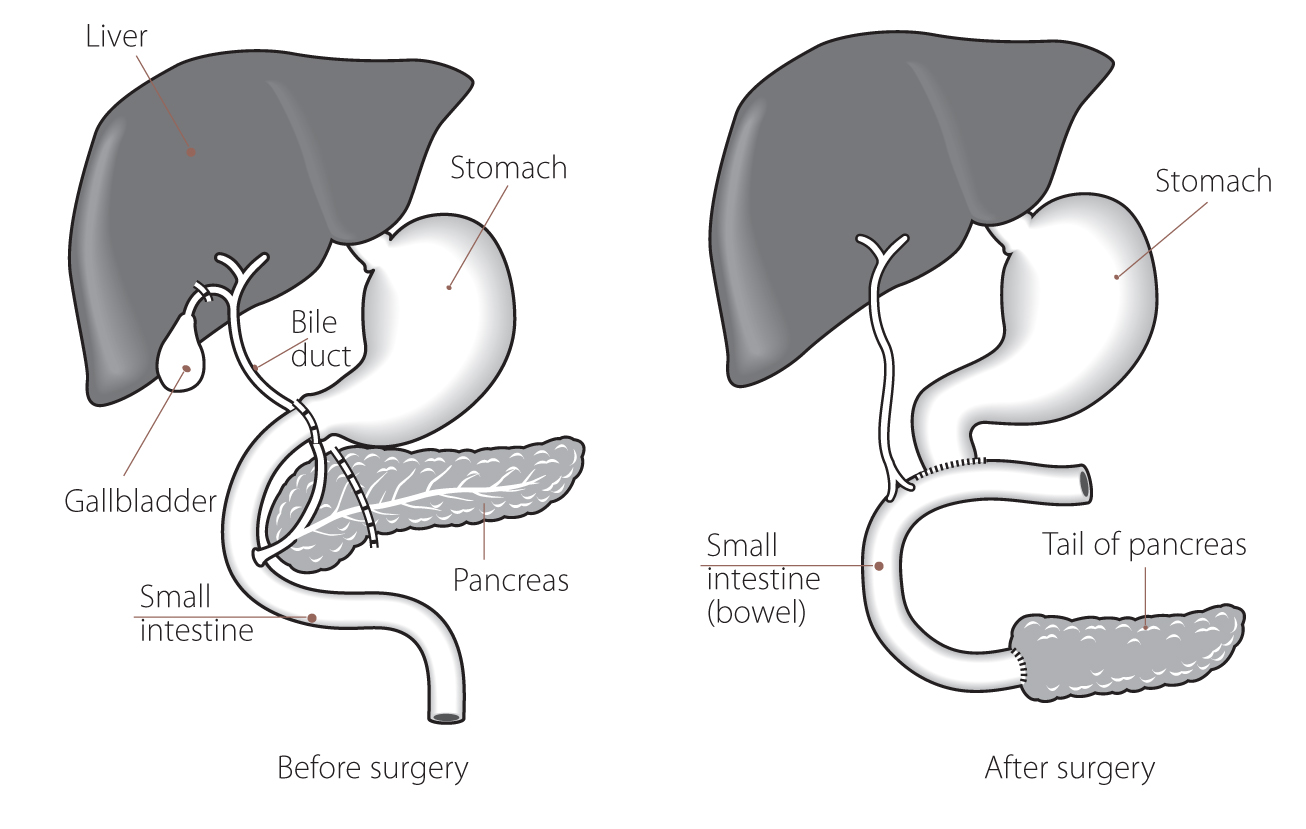
This is very similar to a Whipple procedure (see above), with the main difference being that none of the stomach is removed.
This is where all of your pancreas is removed as well as some of your small intestine, part of your stomach, your gallbladder, part of the bile duct, your spleen and nearby lymph nodes. This kind of surgery is uncommon.
This is done for cancer in the body and tail of the pancreas. The tail of the pancreas is removed, as well as your spleen.
This is when the tail of the pancreas is removed but the spleen is left intact.
Pancreatic surgery is normally done in the National Surgical Centre for Pancreatic Cancer which is St. Vincent’s University Hospital in Dublin or in Cork University Hospital/Mercy University Hospital, Cork.
After surgery for pancreatic cancer
Pancreatic surgery is a big operation. You will either stay in an intensive care or high dependency unit (HDU) where the staff will keep you under close observation for a day or 2, or you will go straight to the ward.
Read more about what happens after surgery.
Replacing insulin and pancreatic enzymes
If you have had part or all of your pancreas removed, you may develop diabetes and need to take insulin. Insulin is normally made by the pancreas. The diabetes nurse specialist will visit you and give you advice if you develop diabetes due to surgery.
Nearly everyone who has had pancreatic surgery needs to take extra digestive enzymes with every meal and snack. This is known as pancreatic enzyme replacement therapy (PERT). PERT is almost always continued long term, as it helps prevent weight loss, bloating, wind and fatty diarrhoea - improving your quality of life.
If all of your pancreas was removed (total pancreatectomy), you will definitely need both insulin and enzyme replacement for the rest of your life.
After a Whipple’s procedure, some people develop low vitamin B12 levels. Your medical team will check this with a blood test and replace it if needed, usually by injection.
Your diet after pancreatic surgery
It may take a while for your stomach to get back to normal. Food may stay in your stomach longer or be ‘dumped’ into the small intestine quickly.
You will be advised on what foods you can and cannot eat. This will depend on whether you need to take insulin or not.
You may be advised to eat high-energy foods. You are also very likely to need pancreatic enzyme supplement tablets. These tablets replace the enzymes usually found in your pancreatic juices to help you digest your food.
If your pancreatic duct is blocked by the cancer, taking the enzymes will help your digestion as well.
Your dietitian will advise you about taking enzymes to match your diet.
We also have tips on coping with eating problems and weight loss.
Related links
Talk to a Cancer Nurse

Support Line


Our Daffodil Centres