Robert's Bowel Cancer Story
“At the beginning, I had so many emotions about the colonoscopy delay. I was so angry that I had cancer, that it had progressed, and the expectation was that having to wait so long had reduced my life expectancy."
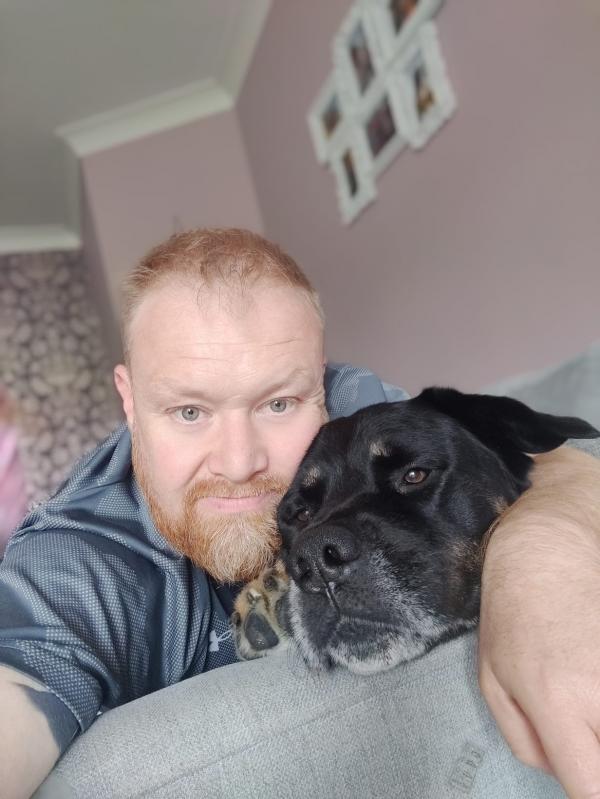
"I felt a degree of annoyance over the time I had to spend waiting, but then my attention turned to my treatment and survival.”
Robert Flanagan, 48, from Portlaoise was diagnosed with rectal cancer in January 2024. He initially went to get his symptoms checked a year before his diagnosis but encountered a delay in receiving a colonoscopy.
“I had issues with what I thought was a perianal abscess and I had rectal bleeding,” he says. “I thought I was actually suffering from piles, and my GP would prescribe medication for piles, but they didn’t make a difference.
“I had a referral sent to Tallaght Hospital for a colonoscopy, and I kept getting letters from them telling me I was on the waiting list and asking me if I still wanted to be on the list. Coming up to about a year after the referral, I couldn’t deal with the discomfort anymore, so I went private.”
Within a week of the referral being sent to a private hospital, Robert underwent a colonoscopy. A tumour was found and biopsied, and he was referred back into the public system where he received his diagnosis.
“The primary cancer was stage four rectal cancer, and they found that it had spread to my liver,” says Robert. “I asked what my prognosis was, and they said it wasn’t good. They said that, statistically, because of the stage it was at, and the fact it had spread to the liver, that I had around two-and-a-half years left after diagnosis.
“I was taken aback when they told me, I was in shock. Everything became a blur. I was focused on my family; my wife Caren and our three children. I was thinking that this was potentially game over for me – I went from thinking I had piles, to then being told I had stage four colorectal cancer that had metastasised to my liver.”
Due to the rectal bleeding he was experiencing, Robert had to receive blood transfusions as his iron was too low for him to be able to begin chemotherapy. He still continued to lose blood, so he was sent for five courses of radiotherapy which he says stopped the bleeding “right away”. He went to on to have IV chemotherapy and found the Irish Cancer Society’s Transport Service to be a valuable source of support.
“At the beginning of my treatment, I used the Irish Cancer Society’s Transport Service, and it was brilliant,” he says. “Because I was constantly up and down to Tallaght Hospital, I was using the car."
"We have three kids who have to go to school every day, and we only have one car now, and we were trying to work out if they would have to miss days of school so I could use the car to get to the hospital. But the Irish Cancer Society's Transport Service solved that, it alleviated a lot of pressure.”
Robert now takes oral chemotherapy every day and goes to Tallaght Hospital every fortnight for blood tests.
“Tallaght Hospital were absolutely brilliant, once I got into the system,” says Robert. “They’re amazing, I can’t speak highly enough of them. They’ve gone above and beyond for me.”
Reflecting on his experience, Robert encourages anyone who notices concerning symptoms to get them checked and investigated, and to advocate for yourself.
“If you notice any problems, go to your GP. Early diagnosis is key, and I think there’s a strong possibility that if I had got the colonoscopy quicker and been diagnosed sooner, it would’ve made a difference, but then again, maybe it wouldn’t have.”