Martyna Treacy's Bowel Cancer Story
“I hope someone can learn from my experience, if one person could be diagnosed at an earlier stage.”
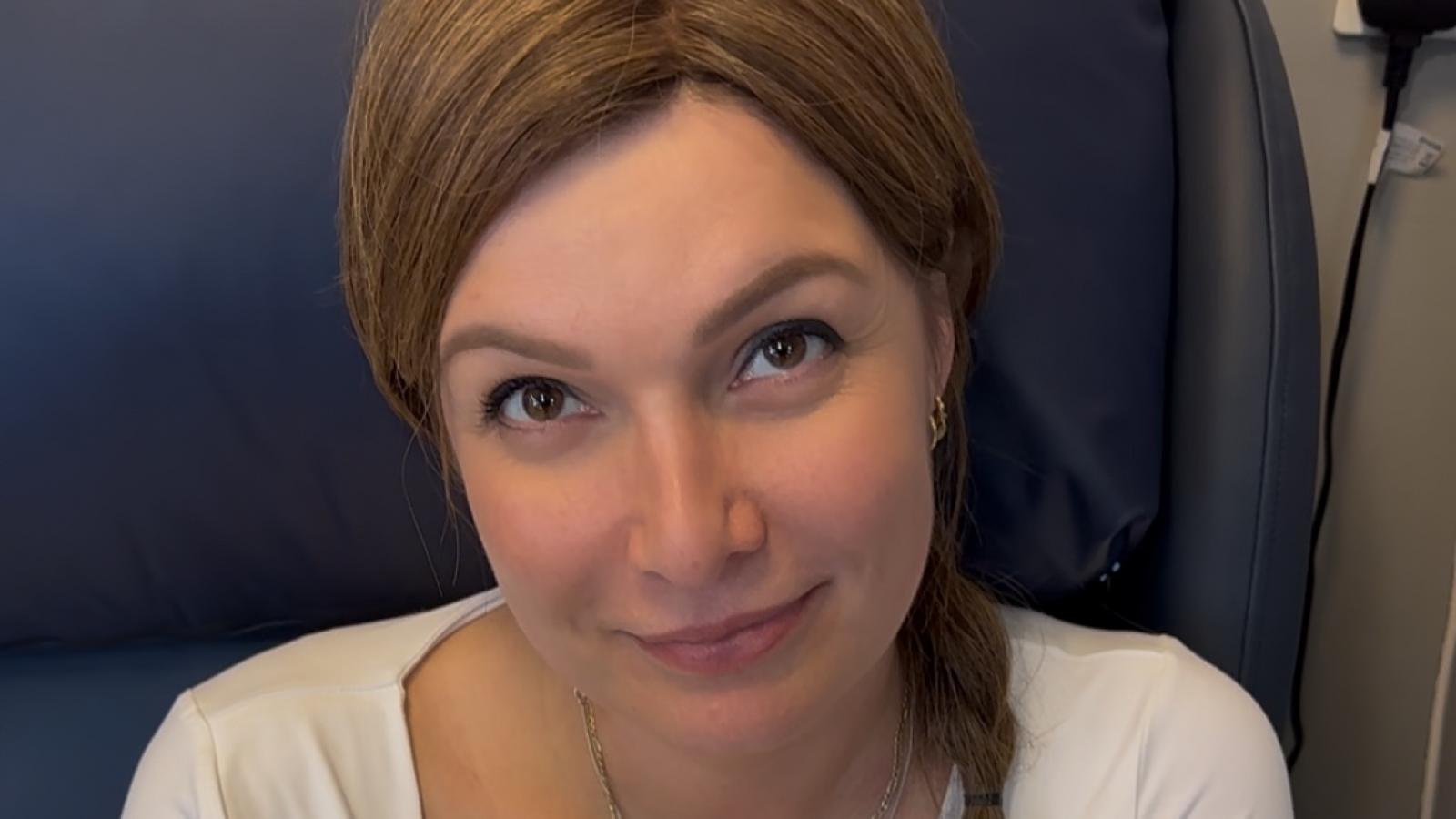
Martyna Treacy, 37, had only been married a few months and was starting her psychotherapy practice when she was diagnosed with stage four bowel cancer in March 2024.
Martyna, from Łódź in central Poland, now living in Dublin 11 with her husband, felt abdominal pain for about a year. She ignored her pain and a few digestive symptoms. At the time, she was planning her wedding and was switching to practicing psychotherapy full time.
“I was ignoring the symptoms. I’d been ignored by doctors in the past, even though I had many different symptoms. I accepted pain as a part of my life. Then the pain got to be unbearable.”
Martyna went to Poland to visit a friend and decided to arrange to see a specialist while she was there. She saw a gynaecologist first, as her pain felt like period cramps. The Polish specialist found an 8-centimetre cyst on her ovary.
She also saw a GP in Poland, who did a full blood panel and an ultrasound on her abdomen. They saw the cyst on her ovary and lesions on her liver, and they thought she might have a cancer that had spread. The GP suggested that she be treated in Poland, but Martyna went back to Ireland, where her husband and business were.
Martyna brought her scan results from Poland back to Ireland. She would require a further scan to be seen in the Irish health system and was advised this would mean a 3 month wait publicly or 2 weeks in the private system. In the end, Martyna was able to pay to go private. Even then, she says: “I had difficulties getting a private scan in Ireland, even though I was ready to pay. I had to be referred to a second hospital.”
“I was in so much pain that my husband had to dress me because I couldn’t do it myself.”

Martyna went back to her Irish GP and was referred to a different hospital. The cyst on her ovary was now measuring 20 centimetres. It had nearly doubled in size in the 2 weeks since she went to hospital in Ireland.
Martyna was diagnosed with stage four bowel cancer that had spread to her liver, ovaries and lungs.
“I feel like I was diagnosed twice,” she says. “The first moment was with the doctor in Poland who didn’t have the full picture. I felt physically weak. You have to lean against something because you feel like you were just going to collapse.
“When I was diagnosed a second time, the shock was so huge. It overtakes everything and you are just numb. I don’t think I was able to feel much for myself – it was mostly when I saw my husband or called my family and said it out loud. When you say it, it becomes real, and you have to hear their responses. I don’t feel as much for myself as I feel for others.”
The scan showed that her bowel was almost entirely blocked by a primary tumour. Her doctors considered her treatment course because surgery would delay chemotherapy for 6 weeks, but they decided to go ahead. Martyna had her first surgery in March 2024.
“If that didn’t go the way that it did, we wouldn’t be talking today. I was very lucky that I was able to make it to see chemo, and the chemo worked.”
More surgeries would be too risky with this aggressive form of cancer, and surgery would mean stopping chemotherapy, which is important for her treatment.
Surgeons removed both of her ovaries and the tumour from her bowel. Martyna’s medical team has started to go in with chemotherapy for the cancer in her lungs and liver. As Martyna says, “I’m exhausting the lines of chemotherapy treatment.”
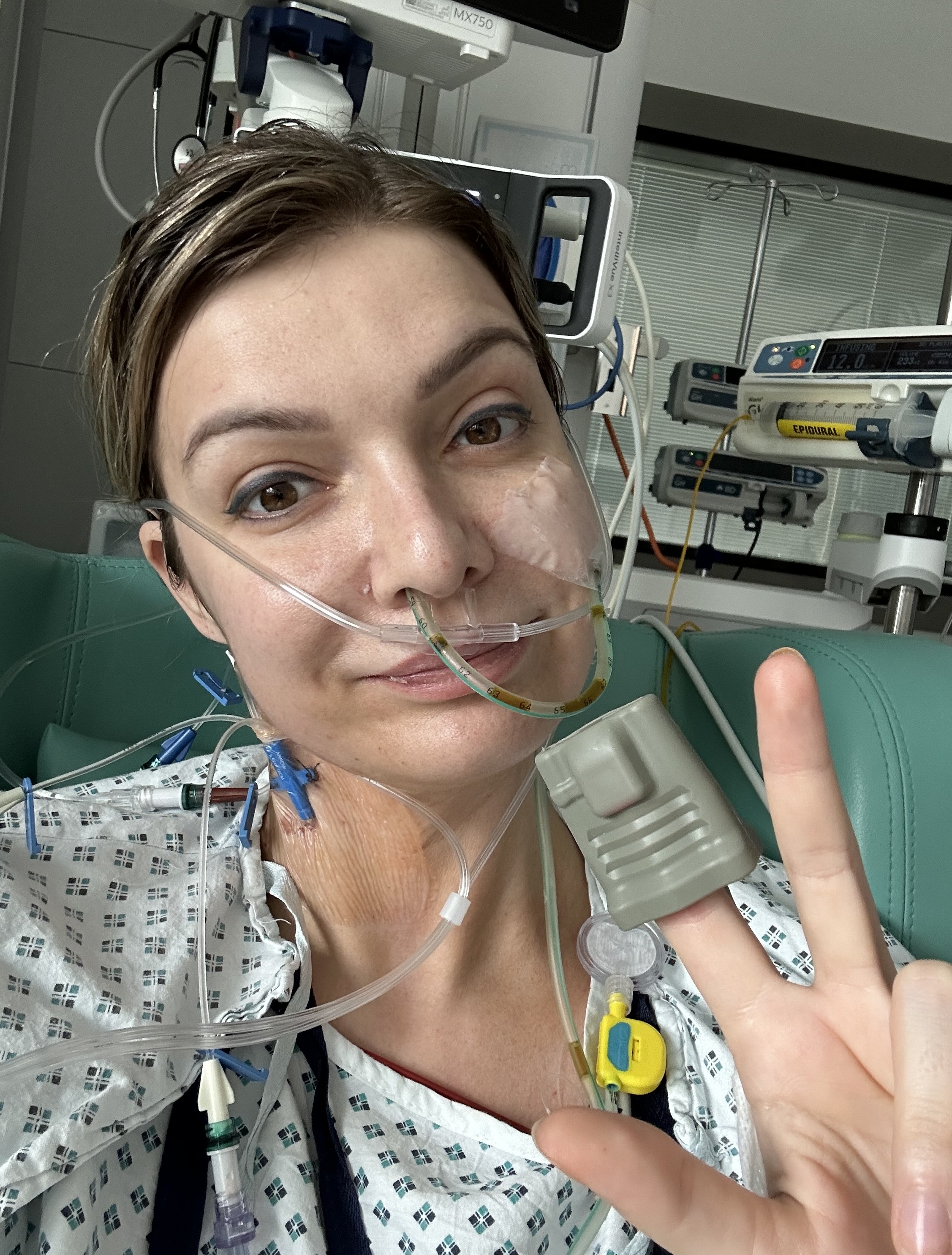
During treatment, Martyna’s husband wasn’t always available to drive her to the hospital, so she used the Transport Service. “It’s lovely to have that support, it’s great to see people offering their free time,” she says.
Martyna looked up her diagnosis on the Irish Cancer Society Website and also used the Daffodil Centre. “The nurses were fantastic, they were amazing.
“When you’re in your own emotions it’s hard to see it from the outside,” she says. “The treatment is affecting me very negatively, physically and mentally. I have more bad days than good days. But I am trying to do nice things for myself.
“I believe it’s very important that we do not ignore the symptoms,” she says. “I hope that somebody can learn from my experience and won’t have to go through what I am going through. This is not something to ignore, it’s a matter of life and death.
“You need to be in charge of your own treatment. You need to fight for yourself. You need to be your own advocate.”