James Anthony's Skin Cancer Story
“I’m someone who always got colour without getting sunburn and I still got skin cancer.”
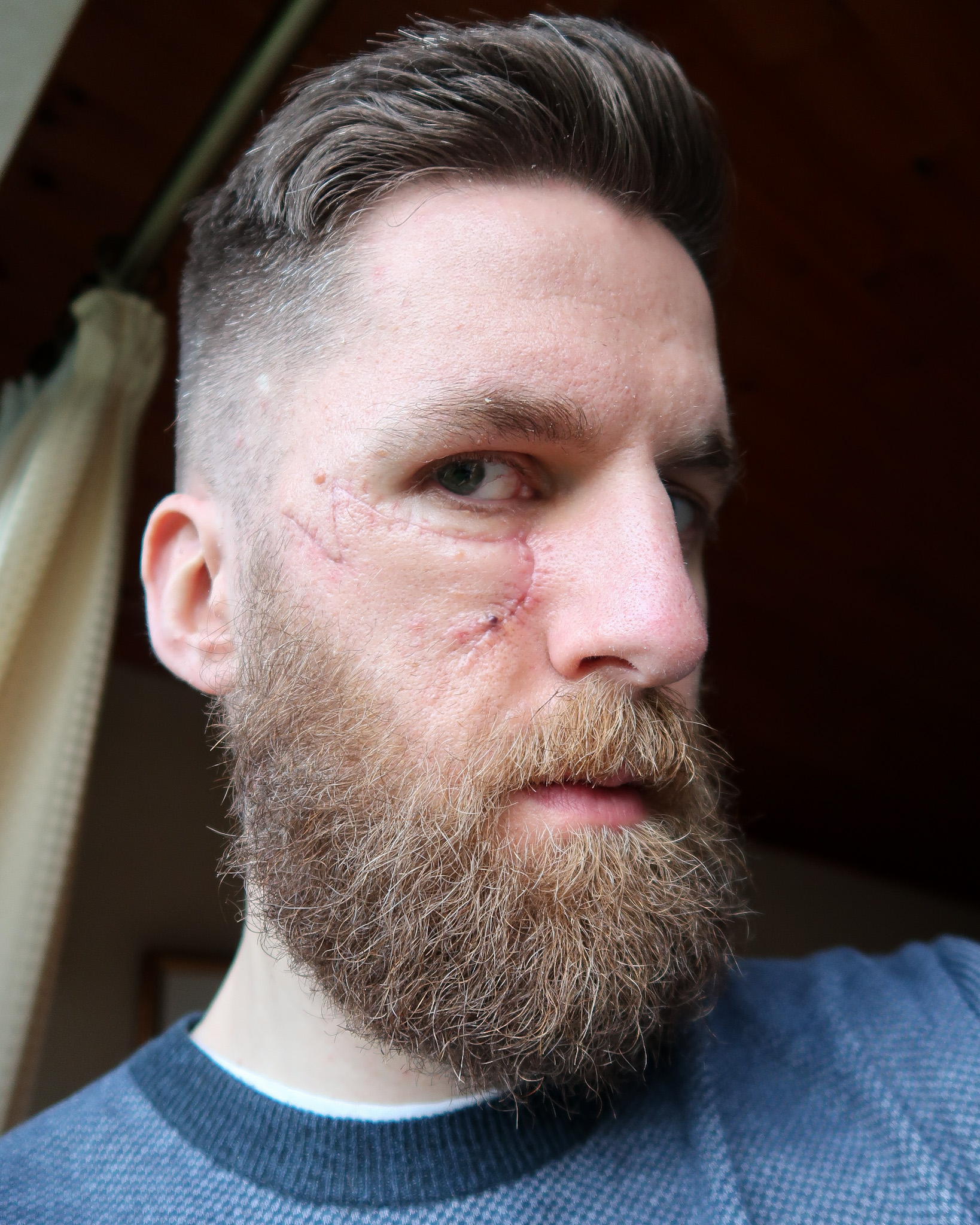
James was working as an actor in London when he became concerned about a mark on his face:
“I had a lump under my right eye since 2005 that I assumed was a scar from acne. Then I got a spot in that area and it left a cut that never healed. It was a tiny red dot which annoyed me, but it was small enough to be insignificant. Later I got another spot right beside it, creating a larger cut. It became a really visible red cut under my eye.
“I went to my GP to ask if anything could be done, just thinking it was a cut or scar tissue. The GP was pretty sure it was basal cell carcinoma, a type of skin cancer. My GP booked an appointment with a dermatology clinic. The main surgeon there confirmed the diagnosis and recommended surgery, and I was in a total state of shock.
“I didn’t know how it could happen. The dermatologist told me that Irish people are some of the most vulnerable to skin cancer. Our skin is naturally so pale."
“My career as an actor meant I was worried about having surgery on my face. It took me a long time to accept it. I was chasing second opinions."
Six months ago, James underwent Mohs micrographic surgery to remove his skin cancer, followed by plastic surgery.
“Luckily basal cell carcinoma isn’t a cancer which required me to have chemo or ongoing treatment, but the fact that it was on my face made it a difficult experience, especially with my career choice."
“My scar is healing well and has faded more than I expected at this stage,” James says today. “I hope the scar will continue to fade. Some people who’ve had similar surgeries have said they can barely see their scar now."
“Skin cancer is one of the cancers we can predominantly prevent through knowledge. Please spread the word. No tan is worth the risks. Wear SPF 30 or above, reapply at least every 2 hours, try to avoid peak hours and never let your skin burn. And if you have a lump or spot that doesn’t heal or new or changing mole, don’t assume it's insignificant. Get it checked out.”