Types of oesophageal cancer
Information about the different types of oesophageal cancer.
What are the types of oesophageal cancer?
A tumour can grow anywhere along your oesophagus. When diagnosing and treating cancer, doctors think of the oesophagus in three sections: upper, middle and lower.
Oesophageal cancers are usually named after the type of cell where the cancer first starts to grow. More than 9 in every 10 oesophageal cancers are squamous cell carcinomas or adenocarcinomas.
- Squamous cell carcinoma: Starts in the squamous cells that line the oesophagus. Squamous cell cancers are more common are most common in the upper to middle part of the oesophagus
- Adenocarcinoma: Starts in the gland cells of the oesophagus that produce mucus. Adenocarcinomas tend to occur in the lower third of the oesophagus.
- Sometimes adenocarcinoma can cross the junction between the oesophagus and the stomach. This is known as a gastrooesophageal junction tumour and may be treated as oesophageal cancer or as stomach cancer, depending on where the cancer is found.
Rare types of oesophageal cancer
There are other rarer types of oesophageal cancer. These include:
- Neuroendocrine cancers: These are rare cancers that affect cells in the neuroendocrine system. Neuroendocrine cells make hormones that help to control many of the functions in your body.
- Soft-tissue sarcomas: Rare cancers that start in soft tissues like fat and muscle. For example, gastrointestinal stromal tumours (GISTs).
- Small cell cancer: These are more common in the lung, but rarely they can develop in the oesophagus.
- Undifferentiated: Cancer where the doctors cannot tell if the cancer started in the gland cells (adenocarcinoma) or skin-like cells (squamous cells).
Tests and treatments for these rarer types of oesophageal cancer are different from the treatments we describe here. Your medical team will give you more information or you can call our Support Line nurses on 1800 200 700.
Talk to a Cancer Nurse

Support Line

Our Cancer Nurses offer confidential advice, support and information for anyone affected by cancer. Call or email supportline@irishcancer.ie. Video calls available. Mon-Fri: 9am-5pm

Our Daffodil Centres
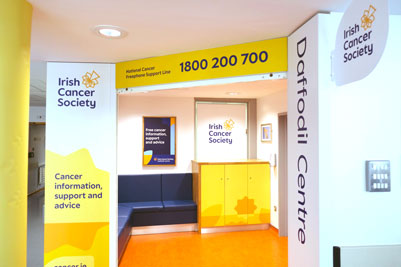
Our Daffodil Centres in 13 hospitals nationwide are staffed by Cancer Nurses and trained volunteers who provide face-to-face advice, support and information for anyone affected by cancer.