Testicular cancer
Testicular cancer affects about 170 men in Ireland each year. It is the most common cancer diagnosed in young men aged between 15 and 34 years.*

Signs and symptoms
Learn about the signs and symptoms of testicular cancer. You are more likely to survive cancer if you find it at an earlier stage.

Treatment
There are a number of different treatments available for testicular cancer. Your medical team will explain the best treatment options for you.
What is testicular cancer?
Testicular cancer is when normal cells in the testicles change and grow into cancer. The cancer can affect how the testicles work normally. Sometimes testicular cancer cells spread to lymph nodes at the back of the abdomen, the chest or neck.
Testicular cancer is rare, but it’s the most common cancer in young men aged between 15 and 34. About 170 men are diagnosed with testicular cancer every year in Ireland.*
Testicular cancer is very treatable and is nearly always curable.
What are the testicles and what do they do?
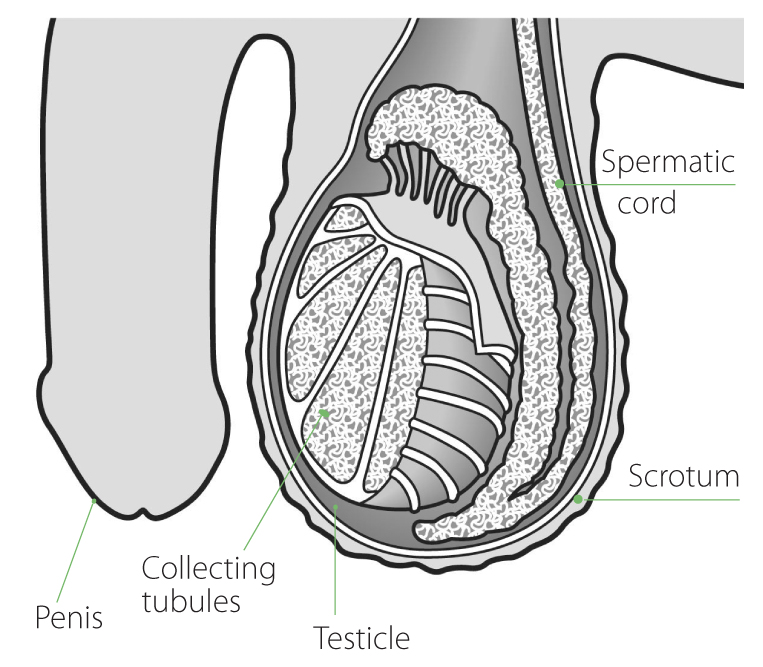
The testicles (also known as the testes) are two small, egg-shaped organs found below your penis in a pouch of skin called the scrotum. They are part of the male reproductive system. Once you reach the age of puberty, the testicles make sperm.
The testicles lie outside your body because they need to be at a lower temperature than the body to make sperm. Sperm is needed to fertilise the female egg after sex, which will grow into a baby.
The testes also make the hormone testosterone. Testosterone is responsible for qualities such as a deep voice, facial hair and strong muscles. It also plays a role in your sex drive and the ability to have an erection.
What increases my risk of testicular cancer?
These risk factors can increase your chance of developing testicular cancer:
Testicular cancer is more common in those who were born with a testicle that did not come down into the scrotum before they were born. Having an operation to move the testicle down into the scrotum at a young age may help to reduce the risk of testicular cancer.
You are slightly more at risk of getting testicular cancer in your other testicle if you’ve had testicular cancer.
You are more at risk if your father or brother had the disease. However, only about 1-2% of testicular cancers are thought to be related to family history.
If you have fertility problems, you have a slightly increased risk of testicular cancer. A vasectomy does not increase your risk of developing testicular cancer.
If you’re white-skinned, you have a higher chance of getting testicular cancer than African-Caribbean or Asian men.
Does getting hit in the testicle give you cancer?
There is no evidence that injury to your testicle causes cancer. If you get a knock to your testicle, you may feel the area and notice a change in your testicle which you wouldn’t have otherwise noticed. So it may be that the knock helps people notice testicular cancer because they become more aware of their testicle because of the pain.
Having a risk factor doesn’t mean you will get cancer. Sometimes people with no risk factors get the disease. If you’re worried, talk to your GP or talk to one of our cancer nurses. Call our Support Line on 1800 200 700 or visit a Daffodil Centre.
Note: We use gender-inclusive language. We sometimes use woman/man and female/male when they are needed to explain a person's treatment and care - for example, talking about hormones or body parts - and when needed to describe research or statistics.
Medical content updated from our 'Understanding testicular cancer' booklet (2025), reviewed by: Mr Arun Z Thomas, Consultant Urological Surgeon; Ada Kinneally, Advanced Nurse Practitioner (Oncology); Karen Fitzmaurice, Daffodil Centre Nurse.
Continue reading about testicular cancer
Publications about testicular cancer


Talk to a Cancer Nurse

Support Line


Our Daffodil Centres
*The Irish Cancer Society uses the most up-to-date cancer statistics from the National Cancer Registry Ireland, available on www.ncri.ie