To speak to a specialist cancer nurse,
freefone the National Cancer Helpline
1800 200 700
Mon—Thurs 9am—7pm Fri 9am—5pm
To speak to a specialist cancer nurse,
freefone the National Cancer Helpline
Mon—Thurs 9am—7pm Fri 9am—5pm
The symptoms of cervical cancer include:
If you have any of the above symptoms, get them checked out by your doctor. But remember they can occur in many conditions other than cancer.For more information, contact the National Cancer Helpline
Testing for abnormal changes in the cervix when you have no symptoms is called screening. A National Cervical Screening Programme is available in Ireland called CervicalCheck. The Government funds this service and provides free smear tests to women aged 25 to 60 years. For more details, contact CervicalCheck at 1800 45 45 55 or visit the CervicalCheck website.
For more information on Cervical Cancer Screening, please see our Cervical Cancer Screening Factsheet (smear test) (pdf 176KB).
Visit your family doctor (GP) if you are worried about any symptoms. He or she will examine your cervix using an instrument called a speculum. This is gently put into your vagina so that it can show your cervix more clearly. Your doctor will also do another exam using two gloved fingers to check your womb and ovaries.
If you have had an abnormal smear test or if your doctor has concerns about you, he or she will refer you to a hospital. There you will see a specialist who will arrange more tests.
You may need some of the following tests:
A colposcopy examines your cervix using a bright light and a colposcope. This is a large microscope that helps your doctor to look more closely at the surface of your cervix.
In this test your doctor can closely examine your cervix and pelvic organs while you are asleep under general anaesthetic. Your doctor can check the size of your womb and if the cancer is found only in your cervix.
A biopsy is a test to find out if cancer cells are present. A sample of the cells are taken and looked at under a microscope in the lab. The biopsy can be done in two ways, as part of the colposcopy or as part of the EUA.

These scans can help to stage the cancer. This means finding out the size of the cancer and if it has spread anywhere else. This can help your doctor decide on the right treatment for you. Learn more about these tests.
Freephone 1800 200 700 to talk to a specialist cancer nurse
It's open Monday-Thursday from 9am to 7pm and Friday from 9am to 5pm

National Cancer Helpline
Freefone 1 800 200 700
Talk to a specialist nurse
Mon-Thurs 9am-7pm
Fri 9am-5pm
helpline@irishcancer.ie

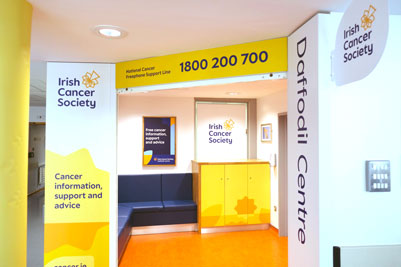
Have you used the Irish Cancer Society's cancer information services by phone, Daffodil Centre, email, social media or this website? A UCD research team is helping us to evaluate so that we can improve those services.
You're not alone. Find out ways we can help you or your loved ones in the fight against cancer.
Staying healthy is the best defence against cancer.

Charity registration number CHY5863 (Ireland)
Irish Cancer Society, 43/45 Northumberland Road, Dublin 4, Ireland. Tel +353 (0)1 2310 500