Having a risk factor doesn’t mean you will get cancer. Sometimes people with no risk factors get the disease. If you’re worried, talk to your GP or talk to one of our cancer nurses. Call our Support Line on 1800 200 700 or visit a Daffodil Centre.
Vaginal cancer
Vaginal cancer is rare. About 20* women in Ireland are diagnosed with it each year.

Signs and symptoms
Learn about the signs and symptoms of vaginal cancer. You are more likely to survive cancer if you find it at an earlier stage.

Treatment
There are a number of different treatments available for vaginal cancer. Your medical team will explain the best treatment options for you.
What is vaginal cancer?
Vaginal cancer is a rare cancer of the female reproductive system.
Vaginal cancer is when normal cells in the vagina change and grow in an abnormal way. These cells can form a malignant (cancerous) tumour.
What is the vagina and what does it do?
The vagina is part of the female reproductive system. It is a muscular tube about 10cm long. It is the passage between the opening of the womb (cervix) and the vulva. The vulva is the most outer part of the female reproductive system located at the opening of the vagina.
The vagina has many functions. It opens and expands during the birth of a baby, and it drains blood during a monthly period.
The wall or lining of the vagina is made up of many layers. For example, an epithelial tissue layer making up the lining of the vagina and a connective tissue layer making up the walls of the vagina that also include muscle, lymph nodes and nerves. The lymph nodes help to fight infection. There are also glands near the entrance of the vagina which produce a mucus. This keeps the vagina moist and acts as a lubricant during sex.
Risks and prevention of vaginal cancer
The cause of vaginal cancer is unknown. But there are certain things called risk factors that can increase your chance of developing the disease. These include:
- Age: The risk of vaginal cancer increases with age, most people diagnosed with vaginal cancer are over 60. It is more common in women who have not had children.
- HPV virus: HPV infections can cause abnormal changes in your vagina (VAIN - vaginal intraepithelial neoplasia). If they are left untreated, there is a slightly higher risk of getting vaginal cancer. HPV is a virus passed on during sexual contact.
Read more about HPV and how it increases the risk of some cancers. - Previous radiotherapy to the pelvic area: This slightly increases the risk but it’s rare.
- Exposure to DES: Being exposed to a hormone called DES (diethylstilbestrol) while you were in the womb causes one type of adenocarcinoma of the vagina. It is very rare.
Note: We use gender-inclusive language. We sometimes use woman/man and female/male when they are needed to explain a person's treatment and care - for example, talking about hormones or body parts - and when needed to describe research or statistics.
Medical content reviewed by Mike Wilkinson and Ed Corry, Consultant Gynaecological Oncologists (2023).
For more information on vaginal cancer, you can also look at This is GO, which gives tailored information for people worried about vaginal cancer, people diagnosed with vaginal cancer and for friends and relatives. This is GO is part of the Women's Health Initiative, a research project supported by the Irish Cancer Society.
Talk to a Cancer Nurse

Support Line

Our Cancer Nurses offer confidential advice, support and information for anyone affected by cancer. Call or email supportline@irishcancer.ie. Video calls available. Mon-Fri: 9am-5pm

Our Daffodil Centres
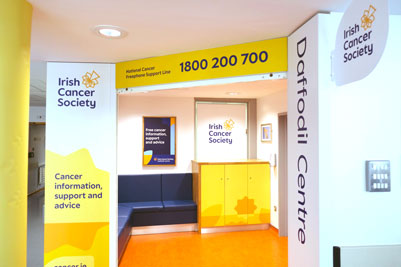
Our Daffodil Centres in 13 hospitals nationwide are staffed by Cancer Nurses and trained volunteers who provide face-to-face advice, support and information for anyone affected by cancer.
*The Irish Cancer Society uses the most up-to-date cancer statistics from the National Cancer Registry Ireland, available on www.ncri.ie