To speak to a specialist cancer nurse,
freefone the National Cancer Helpline
1800 200 700
Mon—Thurs 9am—7pm Fri 9am—5pm
To speak to a specialist cancer nurse,
freefone the National Cancer Helpline
Mon—Thurs 9am—7pm Fri 9am—5pm
If you or someone you know has been diagnosed with secondary brain cancer, we can provide the information you need, from understanding the cancer itself, to choosing the right treatment, to finding support.
Secondary brain cancer is different from primary brain cancer. If you're not sure what the difference is or how it affects you, you can call our helpline on 1800 200 700.
The brain and spinal cord are known as the central nervous system. The brain controls all the functions in your body. Different areas of your brain control different areas of your body.
Like other organs, your brain is made up of cells. These are called neurons and are a type of nerve cell. These cells communicate within your brain and with parts of your body by sending nerve impulses or messages through your nervous system. In this way, your brain is connected to your entire body.
Your brain and spinal cord are covered and protected by three layers called the membranes. These separate your brain from your skull. Between two of the membranes is an area called the subarachnoid space. This space contains fluid called cerebrospinal fluid (CSF).

Cancer that starts in the brain is called primary brain cancer. But cancer that spreads to your brain from somewhere else in your body is called secondary brain cancer. The primary cancer is where the cancer started, for example, breast, lung or bowel. Cancerous tumours are made up of millions of cancer cells. Sometimes these cells break up and travel through your bloodstream or lymphatic system to other parts of your body. When these cells build up to form another tumour somewhere else in your body, this is called a secondary cancer or metastases.
It is hard to say how common secondary brain cancer is. But listed below are some of the main types of cancer that often spread to the brain:
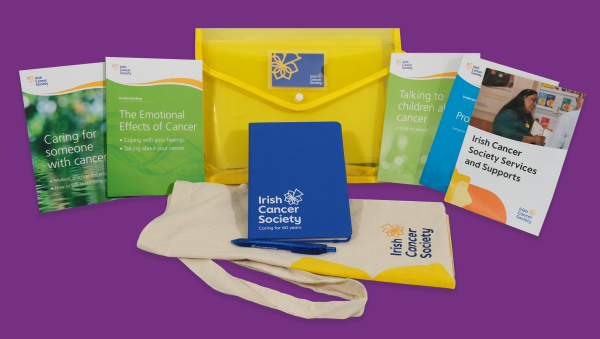
For booklets and factsheets, including information about cancer types, treatments, side-effects, emotional effects, financial information and more. Visit our publications section.
Freephone 1800 200 700 to talk to a specialist cancer nurse
It's open Monday-Thursday from 9am to 7pm and Friday from 9am to 5pm

National Cancer Helpline
Freefone 1 800 200 700
Talk to a specialist nurse
Mon-Thurs 9am-7pm
Fri 9am-5pm
helpline@irishcancer.ie

Have you used the Irish Cancer Society's cancer information services by phone, Daffodil Centre, email, social media or this website? A UCD research team is helping us to evaluate so that we can improve those services.
You're not alone. Find out ways we can help you or your loved ones in the fight against cancer.
Staying healthy is the best defence against cancer.

Charity registration number CHY5863 (Ireland)
Irish Cancer Society, 43/45 Northumberland Road, Dublin 4, Ireland. Tel +353 (0)1 2310 500